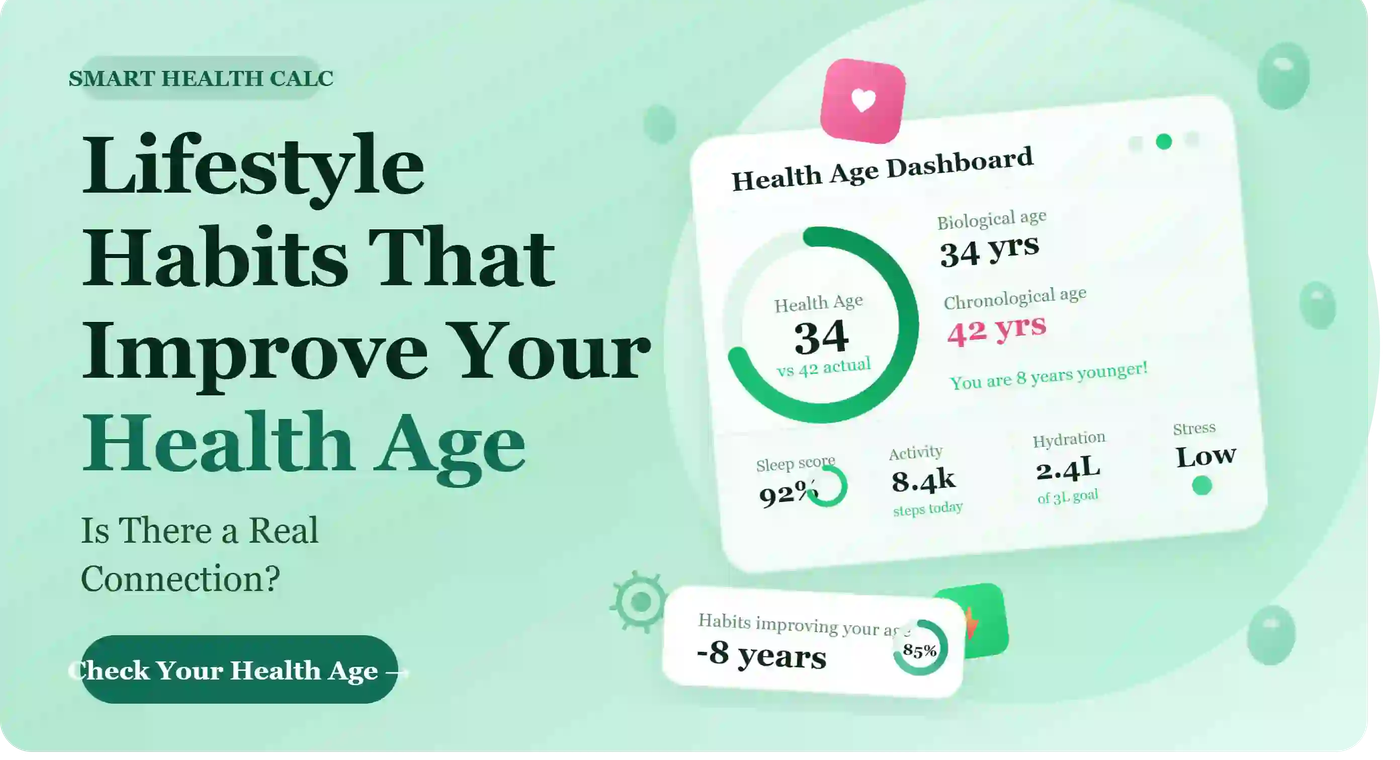
Daily Habits That Improve Your Health Age Score and Slow Biological Ageing
Find out which 10 daily lifestyle habits most improve your health age score. Covering sleep, exercise, Mediterranean diet, hydration, stress management, and more. Check your health age free.
Introduction: Your Age on Paper Is Not Your Real Age
Here is something most people do not realise: the number on your birth certificate is just one measure of how old you are. There is another number — your health age score — that tells a far more important story.
Your health age reflects how well your body is actually functioning compared to average people your age. It is based on real biological markers: your heart health, metabolic function, sleep quality, stress levels, and daily lifestyle habits. And here is the exciting part — unlike your chronological age, your health age score can be improved.
Research consistently shows that the right lifestyle habits can reduce your biological age by five, seven, even ten years. You do not need expensive supplements or complicated biohacking plans. You need the right daily choices, made consistently over time.
This guide will walk you through exactly what those habits are.
What Is a Health Age Score?
A health age score — also called biological age or functional age — is a measurement of how old your body truly is based on its physical and metabolic condition, rather than how many years you have been alive.
Scientists define health age as a composite measure of multiple biomarkers, including resting heart rate, blood pressure, BMI, fasting blood glucose, lung capacity, VO2 max, and more. The epigenetic clock — a scientific tool that measures chemical changes on your DNA — is one of the most accurate methods used today to determine biological age.
For example, a 45-year-old who exercises regularly, eats well, sleeps deeply, and manages stress effectively might have a health age score of 37. Meanwhile, someone the same chronological age who smokes, sleeps poorly, and eats a processed diet might register a biological age of 58.
The difference? Lifestyle habits.
You can check your current health age score for free using the Health Age Calculator at Smart Health Calculators — a fast, evidence-based tool that gives you a personalised baseline to work from.
Why Your Health Age Score Matters More Than Your Birthday
Most chronic diseases — heart disease, type 2 diabetes, metabolic syndrome, and even certain cancers — are not purely inevitable consequences of getting older. They are largely consequences of how we age, which is directly shaped by our daily habits.
According to research published by Harvard Medical School, up to 70 percent of how we age is determined by lifestyle choices, not genetics. That means the majority of your biological destiny is within your control.
When you lower your health age score, you are not just looking younger — you are reducing your risk of disease, improving your energy, sharpening your mental clarity, and extending the number of healthy, active years you live. Doctors and longevity researchers call this extending your healthspan, which matters even more than simply extending your lifespan.
The 10 Lifestyle Habits That Most Improve Your Health Age Score
1. Regular Physical Exercise — The Single Most Powerful Habit
Exercise is the closest thing science has ever found to a genuine anti-ageing intervention. It improves nearly every biomarker associated with biological age.
Consistent physical activity — particularly a combination of cardiovascular exercise and strength training — improves VO2 max, reduces resting heart rate, lowers blood pressure, increases insulin sensitivity, supports mitochondrial function, and maintains muscle mass. Every one of these factors directly impacts your health age score.
The World Health Organization recommends at least 150 minutes of moderate aerobic activity per week, or 75 minutes of vigorous exercise, alongside muscle-strengthening activities twice a week.
You do not need to run marathons. A brisk 30-minute walk five times a week, combined with two strength training sessions, is enough to produce measurable biological age improvements within 8–12 weeks.
Use the Workout Planner at Smart Health Calculators to build a personalised weekly exercise routine matched to your health age goals.
2. Quality Sleep — The Underrated Biological Reset Button
Sleep is not downtime for your body. It is the most intensive repair and restoration period your cells experience in any 24-hour cycle.
During deep sleep, your body releases human growth hormone, repairs damaged cells, consolidates memories, regulates cortisol levels, and resets your immune system. Chronic sleep deprivation — defined as consistently getting less than 6–7 hours per night — has been linked to accelerated telomere shortening, higher inflammation biomarkers, and a measurably older biological age.
Studies published in the journal Nature show that poor sleep can add up to three years to your biological age, while consistently good sleep quality is one of the most reliable predictors of healthy ageing.
The key principles of sleep hygiene for improving your health age score are:
- Sleep 7–9 hours every night
- Keep a consistent sleep and wake time, even on weekends
- Keep your bedroom cool, dark, and screen-free
- Avoid caffeine after 2pm
- Respect your circadian rhythm — your body's natural sleep-wake clock
Check your current sleep quality and get personalised recommendations using the Sleep Quality Checker at Smart Health Calculators.
3. Anti-Inflammatory Nutrition — What You Eat Literally Changes Your Cells
The food you eat does not just fuel your body — it signals your genes, regulates inflammation, and directly affects the rate at which you age at a cellular level.
Systemic inflammation is one of the leading drivers of accelerated biological ageing. It damages blood vessels, disrupts hormone balance, impairs insulin sensitivity, and shortens telomere length. The good news is that your diet is one of the most powerful tools you have for reducing inflammation and improving your health age score.
The Mediterranean diet consistently ranks as the most evidence-supported eating pattern for healthy ageing and longevity. It emphasises:
- Colourful vegetables and fruits rich in antioxidants
- Whole grains over refined carbohydrates
- Lean proteins including fish, legumes, and poultry
- Healthy fats from olive oil, nuts, and avocados
- Minimal ultra-processed food, added sugar, and red meat
Research from the Blue Zones — regions of the world with the highest concentrations of centenarians — consistently shows that plant-forward, whole-food diets are a common thread among people who age most healthily.
Intermittent fasting has also shown promising results for biological age improvement. By giving your digestive system regular rest periods, it triggers cellular autophagy — a self-cleaning process where your cells remove damaged components and regenerate. This is a powerful mechanism for reducing your functional age.
Get a personalised nutrition plan built around your health age goals using the Diet Plan Generator at Smart Health Calculators, and track your daily calorie targets with the Calorie Intake Planner.
4. Optimal Hydration — The Most Overlooked Health Habit
Dehydration is one of the most common yet most overlooked accelerators of biological ageing. Every cellular process in your body — from energy production to waste removal to joint lubrication — depends on adequate water.
Chronic mild dehydration increases oxidative stress, impairs kidney function, raises blood pressure, reduces cardiovascular efficiency, and contributes to skin ageing. All of these effects register as an older biological age.
Research from the National Institutes of Health published in 2023 found that adults who stay well-hydrated develop fewer chronic diseases, show fewer signs of biological ageing, and live longer than those who are chronically underhydrated.
The commonly cited "eight glasses a day" guideline is a starting point, but your actual water needs depend on your body weight, activity level, climate, and diet. Calculate your precise daily hydration needs using the Water Intake Calculator at Smart Health Calculators.
For more guidance on staying optimally hydrated, read the detailed Daily Water Intake Guide on the Smart Health Calculators blog.
5. Stress Management — Because Chronic Stress Literally Ages You
When you experience chronic stress, your body releases excess cortisol — a hormone that, in sustained high quantities, accelerates ageing at the cellular level. Elevated cortisol shortens telomeres, increases systemic inflammation, disrupts sleep, impairs immune function, and raises blood pressure.
Scientists have measured the biological age of caregivers, people in high-pressure jobs, and individuals experiencing prolonged trauma — and consistently found that chronic psychological stress adds measurable years to biological age.
The most evidence-backed stress management practices for improving health age score include:
- Mindfulness meditation (even 10–15 minutes daily reduces cortisol measurably)
- Regular physical exercise (doubles as a stress reliever)
- Journalling and emotional processing
- Spending time in nature (shown to lower cortisol within 20 minutes)
- Maintaining strong social connections and relationships
- Having a clear sense of purpose in life
Research from the Blue Zones consistently shows that people who live past 100 have low chronic stress, strong community connections, and a clear sense of why they get up each morning — a quality the Okinawans call "ikigai."
6. Strength Training — Build Muscle to Slow Ageing
Most people associate strength training with aesthetics. In reality, maintaining muscle mass as you age is one of the most powerful biological anti-ageing strategies available.
After the age of 30, adults lose approximately 3–8 percent of their muscle mass per decade — a process called sarcopenia. This muscle loss is directly linked to increased metabolic age, higher body fat percentage, reduced insulin sensitivity, weaker bones, and a higher risk of falls and disability.
Resistance training two to three times per week counteracts sarcopenia, increases resting metabolic rate, improves glucose metabolism, supports hormonal balance, and improves heart rate variability — all key inputs into your health age score.
You do not need a gym for effective strength training. Bodyweight exercises — push-ups, squats, lunges, planks — performed consistently deliver real results. Track your body composition changes over time using the Body Fat Estimator at Smart Health Calculators.
7. Quitting Smoking and Reducing Alcohol
Few lifestyle choices accelerate biological ageing as dramatically as smoking. Tobacco smoke generates massive quantities of free radicals that damage DNA, shorten telomeres, impair mitochondrial function, reduce lung capacity, and increase cardiovascular age by up to ten years.
The encouraging news is that the body begins repairing this damage almost immediately after quitting. Within one year of stopping smoking, cardiovascular risk drops significantly. Within five years, many biomarkers of biological age recover substantially.
Excess alcohol consumption similarly accelerates biological ageing by damaging the liver, disrupting sleep architecture, increasing inflammation, and depleting key nutrients. Reducing alcohol intake — or eliminating it — reliably improves multiple health age biomarkers within weeks.
8. Sunlight, Outdoor Activity, and Vitamin D
Moderate, regular sun exposure triggers vitamin D synthesis — a nutrient that plays a critical role in immune function, bone health, mood regulation, and inflammation control. Vitamin D deficiency is remarkably common and is associated with accelerated biological ageing, higher rates of chronic disease, and poorer cognitive function.
Beyond vitamin D, spending time outdoors in natural environments has been shown to lower cortisol, reduce blood pressure, improve sleep quality, and support mental health — all of which contribute to a lower health age score.
Aim for 15–30 minutes of morning sun exposure daily, combined with regular outdoor walks or activities. This single habit costs nothing and touches multiple biological ageing pathways simultaneously.
9. Social Connections and Mental Purpose
Loneliness is not just an emotional experience — it is a biological one. Research consistently shows that socially isolated individuals have higher inflammation markers, shorter telomeres, poorer immune function, and die younger than those with strong social bonds.
The Harvard Study of Adult Development — one of the longest-running studies of human happiness and health ever conducted — found that the quality of relationships was the single most consistent predictor of healthy ageing and longevity. More than diet, exercise, or even genetics.
Similarly, having a clear sense of purpose in life — what the Japanese call ikigai — has been shown to reduce biological age markers and is strongly correlated with living longer. People who know why they get up in the morning tend to make better health choices, manage stress more effectively, and age more slowly.
Assess your mental and emotional wellbeing using the Mental Health Checker at Smart Health Calculators — a free tool that helps you understand the psychological factors influencing your health age.
10. Regular Health Monitoring and Biomarker Tracking
You cannot improve what you do not measure. One of the most important habits for improving your health age score is regular health monitoring — tracking the biomarkers that directly reflect your biological age.
The key metrics to track regularly include:
- BMI and body fat percentage
- Blood pressure
- Resting heart rate and heart rate variability (HRV)
- Fasting blood glucose
- Cholesterol levels
- Sleep quality scores
- Daily step count and activity levels
Many of these can be tracked easily at home with basic tools or through annual health checkups. Use the full suite of free tools at Smart Health Calculators to monitor your progress — including the BMI Calculator, BMR Calculator, Body Fat Estimator, and Step Counter Goal Planner.
How Long Does It Take to Improve Your Health Age Score?
This is one of the most common questions — and the answer is more encouraging than most people expect.
Many biomarkers of biological age begin responding to positive lifestyle changes within two to four weeks. Sleep quality typically improves within days of establishing better sleep hygiene. Blood pressure can drop measurably within two to three weeks of consistent exercise and dietary changes. Resting heart rate often improves within four weeks of regular aerobic training.
More profound changes — to inflammation biomarkers, telomere length, and metabolic function — typically require three to six months of consistent habits. But the direction of change begins almost immediately.
The most important thing to understand is that small, consistent actions compound dramatically over time. The person who makes five modest lifestyle improvements and sustains them for two years will achieve far greater biological age improvement than someone who attempts a dramatic overhaul for a month and then reverts.
Start with one or two habits from this list. Build them into your daily routine. Then add more. Use the free tools at Smart Health Calculators to track your progress and stay motivated as your health age score begins to fall.
Building Your Healthy Morning Routine for a Lower Health Age
Your morning routine sets the biological tone for the entire day. A well-structured morning can positively influence your cortisol curve, circadian rhythm, energy levels, and food choices for the following 16 hours.
For a detailed, science-backed guide to building the ideal morning routine for healthy ageing, read the complete morning routine guide on the Smart Health Calculators blog.
A health-age-optimised morning routine might look like this:
- Wake at a consistent time and expose yourself to natural light within 30 minutes
- Drink a large glass of water before coffee or tea
- Complete 10–15 minutes of movement — a walk, stretching, or light exercise
- Eat a nutrient-dense, protein-rich breakfast
- Spend five minutes in mindfulness, journalling, or quiet intention-setting
These five steps together address circadian rhythm, hydration, physical activity, nutrition, and stress management — five of the most powerful drivers of your health age score.
Frequently Asked Questions (FAQs)
What is a health age score?
A health age score is a measure of how biologically old your body is based on physical and metabolic biomarkers, rather than your chronological age. It is calculated using factors like resting heart rate, blood pressure, BMI, sleep quality, fasting blood glucose, and fitness levels. A lower health age score than your actual age means your body is functioning younger than expected.
How is biological age different from chronological age?
Chronological age is simply how many years you have been alive. Biological age — or health age — reflects the actual condition and functional capacity of your body's cells, tissues, and organs. Two people who are both 50 years old can have biological ages of 38 and 63 respectively, depending on their lifestyle habits, stress levels, sleep quality, and diet.
Can lifestyle habits genuinely reduce your biological age?
Yes, and the scientific evidence is substantial. Research shows that consistent exercise, quality sleep, an anti-inflammatory diet, stress management, and social connection can reduce biological age by five to ten years over time. The epigenetic clock — the most accurate scientific measure of biological age — has been shown to reverse measurably in response to positive lifestyle changes.
What are the fastest ways to improve your health age score?
The fastest-acting habits for health age improvement are improving sleep quality, beginning regular aerobic exercise, reducing processed food and sugar intake, increasing daily hydration, and quitting smoking. Many people see measurable improvements in key biomarkers within two to four weeks of making these changes consistently.
Does stress really affect your health age?
Yes — significantly. Chronic psychological stress elevates cortisol, which shortens telomeres, increases systemic inflammation, disrupts sleep, and impairs immune function. All of these effects register as an older biological age. Research has shown that high-stress professions and chronic life adversity can add measurable years to biological age. Conversely, effective stress management practices — meditation, exercise, social connection — reliably improve health age biomarkers.
How accurate are health age calculators?
The accuracy of a health age calculator depends on the quality and quantity of inputs it uses. Calculators that incorporate multiple validated biomarkers — resting heart rate, blood pressure, BMI, sleep, activity levels, diet, and lifestyle factors — produce meaningfully accurate results. The Health Age Calculator at Smart Health Calculators uses a multi-factor evidence-based model to give you a reliable biological age estimate and personalised improvement recommendations.
Conclusion: Your Health Age Is in Your Hands
The most important truth this article can leave you with is this: your biological age is not fixed. It is not determined by your DNA or your family history alone. It is built — day by day, habit by habit — by the choices you make about how you eat, move, sleep, think, and connect with others.
Every glass of water you drink, every night of quality sleep you prioritise, every walk you take, every meal you build around whole foods — these are not small choices. They are votes for a younger, healthier biological age.
You do not need to do everything perfectly. You need to do the right things consistently.
Ready to find out your current health age and start improving it?
Explore the complete suite of Advanced Free Tools at Smart Health Calculators — including the Health Age Calculator, BMI Calculator, Sleep Quality Checker, Water Intake Calculator, Diet Plan Generator, and Mental Health Checker — all completely free, all designed to help you take real, measurable control of how you age.
Your health age journey starts with one number. Find yours today.
Further reading: Explore more evidence-based health guides on the Smart Health Calculators Blog — including how to build a healthy morning routine, the complete daily water intake guide, calorie intake for men and women by age, and why your diet is not working.
Medical Disclaimer
This article is for general education only. It is not medical advice, diagnosis, treatment, prescription guidance, or a replacement for professional healthcare. Speak with a qualified healthcare professional for personal medical concerns, symptoms, pregnancy concerns, mental health crisis, medication questions, or before making major health changes.