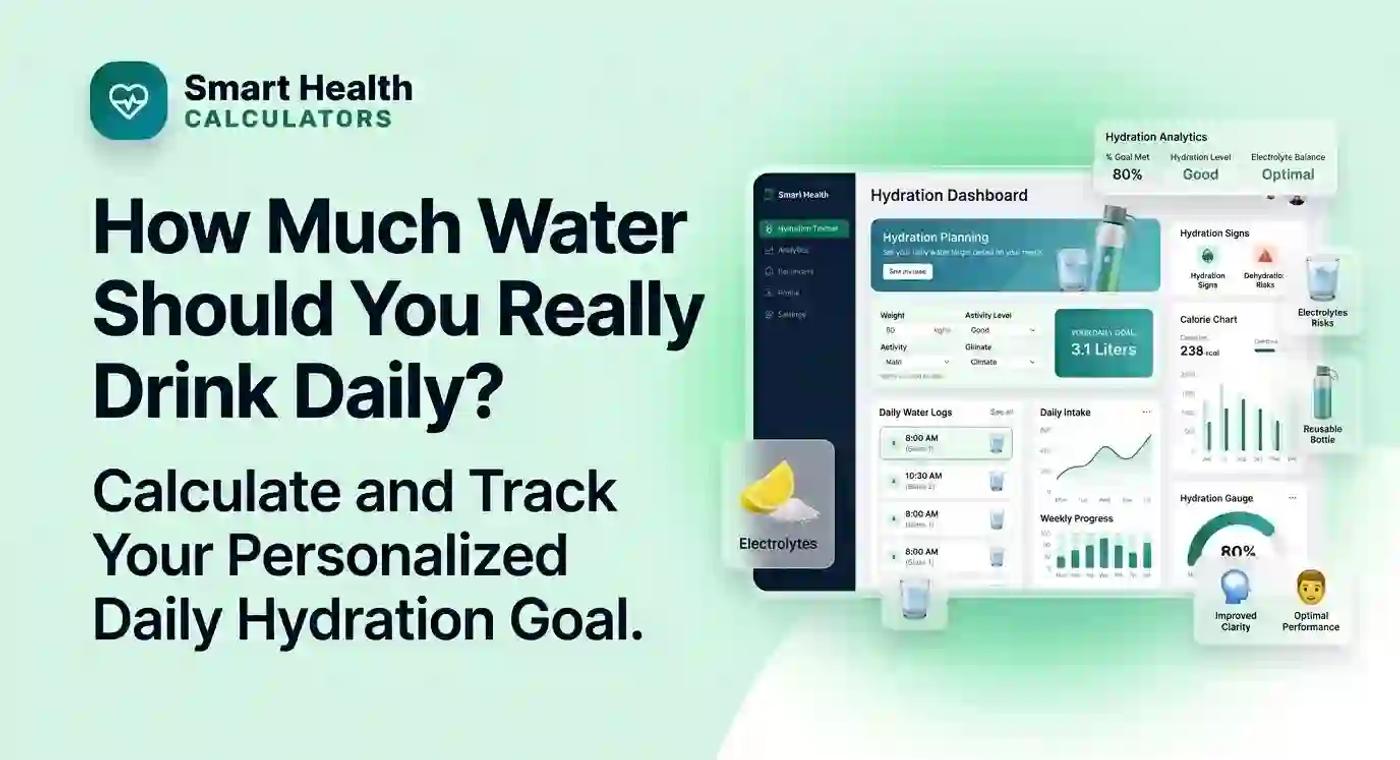
Daily Water Intake: How Much Water Do You Really Need?
How much water should you really drink each day? Discover the truth behind the 8-glass myth and find your personalized daily water intake.
Most adults need around 11.5 to 15.5 cups (2.7 to 3.7 liters) of total fluids every day, according to the National Academies of Sciences. But the real answer to "how much water should I drink daily" depends on your weight, activity level, climate, and overall health. There's no single magic number that works for everyone — and that's exactly what this guide will help you figure out.
If you've ever stood in front of the fridge wondering whether you've had enough water today, you're not alone. Hydration is one of the most searched health topics online, yet so much of the advice out there is outdated, oversimplified, or just plain wrong. This article breaks down the science, debunks the "8 glasses a day" myth, and gives you a practical, personalized way to calculate your daily water intake.
Why Daily Water Intake Actually Matters
Water isn't just a thirst-quencher. It's involved in nearly every function your body performs. Roughly 60% of your body weight is water, and it plays a role in:
- Regulating body temperature
- Lubricating joints and cushioning organs
- Transporting nutrients and oxygen to cells
- Flushing out waste through urine and sweat
- Supporting digestion and preventing constipation
- Maintaining healthy skin and cognitive function
When your fluid intake doesn't match your body's needs, even mild dehydration can affect concentration, mood, energy levels, and physical performance. A drop of just 1-2% in body water can measurably impair focus and increase fatigue.
This is why getting your daily hydration needs right isn't just a wellness trend — it's foundational to how well your body functions every single day.
The "8 Glasses a Day" Myth — Where Did It Come From?
You've probably heard the rule: drink eight 8-ounce glasses of water a day (the "8x8 rule"). It's catchy, easy to remember, and almost everywhere online. But here's the truth — there's no strong scientific study that this exact number is based on.
The recommendation likely originated from a 1945 U.S. Food and Nutrition Board suggestion, which also noted that much of that water could come from food — a detail that got lost over the decades as the rule got repeated.
In reality, water needs vary based on:
- Body weight and muscle mass
- Activity level and exercise intensity
- Climate and humidity
- Diet (how much water-rich food you eat)
- Pregnancy or breastfeeding status
- Certain health conditions
So while 8 glasses might be close enough for some people, it's not a precise or universal target.
How Much Water Should You Drink Based on Your Weight?
One of the more reliable methods for estimating water intake is based on body weight. A commonly used formula is:
Body weight (in pounds) × 0.5 to 1 ounce = daily water intake in ounces
For example:
- A 150 lb person would need roughly 75–150 ounces of water daily (about 9–18 cups)
- A 200 lb person would need roughly 100–200 ounces daily (about 12–25 cups)
If you're more active or live in a hot climate, aim for the higher end of that range. For a more accurate, personalized number based on your weight, age, and activity level, you can use a water intake calculator instead of relying on generic averages.
Recommended Water Intake by Age, Gender, and Life Stage
Hydration needs shift across different life stages. Here's a general breakdown based on guidelines from the National Academies of Sciences and other health authorities:
Adult Men
Around 15.5 cups (3.7 liters) of total fluids per day, including water from food and beverages.
Adult Women
Around 11.5 cups (2.7 liters) of total fluids per day.
Pregnant Women
Roughly 10 cups (2.3 liters) per day, increasing slightly due to higher blood volume and amniotic fluid needs.
Breastfeeding Women
Around 13 cups (3.1 liters) per day to support milk production.
Children
Needs vary by age, generally ranging from 5–8 cups depending on body size and activity. Kids are also more prone to dehydration since they often don't recognize thirst cues as quickly as adults.
Older Adults
Thirst sensation naturally declines with age, which means many seniors don't drink enough even when they need it. Caregivers should encourage regular fluid intake throughout the day rather than waiting for thirst.
If you're expecting and want to track your unique hydration and nutrition needs through pregnancy, a pregnancy calculator can help you stay on top of changing requirements trimester by trimester.
Signs You're Not Drinking Enough Water
Mild to moderate dehydration often shows up before you even feel thirsty. Watch for these common signs of dehydration:
- Dark yellow urine (light pale yellow is the goal)
- Dry mouth or lips
- Headaches
- Fatigue or low energy
- Dizziness or lightheadedness
- Reduced urine output
- Difficulty concentrating
- Dry skin
A simple, snippet-friendly way to check: glance at your urine color. Pale yellow generally means you're well hydrated. Dark yellow or amber is a signal to drink more.
Can You Drink Too Much Water?
Yes — and this is something a lot of hydration advice skips over. Drinking excessive amounts of water in a short period can lead to a condition called hyponatremia, where sodium levels in your blood become dangerously diluted.
Symptoms of overhydration include:
- Nausea and vomiting
- Headache
- Confusion
- Muscle weakness or cramps
- In severe cases, seizures
This is rare in everyday life but can happen during intense endurance events (like marathons) when people drink large volumes of plain water without replacing electrolytes. The takeaway: more water isn't always better — balance and context matter more than hitting an arbitrary number.
Does Coffee, Tea, or Other Drinks Count Toward Water Intake?
This is one of the most common hydration questions, and the answer might surprise you.
Coffee and tea do count toward your daily fluid intake. While caffeine has a mild diuretic effect, research shows that moderate coffee and tea consumption still contributes positively to overall hydration — it doesn't cancel out the fluid you're drinking.
Here's a quick breakdown:
- Coffee/tea — Counts toward hydration, in moderation
- Milk — Counts and provides hydration plus nutrients
- Sparkling/soda water — Counts the same as still water
- Juice — Counts, though added sugar should be considered
- Alcohol — Does NOT count; it actively dehydrates you
- Soda — Technically counts but isn't a healthy primary source due to sugar content
So no, you don't need to drink only plain water to stay hydrated — though water should still be your primary source since it has zero calories, sugar, or additives.
Water Intake and Exercise: What Changes?
When you work out, you lose water and electrolytes through sweat, which means your hydration needs go up. As a general guideline:
- Drink 17–20 oz of water 2–3 hours before exercise
- Drink 7–10 oz every 10–20 minutes during exercise
- Drink 16–24 oz for every pound of body weight lost through sweat after exercise
For workouts longer than 60 minutes or in hot, humid conditions, consider an electrolyte drink alongside water to replace lost sodium and potassium. If you're building a fitness routine and want to align your hydration with your training intensity, a workout planner can help you structure both your sessions and recovery needs together.
Water Intake for Weight Loss
Drinking water can support weight loss in a few practical ways:
- It can reduce appetite when consumed before meals
- It replaces high-calorie beverages like soda or juice
- It supports metabolism, especially when you're well hydrated versus dehydrated
- It helps the body process and burn stored fat more efficiently
Some studies show that drinking roughly 16 oz of water about 30 minutes before meals can modestly reduce calorie intake at that meal. While water alone won't cause significant weight loss, it's a supportive habit when paired with a balanced diet and regular activity.
To see how your hydration habits fit into your broader weight management goals, try pairing your routine with a calorie intake planner and an ideal weight calculator for a fuller picture of your health.
How Climate and Environment Affect Your Hydration Needs
Hot, humid climates increase fluid loss through sweat, even if you're not exercising. Similarly, high altitudes and dry, arid environments can increase water loss through respiration. If you live somewhere hot or are traveling to a warmer climate, increase your intake by an extra 1–2 cups per day, more if you're sweating heavily or spending long hours outdoors.
Indoor heating and air conditioning can also dry out the air and subtly increase your fluid needs, even though you might not notice the same sweat-based cues.
Hydration From Food: It Counts More Than You Think
You don't get all your water from drinking — roughly 20% of daily water intake comes from food. Water-rich foods include:
- Cucumbers (96% water)
- Watermelon (92% water)
- Strawberries (91% water)
- Lettuce (96% water)
- Oranges (87% water)
- Yogurt (85% water)
- Soups and broths
Building more of these into your meals is a simple, often-overlooked way to support your hydration without forcing down extra glasses of plain water.
A Simple Way to Track and Calculate Your Water Intake
Instead of guessing, use a structured approach to calculate your personal water needs:
- Start with your body weight in pounds
- Multiply by 0.5 (minimum) to 1 (active/hot climate) ounce per pound
- Add roughly 12 oz for every 30 minutes of exercise
- Adjust upward for hot weather, pregnancy, breastfeeding, or illness
- Subtract a small amount if you eat a lot of water-rich produce
For a faster, more precise result without doing manual math, plug your details into a water intake calculator to get a number tailored to your body and lifestyle.
Why Choose Smart Health Calculators for Your Hydration Goals
Generic hydration advice treats everyone the same — but your body isn't generic. That's why Why Choose Smart Health Calculators matters: our tools are built to give you personalized, data-driven results based on your actual weight, activity, and goals, rather than one-size-fits-all averages.
Beyond hydration, your overall health is connected — sleep, body composition, mental wellbeing, and nutrition all influence how much water your body needs and how well it uses it. That's why it's worth exploring related tools like:
- BMI Calculator to understand your body composition
- BMR Calculator to see how many calories your body burns at rest
- Body Fat Estimator for a deeper look at your physical health
- Sleep Quality Checker since poor sleep can affect hydration regulation
- Health Age Calculator to see how your habits affect your biological age
- Step Counter Goal Planner to pair activity tracking with hydration needs
- Mental Health Checker since dehydration can subtly affect mood and focus
- Diet Plan Generator to build hydration into a complete nutrition plan
Explore Advanced Tools at Smart Health Calculators to build a complete, personalized picture of your health — not just isolated numbers.
What Health Experts Say
Leading health institutions, including the Mayo Clinic and the National Academies of Sciences, Engineering, and Medicine, consistently emphasize that hydration needs are individualized rather than fixed. According to guidance reflected by the U.S. National Academies of Sciences, adequate daily fluid intake recommendations (around 3.7 liters for men and 2.7 liters for women) include water from all beverages and food — not just plain water alone.
This reinforces a central point: hydration is about total fluid balance throughout your day, not rigidly counting glasses of water.
Practical Tips to Stay Hydrated Daily
- Keep a reusable water bottle with you and refill it throughout the day
- Set reminders on your phone if you tend to forget
- Drink a glass of water first thing in the morning to rehydrate after sleep
- Add natural flavor with lemon, cucumber, or mint if plain water feels boring
- Eat more water-rich fruits and vegetables
- Monitor urine color as a quick daily hydration check
- Increase intake on workout days, hot days, or when you're unwell
Small, consistent habits matter far more than trying to chug large amounts of water all at once.
Frequently Asked Questions
Is 8 glasses of water a day enough? For many people, it's a reasonable baseline, but it's not based on strong scientific evidence and doesn't account for body weight, activity, or climate. A personalized calculation is more accurate.
How do I know if I'm dehydrated? Common signs include dark urine, dry mouth, fatigue, headaches, and dizziness. Pale yellow urine generally indicates good hydration.
Can drinking too much water be harmful? Yes, in rare cases excessive water intake can dilute sodium levels in the blood, leading to a condition called hyponatremia. This typically only occurs with very high, rapid fluid intake.
Does coffee count toward water intake? Yes. Despite its mild diuretic effect, coffee and tea still contribute positively to your daily fluid intake when consumed in moderate amounts.
How much water should I drink during exercise? A general guideline is 17–20 oz before exercise, 7–10 oz every 10–20 minutes during activity, and 16–24 oz for every pound lost through sweat afterward.
Does water intake change with age? Yes. Older adults often experience a reduced sense of thirst, which means they need to be more intentional about drinking water regularly rather than relying on thirst cues alone.
Final Thoughts
There's no single perfect number when it comes to daily water intake — but there is a smarter way to approach it than blindly following the "8 glasses a day" rule. By factoring in your body weight, activity level, climate, and life stage, you can build a hydration routine that actually fits your body's real needs.
Start by calculating your personalized hydration target, pay attention to your body's signals, and adjust as your lifestyle changes. Small, consistent habits — not perfection — are what keep you properly hydrated day after day.
Ready to get a number tailored to you? Use the water intake calculator and Book a seat at Advance Tools offered by Free Convertors to take the next step toward smarter, data-driven health decisions.
Medical Disclaimer
This article is for general education only. It is not medical advice, diagnosis, treatment, prescription guidance, or a replacement for professional healthcare. Speak with a qualified healthcare professional for personal medical concerns, symptoms, pregnancy concerns, mental health crisis, medication questions, or before making major health changes.