Magnesium for Sleep: Does It Really Work? (2026)
Does magnesium help you sleep? Learn the evidence, best types, dosage, timing, side effects, and who should avoid magnesium supplements.
Magnesium supplements have become one of the most recommended "natural" sleep aids on social media, often framed as a guaranteed fix for restless nights. The actual research tells a more nuanced story: some evidence supports a modest benefit, particularly for people who are genuinely deficient, but the effect isn't as universal or dramatic as wellness content often suggests.
This guide walks through what the current research actually shows, which forms of magnesium are worth considering, realistic dosage ranges based on NIH guidance, and who should be cautious before adding it to their nightly routine.
Does Magnesium Actually Help You Fall Asleep Faster?
It depends on why you're not sleeping well in the first place. A large study examining dietary magnesium intake found it was associated with self-reported short sleep duration, but magnesium supplementation itself was not associated with either sleep duration or sleep disorders in that same dataset. Meanwhile, smaller randomized controlled trials on specific magnesium forms, particularly magnesium bisglycinate, have shown more promising results for self-reported sleep quality, though researchers note that future studies need objective sleep assessments, longer intervention periods, and better identification of who actually responds well to it.
In plain terms: magnesium isn't a proven sleep drug the way melatonin or prescription sleep medications are studied to be, but it isn't snake oil either. It appears to help some people meaningfully, particularly those with an existing magnesium shortfall or high stress-related muscle tension, while doing little for people who are already sleeping poorly for unrelated reasons like screen exposure or an irregular schedule.
How Magnesium Is Thought to Affect Sleep
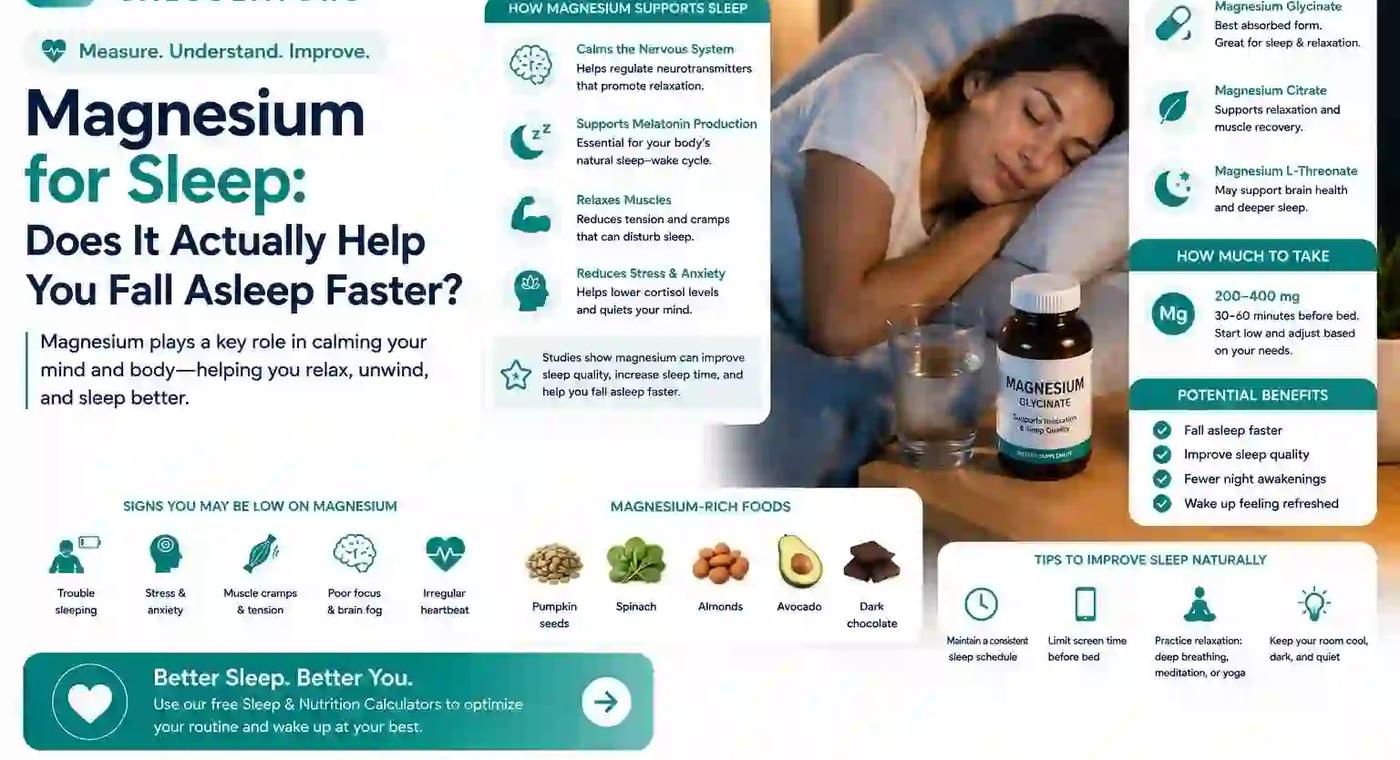
Magnesium's proposed connection to sleep comes down to a few overlapping mechanisms rather than one single pathway:
- GABA receptor activity: Magnesium is believed to support GABA, the neurotransmitter responsible for calming nervous system activity, which may help ease the transition into sleep.
- Muscle relaxation: Magnesium plays a role in muscle function, and adequate levels may reduce the kind of physical tension or restlessness that keeps some people awake.
- Cortisol regulation: Some research suggests magnesium may help blunt the stress hormone response, which matters since elevated cortisol at bedtime is a well-documented disruptor of sleep onset.
None of these mechanisms are unique or overwhelming on their own, which is part of why the clinical evidence remains mixed rather than conclusive.
Types of Magnesium for Sleep: Which One Actually Matters
Not all magnesium supplements are equal, and the form matters more than most product marketing suggests, particularly for how much elemental magnesium you're actually getting and how well your body tolerates it.
| Type | Absorption | Common Use | Sleep-Specific Notes |
|---|---|---|---|
| Magnesium Glycinate | High | General supplementation, sleep, anxiety | Well-tolerated, low GI side effects, most commonly studied for sleep |
| Magnesium Citrate | Moderate-High | Constipation, general use | Can have a laxative effect at higher doses |
| Magnesium Oxide | Low | Budget supplements | Poor absorption, more likely to cause GI discomfort |
| Magnesium Threonate | Emerging research | Cognitive function, sleep | Promising early research specifically for brain-related effects, though evidence is still developing |
A critical detail most people miss: the milligram number on a supplement bottle usually refers to the total weight of the compound, not the actual elemental magnesium inside it. This means 500mg of magnesium glycinate delivers roughly 70mg of actual elemental magnesium, while 500mg of magnesium oxide delivers closer to 300mg elemental — a substantial difference that affects both effectiveness and how close you are to recommended limits.
How Much Magnesium Should You Take for Sleep?
The NIH Office of Dietary Supplements sets the Recommended Dietary Allowance for magnesium at 310–420mg per day for adults, depending on age and sex, and this figure includes magnesium from all sources — food, beverages, and supplements combined.
For supplemental magnesium specifically (separate from food), the Tolerable Upper Intake Level is set at 350mg of elemental magnesium per day for adults. This ceiling applies only to magnesium from supplements and medications, not magnesium naturally occurring in food, since dietary magnesium hasn't been shown to cause the same side effects even at higher intakes.
| Age/Sex Group | RDA (all sources) | Supplemental UL |
|---|---|---|
| Men, 19–30 | 400mg | 350mg |
| Men, 31+ | 420mg | 350mg |
| Women, 19–30 | 310mg | 350mg |
| Women, 31+ | 320mg | 350mg |
For reference, clinical trials studying magnesium for sleep have generally used doses in the 320–500mg range, though the exact elemental amount varied depending on which form was used. This is a good illustration of why checking elemental magnesium content on the label, not just the total compound weight, matters more than picking a round number.
When Should You Take Magnesium Before Bed?
Most people take magnesium 30 minutes to an hour before bed, aligning with when its calming effects are believed to be most useful for sleep onset rather than general daytime supplementation. That said, there's no strong clinical evidence establishing one precise optimal timing window — consistency in taking it nightly appears to matter more than hitting an exact time.
How Long Does Magnesium Take to Work for Sleep?
The clinical trials that have shown benefit generally ran for 7 to 8 weeks of consistent nightly use before evaluating results, rather than measuring effects after a single dose. This is an important expectation to set: magnesium is not a fast-acting sedative like some over-the-counter sleep aids, and judging it after just a few nights likely won't reflect its real effect, if any exists for you personally.
Magnesium vs. Melatonin: Which Is Better for Sleep?
These two supplements work through entirely different mechanisms and aren't really direct competitors. Melatonin signals your body's circadian rhythm that it's time to sleep, making it more directly useful for issues like jet lag or a shifted sleep schedule. Magnesium, by contrast, is thought to work more on relaxation and nervous system calming rather than circadian signaling, which may make it more relevant if racing thoughts, tension, or stress are what's keeping you up rather than a misaligned sleep-wake schedule. Some people do combine the two, though you should introduce them one at a time to gauge individual effects before combining.
Can You Take Magnesium Every Night?
For most healthy adults staying within the recommended supplemental limit, nightly magnesium use appears reasonably safe based on current trial data, which generally did not report safety problems over 7–8 week nightly dosing periods in the adult populations studied. That said, "generally safe in trials" isn't the same as risk-free for everyone, particularly people with kidney impairment, where the body has a harder time clearing excess magnesium.
What Are the Side Effects of Taking Magnesium for Sleep?
The NIH notes that excess magnesium from supplements can cause diarrhea, and in rare cases involving impaired kidney function, more serious toxicity. Milder, more common side effects at higher doses include nausea and stomach discomfort, particularly with less-absorbable forms like magnesium oxide or higher doses of magnesium citrate.
Does Magnesium Deficiency Affect Sleep Quality?
This appears to be where magnesium's sleep benefit is most likely to show up meaningfully — for people who are actually deficient rather than already sufficient. If your baseline magnesium status is adequate, additional supplementation is less likely to produce a noticeable sleep improvement, which may partly explain why population-level studies show weaker overall effects than individual small trials in specific populations.
Common signs associated with low magnesium status include muscle cramps, fatigue, and in some cases restless leg symptoms, though these aren't exclusively caused by magnesium deficiency and shouldn't be self-diagnosed without other context. If you suspect ongoing sleep issues might be connected to broader lifestyle or stress factors rather than a specific nutrient, our guide on how stress affects sleep quality covers a wider range of contributing factors worth ruling out first.
Magnesium for Sleep During Pregnancy or in Older Adults
Both of these populations warrant extra caution rather than self-directed supplementation. Magnesium needs and safe upper limits can differ during pregnancy, and older adults are more likely to be on medications — such as diuretics or proton pump inhibitors — that can affect magnesium status, or medications like certain antibiotics that magnesium can interact with directly. A healthcare provider should be involved in any decision to supplement in either of these groups rather than relying on general dosage guidance.
Who Should Be Cautious or Avoid Magnesium Supplements
- People with kidney disease, since impaired kidney function reduces the ability to clear excess magnesium, raising toxicity risk
- Anyone on regular diuretics, proton pump inhibitors, or specific antibiotics (tetracyclines, quinolones), since these can interact with or be affected by magnesium
- People taking oral bisphosphonates or levothyroxine, since magnesium can interfere with absorption of these medications if taken too close together
- Pregnant individuals, who should consult a healthcare provider before starting any new supplement routine
Magnesium-Rich Foods for Better Sleep
For people without a diagnosed deficiency, increasing dietary magnesium intake is a reasonable lower-risk starting point before considering supplements, since food-based magnesium hasn't been linked to the same side effect profile as high-dose supplementation:
- Leafy greens like spinach and Swiss chard
- Nuts and seeds, particularly almonds and pumpkin seeds
- Legumes, including black beans and edamame
- Whole grains
- Dark chocolate (in moderation)
Frequently Asked Questions
Does magnesium actually help you fall asleep faster? The evidence is mixed rather than conclusive. Some smaller trials show a modest benefit, particularly for people who are magnesium deficient, while larger population studies haven't found a clear association between supplementation and improved sleep duration.
What is the best type of magnesium for sleep? Magnesium glycinate is the most commonly studied and well-tolerated form for sleep, though magnesium threonate shows emerging promise in early research.
How much magnesium should I take for sleep? The NIH sets the Tolerable Upper Intake Level for supplemental magnesium at 350mg of elemental magnesium per day for adults, though clinical trials on sleep have generally used doses in the 320–500mg range depending on the form used.
When should I take magnesium before bed? Most people take it 30 minutes to an hour before bed, though no strong evidence establishes one precise optimal timing window.
Is magnesium better than melatonin for sleep? They work differently — melatonin targets circadian rhythm signaling, while magnesium is thought to support relaxation and nervous system calming, making each potentially more useful for different underlying causes of poor sleep.
How long does magnesium take to work for sleep? Clinical trials showing benefit generally used 7 to 8 weeks of consistent nightly use before evaluating results, rather than expecting immediate effects.
Can you take magnesium every night? For most healthy adults within the recommended supplemental limit, nightly use appears reasonably safe based on current trial data, though people with kidney issues or those on certain medications should consult a healthcare provider first.
What are the side effects of taking magnesium for sleep? The most common side effects at higher doses are diarrhea and stomach discomfort, with rare but serious toxicity risk in people with impaired kidney function.
Final Takeaway
Magnesium isn't a proven, universal sleep fix, but it also isn't unfounded — the honest picture is that it may genuinely help people who are deficient or dealing with stress-related tension, while offering little for those whose sleep issues stem from other causes entirely. If you're considering it, choose a well-absorbed form like glycinate, stay within the 350mg elemental supplemental limit, give it a full 7-8 week trial rather than judging it after a few nights, and check with a healthcare provider first if you have kidney issues or take regular medications.
If magnesium doesn't move the needle for you, it's worth looking at the bigger picture of your sleep habits — our Sleep Quality Checker can help identify other contributing factors, and our guide on signs of poor sleep quality covers what else might be worth addressing beyond supplementation alone.
For official, detailed guidance on magnesium intake, upper limits, and medication interactions, see the NIH Office of Dietary Supplements Magnesium Fact Sheet. This article is for informational purposes and isn't a substitute for personalized medical advice.
Medical Disclaimer
This article is for general education only. It is not medical advice, diagnosis, treatment, prescription guidance, or a replacement for professional healthcare. Speak with a qualified healthcare professional for personal medical concerns, symptoms, pregnancy concerns, mental health crisis, medication questions, or before making major health changes.