Morning Routine: Sleep, Water, Steps & Stress Tips
Build a healthy morning routine that boosts energy, lowers stress & improves sleep. Simple, science-backed steps you can start tomorrow.
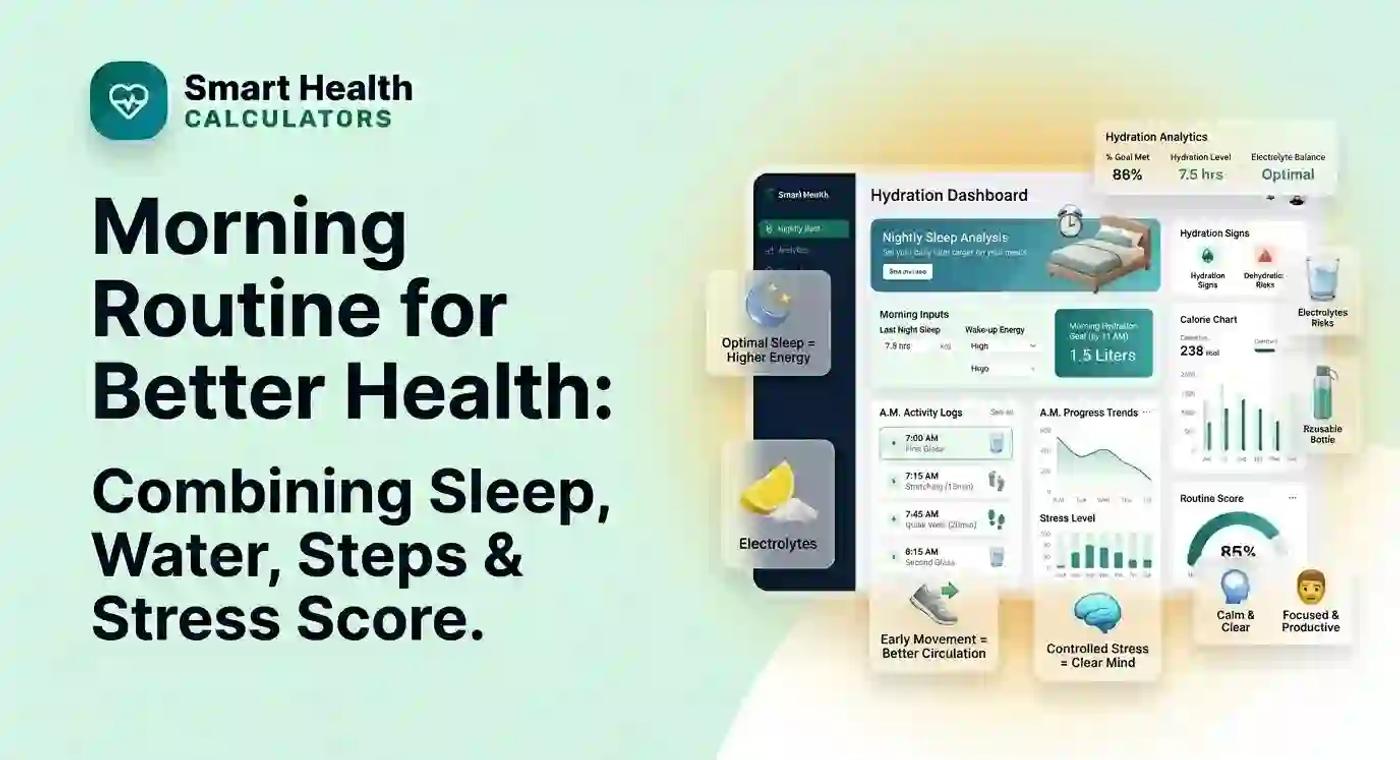
Most people wake up and reach for their phone before they even open their eyes. It's a small habit, but it sets the tone for the entire day. If you've ever wondered why some mornings leave you energized while others leave you dragging by 10 a.m., the answer usually comes down to four things: sleep, water, steps, and stress score. These four pillars work together like gears in a machine. When one is off, the rest struggle to keep up.
This guide breaks down a science-backed, easy-to-follow morning routine that blends these four elements into a simple daily habit. Whether you're a busy professional, a student, or someone just trying to feel less tired, this routine is built to fit real life — not just Instagram aesthetics.
What Is a Morning Routine for Better Health?
A morning routine for better health is a structured sequence of habits performed shortly after waking up that supports your sleep recovery, hydration, physical movement, and stress regulation. Unlike generic "wake up early and meditate" advice, a health-focused morning routine is built around measurable wellness markers — your sleep score, hydration levels, daily step count, and stress score from wearable devices like Oura, Whoop, Fitbit, or Garmin.
In simple terms, it's the bridge between how you slept and how you'll perform for the rest of the day.
Why a Healthy Morning Routine Matters
Your body doesn't reset to zero overnight. What happens in your first 30–60 minutes awake directly influences your cortisol levels, blood sugar, mental clarity, and even your mood for hours afterward.
Here's why this matters more than most people realize:
- Cortisol Awakening Response (CAR): Cortisol naturally spikes 30–45 minutes after waking. A good morning routine works with this spike instead of against it.
- Sleep debt accumulates silently. Missing even one hour of sleep repeatedly creates a deficit that hydration and movement can partially offset — but not fully replace.
- Hydration affects metabolism within minutes. Your body loses water overnight through breathing and sweat, and rehydrating quickly supports better digestion and energy.
- Movement lowers stress score faster than rest does. Light walking in the morning has been shown to reduce next-day stress readings on most wearable trackers.
If you're someone who tracks your health with a wearable, you've probably noticed your stress score climbing on days when you skip water, skip movement, or had poor sleep. That's not a coincidence — it's biology.
The Four Pillars of a Health-Optimized Morning Routine
1. Sleep: The Foundation You Can't Skip
Before talking about what to do in the morning, it's worth understanding that your morning routine actually starts the night before. Poor sleep quality and sleep cycle disruption are the number one reason morning routines fail.
Key sleep habits that improve your morning:
- Keep a consistent wake-up time, even on weekends.
- Avoid screens 30 minutes before bed to reduce blue light disruption.
- Track your sleep score using a wearable or app to understand your sleep cycle patterns.
- Aim for 7–9 hours, since sleep debt compounds over just a few nights.
If you're unsure whether your sleep is actually restorative, a quick way to check is through a sleep quality checker, which gives you a clearer picture of your sleep cycle stages, not just total hours.
2. Water: Rehydrate Before You Caffeinate
After 7–8 hours without water, your body is mildly dehydrated by the time you wake up. This affects cognitive function, energy, and even your morning mood.
How much water should you drink when you wake up? Most health experts recommend 16–20 oz (roughly 500ml) of water within the first 30 minutes of waking, before coffee or tea.
Why morning hydration matters:
- Supports metabolism and digestion
- Helps regulate blood sugar levels
- Reduces morning grogginess
- Supports gut health, especially when paired with warm water or lemon water
If you're someone juggling multiple health goals like weight loss or muscle gain, your hydration needs may differ. A water intake calculator can help you personalize this number based on your weight, activity level, and climate.
3. Steps: Movement Before Screens
You don't need a full workout first thing in the morning — though it helps. Even 10–15 minutes of walking can:
- Lower cortisol spikes
- Improve circulation
- Boost mental clarity for the day ahead
- Support a lower resting heart rate over time
How many steps should I walk in the morning for health? A simple benchmark is 1,500–2,500 steps in the morning, which is roughly 10–20 minutes of light walking. This isn't about hitting 10,000 steps before breakfast — it's about activating your body and signaling to your nervous system that the day has begun.
If you want a structured approach, a step counter goal planner can help you set realistic daily step targets based on your fitness level and schedule.
4. Stress Score: The Modern Health Metric
Stress score is one of the newer additions to morning health tracking, popularized by wearables like Garmin, Fitbit, and Whoop. It's calculated using a combination of heart rate variability (HRV), resting heart rate, and sleep quality.
What is a good stress score on a fitness tracker? Generally, a stress score between 0–25 is considered "resting" or low stress, 26–50 is "normal," and anything consistently above 75 suggests your body hasn't recovered properly — often linked to poor sleep or dehydration the night before.
How morning habits lower your stress score:
- Drinking water first thing reduces physiological stress signals
- Morning sunlight exposure helps regulate circadian rhythm, which stabilizes cortisol
- Light movement activates the parasympathetic nervous system (rest-and-digest mode)
- Avoiding immediate phone/email checking reduces cognitive stress load
Sample Morning Routine: Combining All Four Pillars
Here's a practical, time-based example you can adapt:
- 6:00 AM – Wake up consistently (same time daily, even weekends)
- 6:02 AM – Drink 500ml of water before anything else
- 6:05 AM – Get 5–10 minutes of natural sunlight (step outside or open curtains)
- 6:10 AM – Light stretching or mobility routine (5 minutes)
- 6:15 AM – 15–20 minute walk (outdoors if possible)
- 6:35 AM – Check sleep score and stress score on your wearable app
- 6:40 AM – Light breakfast or protein-based snack
- 6:50 AM – Begin your day (work, study, family routine)
This entire routine takes under an hour and directly targets all four health pillars without requiring drastic lifestyle changes.
How to Build a Morning Routine That Actually Sticks
Most morning routines fail not because they're wrong, but because they're too ambitious from day one. Here's how to make yours sustainable:
- Start with one habit at a time. Add water first, then movement, then sleep tracking.
- Track progress weekly, not daily. Stress scores and sleep scores fluctuate; look at trends.
- Use tools instead of guesswork. A calorie intake planner or diet plan generator can help align your morning nutrition with your overall health goals.
- Adjust for your body type. Use a body fat estimator or ideal weight calculator to understand what "healthy" looks like specifically for you, rather than following generic advice.
- Be season and climate aware. In hotter regions, hydration needs increase; in colder months, morning sunlight exposure becomes more important for mood and circadian regulation.
Morning Routine vs Night Routine: Which Matters More?
This is a common question, and the honest answer is: they're connected, not competing.
Your night routine determines your sleep score, which directly affects your morning stress score. Your morning routine then determines how well you recover from the previous night and how your body performs for the next 12–16 hours. Neglecting either one creates a cycle — poor sleep leads to poor mornings, which leads to poor sleep again.
Why Choose Smart Health Calculators for Your Morning Routine Journey
Building a morning routine based on real data — not guesswork — is what separates a habit that sticks from one that fades after a week. Smart Health Calculators offers a full suite of free tools designed specifically to personalize your health journey, including:
- A BMI calculator to understand your baseline health status
- A BMR calculator to know your daily calorie burn at rest
- A health age calculator to see how your habits are affecting your biological age
- A mental health checker to track stress and emotional wellbeing alongside physical metrics
- A workout planner to structure movement beyond just morning walks
Instead of relying on generic advice, these tools let you build a routine based on your actual body, lifestyle, and goals.
Real-World Example: A Working Professional's Transformation
Consider a typical case — a 32-year-old office worker who frequently woke up with a stress score above 70 on their wearable. After adjusting their morning routine to include 500ml of water immediately upon waking, a 15-minute walk before work, and consistent sleep tracking, their average stress score dropped to the 35–40 range within three weeks. Their reported energy levels and afternoon focus also improved significantly — a pattern commonly seen when hydration and movement are added consistently to mornings.
This isn't an isolated case. According to research published by the CDC on physical activity guidelines, even short bouts of moderate activity like brisk walking are associated with measurable reductions in stress and improved cardiovascular health over time. The key isn't intensity — it's consistency.
Future of Morning Routines: AI and Wearable Integration
Morning routines in 2026 and beyond are increasingly shaped by AI-powered wearables that don't just track data but actively suggest adjustments. Devices now combine sleep score, HRV, and stress score into a single "readiness" rating, telling users whether to push hard or recover that day.
This shift means morning routines are no longer one-size-fits-all. They're becoming dynamic — adjusting based on yesterday's sleep, today's stress score, and even weather or seasonal factors. For anyone serious about long-term health, learning to read and respond to these metrics is quickly becoming as important as the habits themselves.
Frequently Asked Questions
What is the best morning routine for better health? The best morning routine combines four core habits: rehydrating with water immediately after waking, getting natural sunlight exposure, light movement like a 15–20 minute walk, and checking your sleep and stress scores to guide the rest of your day.
How much water should you drink when you wake up? Most experts recommend 16–20 oz (about 500ml) of water within 30 minutes of waking, before consuming coffee or tea, to support hydration and metabolism.
How many steps a day is healthy? While 7,000–10,000 steps daily is a common overall target, even 1,500–2,500 steps in the morning alone can meaningfully reduce stress and improve circulation.
What is a good stress score on Oura, Whoop, or Garmin? A stress score between 0–25 typically indicates a resting state, 26–50 is considered normal daily stress, and consistent scores above 75 often signal poor recovery, usually linked to inadequate sleep or dehydration.
Does drinking water first thing boost metabolism? Yes. Rehydrating after waking supports digestive function and has been linked to a temporary boost in metabolic rate, particularly when consumed before food or caffeine.
Can morning walks reduce stress and improve sleep? Yes. Morning walks help regulate circadian rhythm through natural light exposure and lower cortisol levels, which in turn supports more consistent sleep patterns at night.
Conclusion: Start Small, Stay Consistent
A better morning routine doesn't require waking up at 4 a.m. or following a 10-step ritual copied from a billionaire's interview. It requires understanding four simple pillars — sleep, water, steps, and stress score — and building habits around them consistently.
Start with one change this week. Drink water before your phone. Walk before your inbox. Track your stress score instead of ignoring it. Small, consistent shifts compound into real health improvements over time.
Ready to personalize your routine based on real data instead of guesswork? Explore Advanced Tools at Smart Health Calculators and take the next step toward a healthier, more energized morning — starting tomorrow.
Medical Disclaimer
This article is for general education only. It is not medical advice, diagnosis, treatment, prescription guidance, or a replacement for professional healthcare. Speak with a qualified healthcare professional for personal medical concerns, symptoms, pregnancy concerns, mental health crisis, medication questions, or before making major health changes.