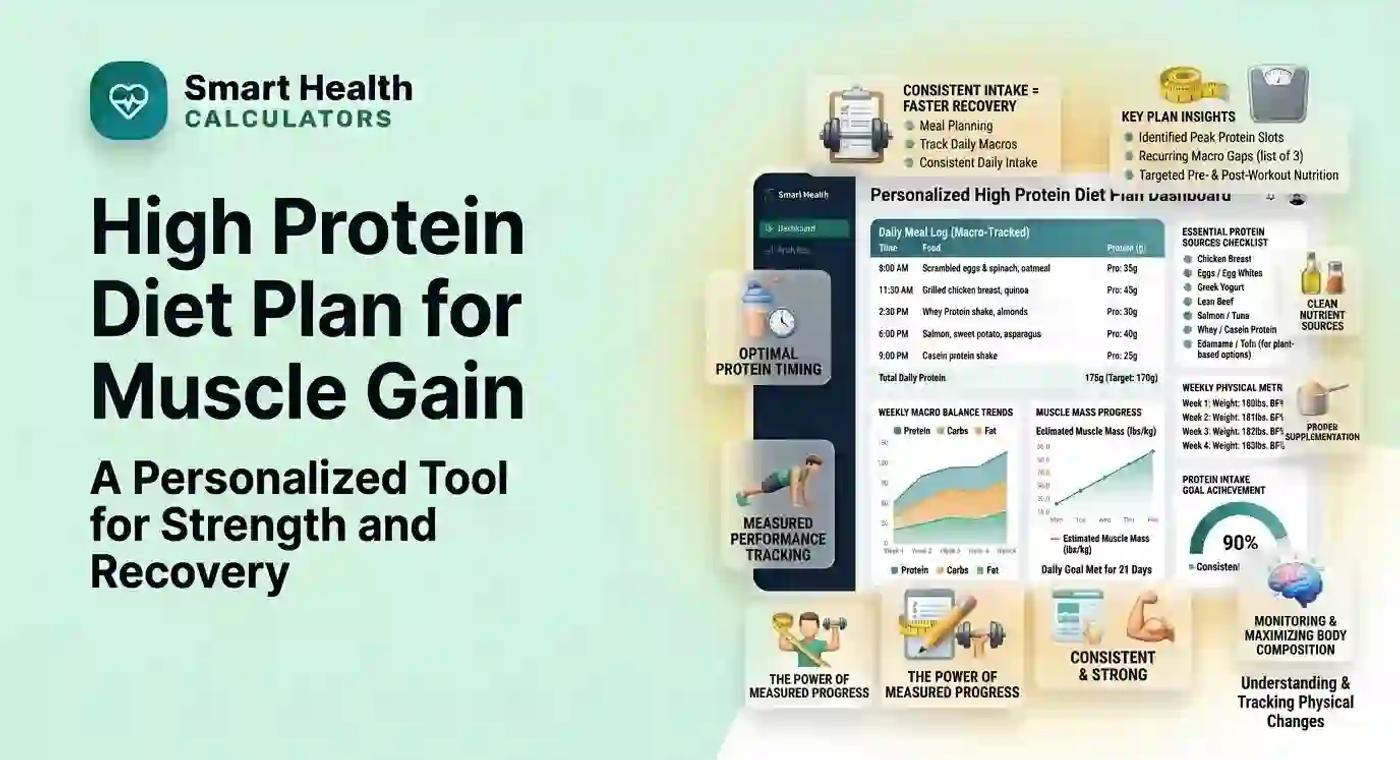
High Protein Diet Plan for Muscle Gain
How much protein do you really need to build muscle? Discover the ideal high protein diet plan, sample meals & science-backed tips inside.
If you've been hitting the gym consistently but still don't see the muscle growth you're expecting, the problem might not be your workout — it might be your plate. Muscle isn't built in the gym alone; it's built through consistent training combined with the right nutrition, and protein sits right at the center of that equation.
A high protein diet plan for muscle gain generally means eating around 1.6 to 2.2 grams of protein per kilogram of body weight daily, spread across 4–5 meals, alongside a modest calorie surplus and consistent resistance training. That's the short answer. But knowing the number isn't enough — you need to understand which foods to eat, how to time your meals, and how to avoid common mistakes that stall progress.
In this guide, we'll break down exactly how to build a high protein diet that actually works, whether you're a complete beginner or someone who's plateaued despite months of effort.
What Is a High Protein Diet for Muscle Building?
A high protein diet for muscle building is an eating pattern where protein makes up a larger-than-average share of your daily calories — typically 25–35% of total intake — to support muscle protein synthesis, the biological process your body uses to repair and grow muscle tissue after training.
Unlike general "healthy eating," this approach is specifically structured around three pillars:
- Enough protein to supply amino acids for muscle repair
- A calorie surplus (or at least maintenance) to give your body the energy to build new tissue
- Consistent resistance training that signals your body to actually use that protein for muscle growth
Without training, extra protein alone won't build muscle. And without enough protein, even the best workout program will struggle to produce visible results.
Why Protein Matters So Much for Muscle Growth
When you lift weights, you create tiny amounts of damage in your muscle fibers. Your body repairs this damage during rest, and over time, this repair process makes the muscle slightly bigger and stronger — a process called muscle hypertrophy.
Protein provides the amino acids your body needs to carry out this repair. Without adequate protein intake for muscle gain, your body simply doesn't have the raw materials to rebuild bigger, stronger muscle fibers, no matter how hard you train.
This is backed by long-standing nutrition science. According to dietary guidelines from health authorities like the USDA's Dietary Guidelines for Americans, active individuals — especially those doing resistance training — require more protein than sedentary people to support muscle repair and growth.
How Much Protein Do You Need to Build Muscle?
This is the question everyone asks first, and thankfully, research gives us a fairly clear range.
For muscle gain, most evidence-based recommendations suggest:
- 1.6–2.2 grams of protein per kg of body weight per day for people actively strength training
- 0.7–1.0 grams per pound of body weight if you prefer measuring in pounds
For example, someone weighing 70 kg (about 154 lbs) would aim for roughly 112–154 grams of protein per day, spread across multiple meals rather than consumed in one sitting.
Going significantly above this range doesn't necessarily speed up muscle growth further — your body can only use so much protein for muscle repair at a time. The rest gets used for energy or stored, which is why very high intakes beyond 2.2g/kg rarely provide extra benefit for most people.
If you want a personalized daily target based on your weight, activity level, and goals, our free Calorie Intake Planner can help you calculate a starting point tailored to you.
Calorie Surplus: The Often-Overlooked Piece
Protein alone won't build muscle if you're not eating enough overall. To gain muscle, your body needs extra energy — this is called a calorie surplus for muscle gain, typically an extra 250–500 calories above your maintenance level per day.
Eating in a surplus that's too small can slow muscle growth, while eating in a surplus that's too large often leads to excess fat gain instead of lean muscle. This is the classic difference between a "clean bulk" and a "dirty bulk" — a clean bulk keeps the surplus moderate and food choices nutrient-dense, while a dirty bulk allows for a much larger surplus with less attention to food quality, often resulting in more fat gain alongside muscle.
To figure out your maintenance calories and how much of a surplus makes sense for your body, our BMR Calculator is a great starting point — it estimates how many calories your body burns at rest, which is the foundation for building an accurate surplus.
Best High Protein Foods for Muscle Growth
Not all protein sources are created equal. Some provide all essential amino acids (complete proteins), while others need to be combined with other foods to provide the full amino acid profile your body needs.
Animal-Based Protein Sources
- Chicken breast (31g protein per 100g)
- Eggs (6g protein per egg)
- Greek yogurt (10g protein per 100g)
- Salmon and other fatty fish (20–25g per 100g)
- Lean beef (26g protein per 100g)
- Cottage cheese (11g protein per 100g)
Plant-Based Protein Sources
- Lentils (9g protein per 100g cooked)
- Chickpeas (8g protein per 100g cooked)
- Tofu and tempeh (12–19g per 100g)
- Quinoa (4g protein per 100g cooked, plus complete amino acid profile)
- Peanut butter (25g protein per 100g)
- Edamame (11g protein per 100g)
Protein Supplements
- Whey protein (fast-digesting, ideal post-workout)
- Casein protein (slow-digesting, good before bed)
- Plant-based protein powders (pea, rice, or blended sources for vegans)
A common debate is whey protein vs whole food protein — and the honest answer is both work well. Whole foods provide additional nutrients like fiber, vitamins, and healthy fats, while protein shakes offer convenience, especially right after a workout when you may not feel like eating a full meal.
Sample High Protein Meal Plan for Muscle Gain
Here's a simple, practical example based on a target of roughly 140–150 grams of protein per day. Adjust portions based on your own calculated needs.
Here's my go-to high protein meal plan for muscle gain — Breakfast: 3 eggs + Greek yogurt (32g), Snack: whey shake + banana (25g), Lunch: grilled chicken + rice + veggies (35g), Pre-workout: peanut butter toast + milk (15g), Post-workout: shake + oats (25g), Dinner: salmon + quinoa + salad (28g). Total: ~160g protein a day — consistency over perfection.
This is just one example — a high protein vegetarian diet or high protein vegan diet can hit the same targets using tofu, lentils, chickpeas, and plant-based protein powders instead of meat and dairy.
Protein Timing: Does It Really Matter?
There's a lot of debate around protein timing for muscle growth — specifically, whether you need to eat protein immediately after a workout for it to "count."
The current consensus is more relaxed than older bodybuilding myths suggested. What matters most is your total daily protein intake, not hitting a narrow post-workout window. That said, spreading protein across 4–5 meals throughout the day (rather than one or two large meals) does appear to support muscle protein synthesis slightly better, since your body can only utilize a certain amount of protein for muscle repair at any given time — generally around 20–40 grams per meal.
Eating a protein-rich meal or shake within a couple of hours after training is still a good practice, but it doesn't have to be immediate to be effective.
Common Mistakes People Make on a High Protein Diet
Even with good intentions, plenty of people struggle to see results. Here are the most common issues:
- Not eating enough overall calories — protein without a surplus (or at least maintenance) limits muscle growth
- Inconsistent training — diet supports growth, but resistance training triggers it
- Ignoring carbs and fats — both play supporting roles in energy and hormone production
- Poor hydration — protein metabolism relies on adequate water intake, which also supports overall recovery
- Unrealistic expectations — natural muscle gain is slow, often just 0.5–1 kg of lean mass per month for most people
Staying hydrated is more connected to muscle recovery than most people realize. If you're unsure how much water you should be drinking daily, our Water Intake Calculator can help you find a target based on your body weight and activity level.
High Protein Diet for Vegetarians and Vegans
Building muscle on a plant-based diet is absolutely achievable — it just requires a bit more planning to make sure you're getting complete proteins and enough total volume.
Focus on combining protein sources across the day: rice with lentils, whole grain bread with peanut butter, or a blended smoothie with plant protein powder, oats, and nut butter. Soy-based products like tofu and tempeh are particularly valuable since they're complete proteins, offering all essential amino acids in a plant-based package.
How This Fits Into Your Bigger Fitness Plan
Diet and training work together, not separately. If you're building a high protein diet plan for muscle gain but don't have a structured training routine yet, pairing it with our Workout Planner can help you build a consistent resistance training schedule that actually uses the extra protein and calories you're eating.
It's also worth tracking your progress over time — not just on the scale, but in terms of body composition. Our Body Fat Estimator gives you a clearer picture of whether your gains are coming from muscle or simply overall weight increase.
And if your current approach genuinely isn't working despite consistent effort, it's worth reading our breakdown of why your diet might not be working — small, overlooked factors often make a bigger difference than people expect.
Why Choose Smart Health Calculators
Building a high protein diet plan shouldn't involve guesswork. At Smart Health Calculators, every recommendation is grounded in practical, evidence-based nutrition principles — not fad diet trends. Our free tools are designed to give you personalized numbers instead of generic advice, so you can build a plan that actually fits your body, your goals, and your lifestyle.
Whether you're just starting out or fine-tuning an existing routine, explore our full collection of health and fitness tools to calculate your calorie needs, track your progress, and build a plan that's actually built around you.
FAQs About High Protein Diets for Muscle Gain
How much protein do I need daily to build muscle? Most active individuals need 1.6–2.2 grams of protein per kilogram of body weight daily. For a 70kg person, that's roughly 112–154 grams spread across 4–5 meals for best results.
What foods are highest in protein for muscle gain? Chicken breast, eggs, Greek yogurt, lentils, tofu, salmon, and cottage cheese are among the highest protein foods available, offering both quality and convenience for daily meal planning.
Can I build muscle without eating meat? Yes. A well-planned high protein vegetarian or vegan diet using tofu, lentils, chickpeas, quinoa, and plant-based protein powders can absolutely support muscle growth when combined with resistance training.
Is too much protein bad for muscle gain? Excess protein beyond your body's needs won't speed up muscle growth further — it's simply used for energy or stored. For most healthy individuals, staying within the 1.6–2.2g/kg range is sufficient and effective.
How many meals a day should I eat to build muscle? Spreading protein across 4–5 meals daily tends to support muscle protein synthesis better than eating it all in one or two large meals, since your body processes protein for muscle repair in smaller, regular doses.
Do I need protein supplements to build muscle? No, supplements aren't required if you can meet your protein targets through whole foods. However, protein shakes offer a convenient way to hit your numbers, especially around workouts or busy days.
Final Thoughts
A high protein diet plan for muscle gain isn't about extreme restriction or expensive supplements — it's about consistency. Hit your daily protein target, eat in a modest calorie surplus, train with resistance consistently, and give your body time to adapt. Muscle growth is a slow, steady process, and the people who see the best results are usually the ones who stick with the basics longer than everyone else gives up.
Ready to build your personalized plan? Use our free Diet Plan Generator to calculate your ideal protein, calorie, and macro targets based on your body and goals — no guesswork required.
Disclaimer: This article is intended for general informational purposes and does not replace personalized medical or nutritional advice. If you have underlying health conditions or specific dietary concerns, please consult a registered dietitian or healthcare provider before making significant changes to your diet.
Medical Disclaimer
This article is for general education only. It is not medical advice, diagnosis, treatment, prescription guidance, or a replacement for professional healthcare. Speak with a qualified healthcare professional for personal medical concerns, symptoms, pregnancy concerns, mental health crisis, medication questions, or before making major health changes.