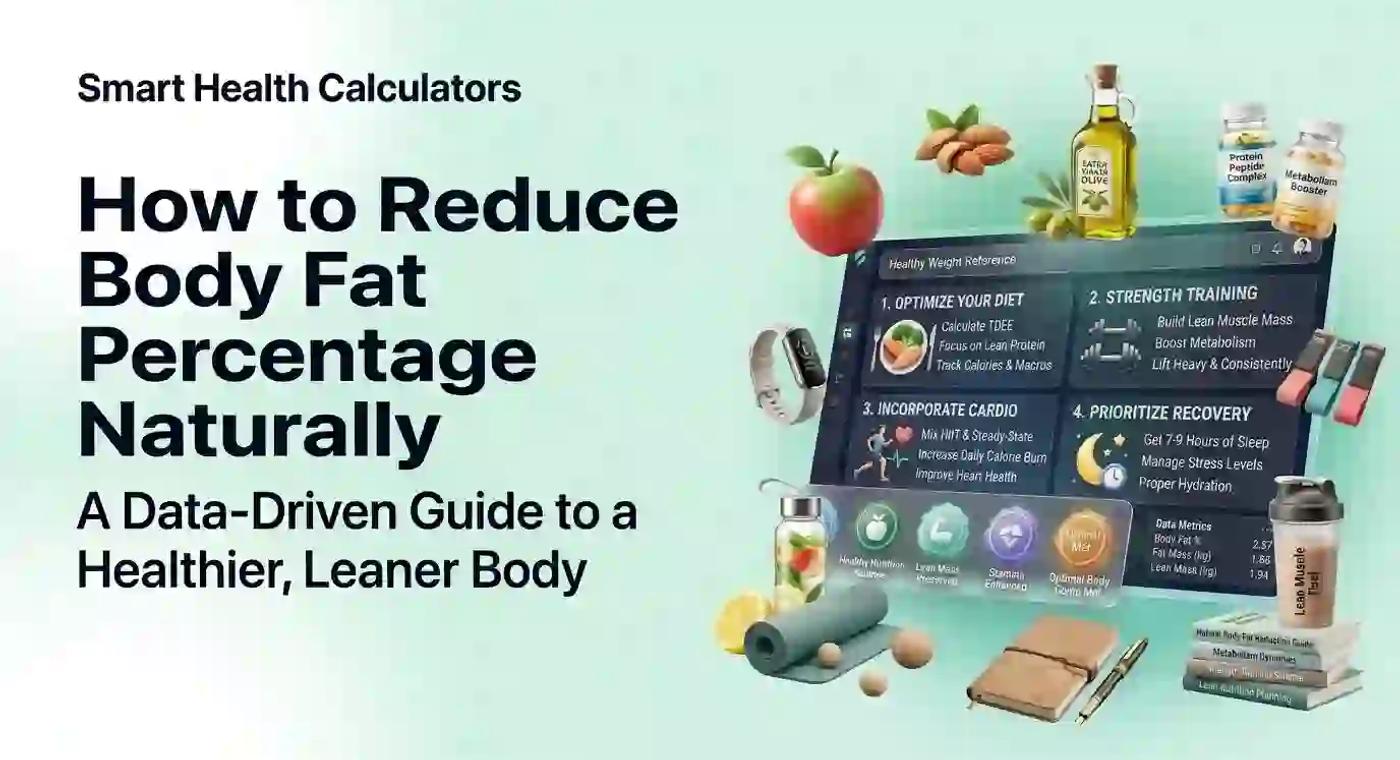
How to Reduce Body Fat Percentage Naturally (2026 Guide)
Want to reduce body fat percentage naturally? Get 7 proven, no-supplement strategies — diet, training, sleep & more — backed by science.
If you've been working out consistently but your body fat percentage isn't budging the way you expected, you're not alone. Reducing body fat naturally isn't about extreme diets or miracle supplements — it comes down to a handful of proven, sustainable habits working together consistently over time.
The core formula for reducing body fat percentage naturally is straightforward: maintain a moderate calorie deficit, prioritize protein intake, incorporate resistance training, get quality sleep, and manage stress levels. None of these require supplements, and most people can realistically expect to lose about 0.5–1% body fat per week with consistent effort. In this guide, we'll break down exactly how each piece works, what actually moves the needle, and how to avoid the common mistakes that stall progress.
Note: Individual results vary based on genetics, hormones, age, and underlying health conditions. This article provides general guidance — for a personalized plan, especially if you have a medical condition, consult a healthcare provider or registered nutritionist.
What Is Body Fat Percentage (And Why It's Different From Weight)?
Body fat percentage measures how much of your total body mass is made up of fat, as opposed to muscle, bone, and water. This is a meaningfully different — and often more useful — metric than simple body weight, since two people at the exact same weight and height can have very different body compositions depending on how much muscle they carry.
This is also the key difference between fat loss vs weight loss. Weight loss can include muscle loss, water loss, and fat loss all combined, while true fat loss specifically targets reducing the fat component while ideally preserving or even building lean muscle mass. This distinction matters enormously, because losing weight quickly through crash dieting often sacrifices muscle along with fat — leaving you lighter on the scale but with a similar or even higher body fat percentage than before.
What Is a Healthy Body Fat Percentage?
Healthy ranges differ by sex and vary somewhat by source, but general guidelines from organizations like the American Council on Exercise (ACE) suggest:
- Men: 14–17% is considered fitness-level, 18–24% is average/healthy
- Women: 21–24% is considered fitness-level, 25–31% is average/healthy
Athletic individuals often sit lower than these ranges, while essential fat (the minimum needed for basic physiological function) is roughly 2–5% for men and 10–13% for women. If you want an accurate starting point before setting a goal, our free Body Fat Estimator gives you a personalized calculation rather than relying on a generic chart.
How to Reduce Body Fat Percentage Naturally: The Core Strategies
1. Create a Moderate Calorie Deficit
At the most fundamental level, reducing body fat requires burning more calories than you consume — a calorie deficit for fat loss. However, the size of that deficit matters significantly. A moderate deficit of roughly 300–500 calories below your maintenance level tends to produce steady fat loss while minimizing muscle loss, compared to aggressive deficits that often backfire by slowing metabolism and increasing muscle breakdown.
To find your actual maintenance calories rather than guessing, our free Calorie Intake Planner calculates a personalized target based on your body, activity level, and goals.
2. Prioritize Protein Intake
A high protein diet for fat loss does double duty: it helps preserve lean muscle mass during a calorie deficit, and it's more satiating than carbs or fat, meaning you naturally feel fuller on fewer calories. Research consistently shows that higher protein intake during fat loss phases helps maintain more muscle tissue compared to lower-protein diets at the same calorie deficit.
Aim for roughly 1.6–2.2 grams of protein per kilogram of body weight daily if you're also engaging in resistance training, prioritizing lean sources like chicken, fish, eggs, legumes, and Greek yogurt throughout the day rather than in one large meal.
3. Incorporate Resistance Training
This is one of the most overlooked pieces of the natural fat loss puzzle. Resistance training for fat loss doesn't just burn calories during the workout — it helps preserve and build muscle mass, which increases your resting metabolic rate over time, meaning your body burns more calories even at rest.
Cardio vs weight training for fat loss isn't really an either/or debate — both have value, but strength training specifically protects against the muscle loss that often accompanies fat loss, which is why most sustainable fat loss methods combine both rather than relying on cardio alone.
If you're not sure where to start, our Workout Planner can help you build a structured routine that balances resistance training with cardio based on your current fitness level.
4. Don't Underestimate Sleep
The connection between sleep and fat loss is stronger than most people realize. Poor sleep disrupts hormones that regulate hunger and fullness — specifically increasing ghrelin (which stimulates appetite) and decreasing leptin (which signals fullness) — making it significantly harder to stick to a calorie deficit even with the best intentions.
Poor sleep is also linked to elevated cortisol levels, and cortisol and belly fat have a well-documented relationship, with chronically elevated cortisol associated with increased abdominal fat storage specifically. Aiming for 7–9 hours of quality sleep isn't just about feeling rested — it's a legitimate fat loss lever many people ignore entirely. Our Sleep Quality Checker can help you identify patterns that might be working against your progress.
5. Manage Stress Levels
Chronic stress keeps cortisol elevated, which not only encourages fat storage — particularly visceral fat vs subcutaneous fat, with cortisol specifically promoting the more metabolically harmful visceral fat around organs — but also often drives emotional eating and cravings for high-calorie processed foods. Stress management and weight loss are more connected than most fat loss plans acknowledge, making practices like short walks, breathing exercises, or simply protecting downtime a legitimate part of a natural fat loss strategy, not just a "nice to have."
6. Stay Hydrated
Water intake and metabolism are linked in a few practical ways: proper hydration supports optimal metabolic function, can modestly boost calorie burning temporarily after drinking, and often helps distinguish true hunger from thirst — a common source of unnecessary snacking. Our Water Intake Calculator can help you find a personalized daily target based on your weight and activity level.
7. Consider Intermittent Fasting (If It Fits Your Lifestyle)
Intermittent fasting benefits for fat loss largely come down to making calorie deficit easier to maintain for some people, by naturally limiting the eating window and reducing overall calorie intake without requiring constant food tracking. It's not magic — the underlying mechanism is still a calorie deficit — but for people who find restricting eating hours easier than restricting portions, it can be a genuinely useful tool rather than a gimmick.
Strategy Table:Natural Fat Loss Strategies at a Glance
🔥 Calorie Deficit — Forces body to use stored fat for energy | Aim for 300–500 calories below maintenance
🥩 High Protein Intake — Preserves muscle, increases satiety | 1.6–2.2g protein per kg body weight daily
💪 Resistance Training — Builds muscle, raises resting metabolic rate | 3–4 sessions per week, progressive overload
😴 Quality Sleep — Regulates hunger hormones, lowers cortisol | 7–9 hours nightly, consistent schedule
🧘 Stress Management — Reduces cortisol-driven fat storage | Daily walks, breathing exercises
💧 Hydration — Supports metabolism, reduces false hunger | ~2–3 liters daily, adjust for activity
⏱️ Intermittent Fasting (optional) — Simplifies calorie deficit adherence | 16:8 window is a common starting point
How Long Does It Take to Naturally Reduce Body Fat?
Realistic timelines matter for staying motivated. A sustainable, healthy fat loss rate is generally around 0.5–1% of body fat per week, which translates to roughly 0.5–1 kg of fat loss weekly for most people in a moderate calorie deficit. This means noticeable changes in body fat percentage typically show up over 8–12 weeks of consistent effort, not days.
Faster fat loss is often possible short-term, but tends to come at the cost of muscle loss and is harder to sustain — which is exactly why crash diets so often result in regained weight once normal eating resumes.
Can You Reduce Body Fat Without Losing Muscle?
Yes, and this is genuinely achievable with the right approach — specifically a moderate (not extreme) calorie deficit, adequate protein intake, and consistent resistance training. This combination signals your body to preserve muscle tissue while primarily drawing energy from fat stores, whereas aggressive calorie restriction without resistance training tends to burn through muscle alongside fat, leaving you "skinny fat" rather than genuinely leaner.
Does Diet or Exercise Matter More for Reducing Body Fat?
Diet plays the larger role in creating the calorie deficit necessary for fat loss, since it's generally easier to reduce calorie intake than to burn an equivalent amount through exercise alone. However, exercise — particularly resistance training — plays an essential supporting role in preserving muscle mass and improving body composition, meaning the best natural fat loss method for beginners combines both rather than relying on either alone.
What Foods Help Reduce Body Fat Percentage Naturally?
While no single food burns fat directly, certain food choices support the overall process:
- Lean proteins (chicken, fish, eggs, tofu) — support muscle preservation and satiety
- High-fiber vegetables — promote fullness with minimal calories
- Whole grains over refined carbs — support stable blood sugar and reduce cravings
- Healthy fats (avocado, nuts, olive oil) — support hormonal balance despite the name
- Water-rich foods (cucumbers, watermelon, soups) — add volume and satiety for fewer calories
Processed food and fat gain are closely linked, largely because processed foods tend to be calorie-dense, low in fiber, and easy to overeat without triggering normal fullness signals — making whole, minimally processed foods a practical default for anyone focused on natural fat loss.
Common Mistakes That Stall Natural Fat Loss
- Cutting calories too aggressively — This often backfires through muscle loss and metabolic slowdown, making fat loss harder over time, not easier.
- Skipping resistance training entirely — Relying on cardio alone often results in more muscle loss alongside fat loss.
- Underestimating sleep's role — Poor sleep undermines even a perfect diet and training plan through hormonal disruption.
- Chasing rapid results — Expecting dramatic changes in days rather than weeks leads to unsustainable extreme measures and burnout.
- Ignoring stress — Chronic stress and elevated cortisol can stall fat loss progress even when diet and exercise are otherwise on point.
Why Choose Smart Health Calculators
Reducing body fat naturally requires understanding your actual numbers — not generic advice pulled from a one-size-fits-all chart. At Smart Health Calculators, our tools are built around evidence-based formulas that give you a personalized starting point, whether that's your maintenance calories, current body fat percentage, or realistic hydration needs.
Explore our full collection of free health and fitness tools to build a natural fat loss approach based on your actual body, not assumptions. If you've been putting in effort without seeing results, our breakdown of why your diet might not be working covers the overlooked factors that often explain a stalled plateau.
FAQs About Reducing Body Fat Percentage Naturally
How can I reduce my body fat percentage naturally? Combine a moderate calorie deficit (300–500 calories below maintenance), adequate protein intake, regular resistance training, quality sleep, and stress management. This combination supports fat loss while preserving muscle mass, without requiring supplements.
What is a healthy body fat percentage to aim for? For men, 18–24% is considered average/healthy, with 14–17% reflecting a fitness level. For women, 25–31% is average/healthy, with 21–24% reflecting a fitness level, according to general ACE guidelines.
How long does it take to naturally reduce body fat? A sustainable rate is roughly 0.5–1% body fat loss per week. Most people notice meaningful changes over 8–12 weeks of consistent effort, though individual results vary based on starting point and adherence.
Can you reduce body fat without losing muscle? Yes. A moderate (not extreme) calorie deficit combined with sufficient protein intake and resistance training helps preserve muscle mass while your body primarily draws energy from fat stores.
Does diet or exercise matter more for reducing body fat? Diet plays the larger role in creating the calorie deficit needed for fat loss, but resistance training is essential for preserving muscle mass and improving overall body composition — the most effective approach combines both.
Does sleep affect body fat percentage? Yes, significantly. Poor sleep disrupts hunger-regulating hormones and raises cortisol levels, both of which can increase cravings, reduce diet adherence, and promote fat storage, particularly around the abdomen.
Final Thoughts
Reducing body fat percentage naturally isn't about finding a secret trick — it's about consistently applying a handful of well-established habits: eating in a moderate calorie deficit, prioritizing protein, training with resistance, sleeping well, and managing stress. None of these require supplements or extreme restriction, and all of them work better together than in isolation.
Progress will be gradual, and that's actually the point — sustainable fat loss protects your muscle mass and metabolism in ways that crash approaches simply can't match.
Ready to build your personalized plan? Try our free Body Fat Estimator to see where you're starting from, and use our Calorie Intake Planner to calculate your ideal deficit for sustainable, natural fat loss.
For further authoritative reference, the World Health Organization's guidance on physical activity and healthy body composition offers evidence-based context worth reviewing.
Medical Disclaimer
This article is for general education only. It is not medical advice, diagnosis, treatment, prescription guidance, or a replacement for professional healthcare. Speak with a qualified healthcare professional for personal medical concerns, symptoms, pregnancy concerns, mental health crisis, medication questions, or before making major health changes.