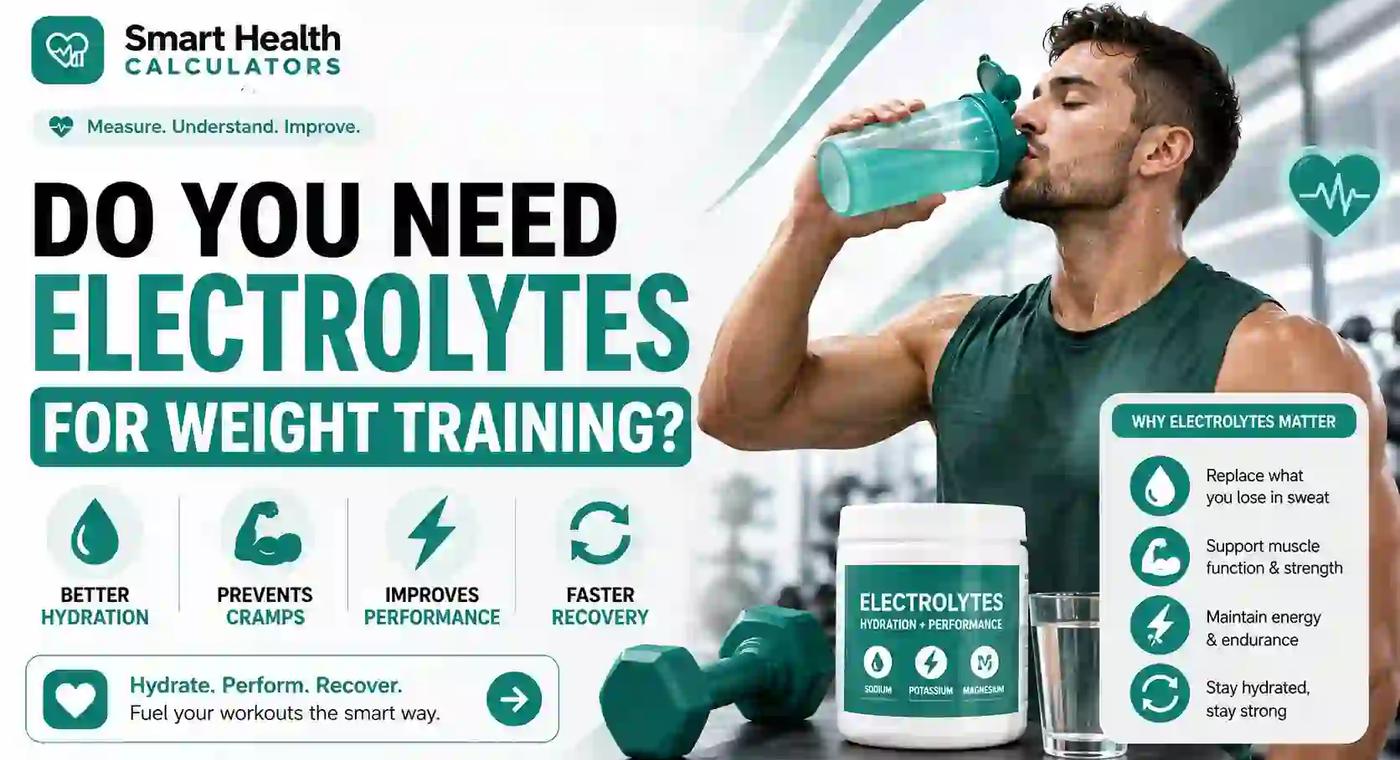
Do You Need Electrolytes for Weight Training?
Do you need electrolytes for weight training? Learn when electrolytes help, signs you may need them, water vs. electrolyte drinks, and keto or fasting tips.
Most people doing a typical 45–60 minute weight training session don't need a dedicated electrolyte drink — plain water and a normal diet cover it for the average lifter. That answer changes meaningfully once you factor in heat, heavy sweating, longer sessions, or certain diets like keto or intermittent fasting, where electrolyte needs genuinely go up.
This is one of those fitness topics where the honest answer is conditional rather than universal, and most content around it swings too hard in one direction — either treating electrolyte drinks as essential gym gear for everyone, or dismissing them entirely as marketing. Neither is accurate. Let's break down what electrolytes actually do during resistance training, who genuinely benefits from supplementing them, and how to tell the difference for yourself.
What Electrolytes Actually Do During Weight Training
Electrolytes are minerals that carry an electric charge when dissolved in body fluids, and they're directly responsible for two functions that matter enormously during a lifting session: muscle contraction and nerve signaling. Every time you contract a muscle to lift a weight, that action depends on electrical signals traveling through nerve cells and triggering a coordinated response in muscle fibers — a process that literally cannot happen without adequate sodium, potassium, and calcium moving across cell membranes.
Here's how the main electrolytes function specifically in the context of training:
| Electrolyte | Role in Muscle Function | Typical Daily Need (General Adult) |
|---|---|---|
| Sodium | Regulates fluid balance, nerve signal transmission | ~1,500–2,300 mg |
| Potassium | Supports muscle contraction, counterbalances sodium | ~2,600–3,400 mg |
| Magnesium | Muscle relaxation, energy production, over 300 enzyme reactions | ~310–420 mg |
| Calcium | Triggers the actual muscle contraction mechanism | ~1,000–1,200 mg |
These figures reflect general adult dietary reference intakes and aren't training-specific recommendations — someone sweating heavily during long or intense sessions will lose more sodium and other electrolytes through sweat and may need more than these baseline daily figures to stay in balance.
Do You Actually Need Electrolyte Supplements for Weight Training?
This is the core question, and the honest answer depends heavily on a handful of specific factors rather than being a blanket yes or no.
You probably don't need dedicated electrolyte supplementation if:
- Your training sessions run 45–60 minutes at moderate intensity
- You're training in a climate-controlled gym, not particularly hot or humid conditions
- You eat a varied diet that includes normal amounts of salt, fruits, vegetables, and dairy or fortified alternatives
- You're not a notably heavy sweater
You likely do benefit from added electrolytes if:
- You train for 90 minutes or longer, especially combining strength work with conditioning or cardio
- You sweat heavily and visibly — soaked shirts, salt residue on skin or clothing after a session
- You train in hot, humid, or poorly ventilated environments
- You follow a ketogenic or low-carb diet, which causes the body to excrete more sodium and water than usual, particularly in the first few weeks
- You practice intermittent fasting and train in a fasted state, since fasting windows can affect fluid and electrolyte balance
- You're an older adult, since kidney function and thirst signaling can shift with age in ways that affect fluid balance
The pattern here is genuinely about sweat rate, session duration, environmental heat, and diet — not about weight training as a category needing special hydration products by default. A 45-minute strength session in an air-conditioned gym is a very different physiological demand than a 90-minute session in a hot, humid environment, even if both technically count as "weight training."
Which Electrolytes Are Lost Through Sweat?
Sweat isn't just water — it carries a meaningful electrolyte load out of your body, primarily:
- Sodium — by far the most significant electrolyte lost in sweat, and the one most directly tied to muscle cramping and fluid balance during exercise
- Chloride — lost alongside sodium, since the two are chemically paired as sodium chloride (table salt)
- Potassium — lost in smaller amounts than sodium, but still relevant, particularly during longer sessions
- Magnesium — lost in comparatively small amounts through sweat, though magnesium status can still be affected by overall training volume and diet
Sweat sodium concentration varies significantly between individuals — some people are naturally "salty sweaters" who lose considerably more sodium per liter of sweat than others, which is part of why identical training sessions can leave two people with very different electrolyte needs. If you've ever noticed visible white, crusty residue on your skin or clothing after a workout, that's actually dried salt, and it's a reasonably strong personal indicator that you fall into the heavier sodium-loss category.
Signs You Might Need More Electrolytes
Rather than guessing, there are genuine physical signals worth paying attention to during and after training:
- Muscle cramping, particularly in the calves, hamstrings, or feet during or after a session
- Unusual fatigue that feels disproportionate to the actual training load
- Dizziness or lightheadedness, especially when standing up quickly after a set
- Headache that develops during or shortly after a long or intense training session
- Excessive thirst that doesn't resolve with normal water intake
- Reduced performance in a session compared to your normal baseline, without an obvious reason like poor sleep or illness
It's worth being clear that muscle cramps during exercise have multiple potential causes — dehydration and electrolyte loss are genuine contributors, but muscle fatigue, poor conditioning, and simply pushing a muscle group harder than usual can also cause cramping independent of hydration status. If cramping is frequent and severe, it's worth mentioning to a healthcare provider rather than assuming electrolytes are automatically the fix.
Electrolyte Drinks vs. Plain Water: When Each Makes Sense
This is a genuinely common point of confusion, and the answer comes down to session length and sweat loss rather than one option being universally "better."
Plain water is generally sufficient when:
- Your session is under an hour at moderate intensity
- You're not sweating heavily
- Your regular diet already includes adequate sodium and potassium from food
An electrolyte drink adds real value when:
- Sessions run long, particularly past 90 minutes
- You're sweating heavily enough to notice salt residue
- You're training in heat or a poorly ventilated space
- You're on a low-carb or fasting protocol where baseline sodium and fluid balance are already shifted
For most moderate-length strength training sessions, drinking water before, during, and after your workout — guided by your general daily fluid needs — covers hydration adequately without needing a dedicated electrolyte product. Our Water Intake Calculator can help you establish a baseline daily fluid target, which is a more useful starting point than guessing.
Sodium, Potassium, and Magnesium: What Lifters Actually Need to Know
Sodium deserves the most attention here, since it's lost in the greatest volume through sweat and plays the most direct role in fluid balance and muscle function during exercise. For most people, general dietary sodium intake from a normal diet — not an especially low-sodium one — covers baseline needs, but heavy sweaters and long-session trainees may reasonably need more, particularly around training windows.
Potassium works in balance with sodium and supports the electrical gradient that allows muscle cells to contract properly. Whole foods — bananas, potatoes, leafy greens, avocados — are generally a more practical and bioavailable source of potassium for most people than supplements, and eating a varied diet usually covers training-related potassium needs without extra intervention.
Magnesium is involved in muscle relaxation as well as contraction, and inadequate magnesium status has been associated with increased cramping risk in some research, though the evidence connecting magnesium supplementation specifically to reduced exercise-related cramping is mixed rather than conclusively strong. Whole grains, nuts, seeds, and leafy greens are solid dietary magnesium sources worth prioritizing before reaching for a supplement.
Best Time to Take Electrolytes Around Training
If you've determined that supplementation genuinely fits your situation, timing matters less than total daily intake, but there are a few practical patterns worth knowing:
- Before a long or hot-weather session, a modest pre-hydration approach with some added sodium can help offset losses before they happen, particularly useful if you know from experience that you're a heavy sweater.
- During extended sessions (90+ minutes), sipping an electrolyte drink periodically helps replace losses as they occur rather than trying to catch up afterward.
- After training, replacing fluids and electrolytes lost through sweat supports recovery, particularly if the session was long, intense, or in a hot environment.
For a typical shorter strength session, this level of timing precision usually isn't necessary — a normal diet and adequate water intake around your workout handles it without needing a structured protocol.
Electrolytes and Keto or Fasted Training
This deserves its own mention because it's a genuinely different physiological situation than standard training hydration. Ketogenic diets cause the kidneys to excrete more sodium and water than usual, particularly during the first few weeks of adaptation — this is part of why people sometimes experience the so-called "keto flu," which includes fatigue, headache, and muscle cramping that overlaps considerably with electrolyte imbalance symptoms.
If you're lifting weights while following a ketogenic diet, deliberately increasing sodium intake — and to a lesser extent potassium and magnesium — is a reasonable and commonly recommended adjustment, rather than something to leave to chance.
Similarly, training in a fasted state, particularly during extended fasting windows, can affect fluid balance and how your body handles electrolyte losses during the session. This doesn't mean fasted training is unsafe for most healthy people, but it's a scenario where paying closer attention to how you feel during the workout — and adjusting hydration and electrolyte intake accordingly — is more warranted than during a normally-fed training session.
Can You Get Too Many Electrolytes?
Yes, and this side of the equation gets far less attention than it deserves. Over-supplementing electrolytes, particularly sodium, without a corresponding need can contribute to unnecessary strain on blood pressure regulation over time, and excessive water intake combined with inadequate sodium — the opposite imbalance — can lead to a genuinely dangerous condition called hyponatremia, where blood sodium becomes diluted to dangerously low levels.
Hyponatremia is more commonly associated with endurance events lasting several hours where people drink large volumes of plain water without replacing sodium, rather than typical weight training sessions, but it's worth knowing the risk exists on both ends of this equation — under-hydrating and over-hydrating without electrolyte balance both carry genuine risk, just at different points on the spectrum.
If you have an existing health condition affecting blood pressure, kidney function, or fluid balance, it's worth discussing electrolyte supplementation with a healthcare provider before adding it as a regular training habit, rather than assuming more is automatically better.
Do Electrolytes Help With Post-Workout Recovery?
For people who fall into the higher-need categories outlined above — long sessions, heavy sweating, heat exposure, keto or fasting protocols — replacing lost electrolytes does support a smoother recovery process, primarily by restoring normal fluid balance more efficiently than water alone. For the average moderate-length strength session, though, recovery is driven far more by protein intake, overall calorie adequacy, and sleep than by electrolyte replacement specifically.
If you're looking at recovery holistically rather than isolating electrolytes as the single lever, our guide on common workout planning mistakes that slow results covers the broader recovery picture, and pairing consistent hydration habits with adequate sleep tends to matter more for most lifters than any specific supplement choice.
A Practical Framework for Most Lifters
Here's a reasonable, non-alarmist approach that fits most people training with weights regularly:
- Start with your general daily water intake target, adjusted for your body size and activity level — our Water Intake Calculator gives you a personalized baseline.
- Eat a varied diet that includes normal dietary sodium, potassium-rich foods like fruits and vegetables, and magnesium sources like nuts and whole grains.
- Pay attention to your own sweat rate and session length. If you're a visibly heavy sweater training past an hour, or regularly in hot conditions, that's your signal to consider adding electrolytes deliberately rather than incidentally.
- Reassess if you're on keto, low-carb, or fasting protocols, since these genuinely shift baseline sodium needs upward compared to a standard diet.
- Watch for actual symptoms — cramping, unusual fatigue, dizziness — rather than assuming you need supplementation just because it's marketed toward gym-goers generally.
If you've been experiencing unexplained afternoon fatigue that could be related to hydration and general daily habits rather than training specifically, our broader guide on hydration and weight loss covers how fluid balance interacts with energy levels beyond just the gym context.
Frequently Asked Questions
Do you need electrolytes for weight training? Most people doing typical 45–60 minute sessions at moderate intensity don't need dedicated electrolyte supplementation, but longer sessions, heavy sweating, hot environments, and certain diets like keto or fasting genuinely increase electrolyte needs beyond what plain water and a normal diet provide.
What electrolytes are lost when you sweat during exercise? Sodium is lost in the greatest amount, followed by chloride, with smaller amounts of potassium and magnesium also lost through sweat, though individual sweat composition varies significantly between people.
How much sodium should a lifter consume daily? General dietary guidelines suggest roughly 1,500–2,300 mg daily for most adults, though heavy sweaters and those training in heat or on low-carb diets may reasonably need more to maintain proper fluid and electrolyte balance.
Can dehydration cause muscle cramps during weightlifting? Dehydration and electrolyte loss are genuine contributors to exercise-related muscle cramping, though muscle fatigue and training load also play a role, so cramping isn't automatically a sign that more electrolytes alone will fix the issue.
Are electrolyte drinks better than water for the gym? Not universally — for shorter, moderate-intensity sessions, plain water is generally sufficient, while electrolyte drinks add genuine value specifically during longer sessions, heavy sweating, hot conditions, or when following diets that increase baseline sodium needs.
What are the signs of an electrolyte imbalance? Common signs include muscle cramping, unusual fatigue, dizziness, headache, and reduced training performance, though these symptoms can also stem from other causes like poor sleep or insufficient recovery.
Do electrolytes help with muscle recovery? For people with genuinely elevated electrolyte losses — long sessions, heavy sweating, keto or fasting diets — replacing electrolytes supports smoother recovery, though for average training sessions, protein intake, overall nutrition, and sleep play a larger overall role.
Is it possible to get too many electrolytes? Yes — excessive sodium intake without a corresponding need can strain blood pressure regulation over time, and severe imbalances in either direction, including diluted sodium from excessive plain water intake without replacement, can lead to genuinely serious conditions like hyponatremia.
The Bottom Line
Electrolytes matter for weight training, but the need is conditional, not universal — the honest answer depends on how long you train, how much you sweat, what environment you're training in, and whether your diet already shifts your baseline sodium and fluid needs. Most people doing a standard strength session don't need a dedicated electrolyte product beyond normal water intake and a reasonably varied diet, while heavy sweaters, long-session trainees, and keto or fasting dieters genuinely benefit from paying closer attention.
Start by establishing your baseline daily fluid needs with our Water Intake Calculator, pay attention to your own sweat rate and session length, and adjust from there based on how your body actually responds — rather than assuming every gym session requires a specialized drink by default.
Medical Disclaimer
This article is for general education only. It is not medical advice, diagnosis, treatment, prescription guidance, or a replacement for professional healthcare. Speak with a qualified healthcare professional for personal medical concerns, symptoms, pregnancy concerns, mental health crisis, medication questions, or before making major health changes.