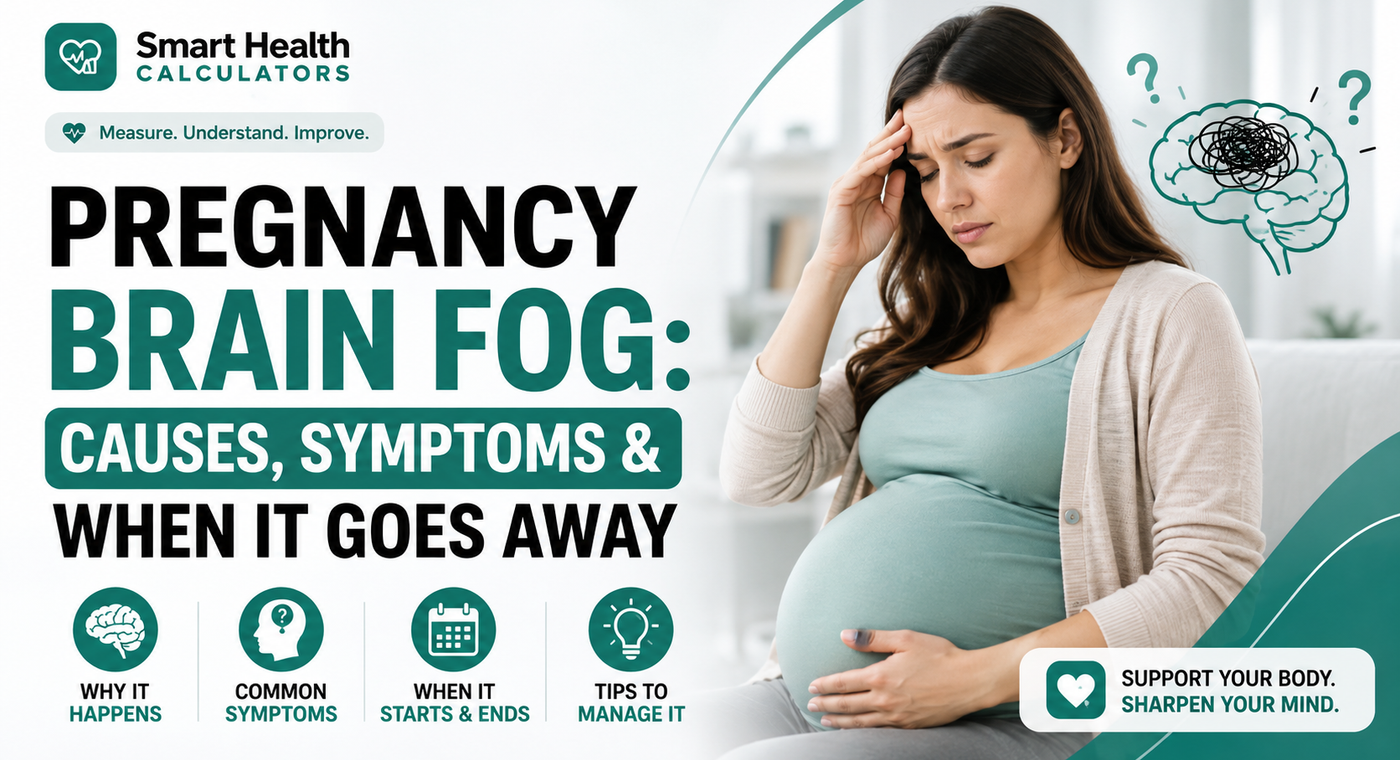
Pregnancy Brain Fog: Causes, Symptoms & When It Goes Away
Is pregnancy brain fog real? Learn when it starts, common symptoms, causes, hormones, sleep, and practical ways to manage forgetfulness during pregnancy.
Yes, pregnancy brain fog is real, and research increasingly backs up what generations of pregnant people have described anecdotally. It can start as early as the first trimester for some, though most people report it becoming noticeable by the second or third trimester, and neuroimaging studies have now documented measurable structural brain changes during pregnancy that line up with the timing many people describe.
This isn't "just hormones" in the dismissive sense that phrase often implies. There's a genuinely interesting and still-developing body of research behind why pregnancy affects memory and concentration, and understanding it can make the day-to-day experience of forgetting where you put your keys or losing your train of thought mid-sentence feel a lot less alarming.
Is Pregnancy Brain Fog Actually Real?
For a long time, "pregnancy brain" or "momnesia" was treated mostly as folk wisdom — something pregnant people talked about but that researchers struggled to consistently confirm in cognitive testing. That's shifted meaningfully in recent years, particularly with a landmark study led by neuroscientist Elseline Hoekzema at Leiden University, which used MRI scans to compare women's brains before and after their first pregnancy, as detailed by BrainFacts.org.
The findings were striking: gray matter volume decreased by up to roughly 4.9% during pregnancy, with changes detectable in as much as 94% of the brain in follow-up research from a team at the Universitat Autònoma de Barcelona, concentrated particularly in regions associated with social cognition — the brain networks involved in understanding and responding to others' mental states, which researchers suspect may relate to preparing for the intense social and emotional demands of caring for an infant. More recent longitudinal work, including a widely covered case study reported by National Geographic that scanned a single subject repeatedly before, during, and after pregnancy, confirmed that gray matter decreases steadily starting in the first weeks of pregnancy, stabilizes around birth, and persists for at least two years postpartum.
This doesn't mean pregnancy makes you less intelligent or less capable — researchers are careful to note that volume reduction isn't necessarily a loss of function. Hoekzema herself compares the change to the synaptic pruning that happens during adolescence: a fine-tuning of neural connections rather than damage, potentially making certain brain circuits more efficient rather than weaker. Still, it's genuinely reasonable that measurable structural change of this scale would coincide with noticeable, real changes in day-to-day memory, focus, and word-finding — which is exactly what most pregnant people report experiencing.
When Does Pregnancy Brain Fog Start?
This varies from person to person, and research on timing is still evolving, but here's a reasonable general picture based on both self-reported experience and the imaging research on structural brain changes:
| Trimester | Reported Cognitive Changes | Likely Contributing Factors |
|---|---|---|
| First trimester | Some report early forgetfulness, word-finding difficulty; imaging research shows gray matter changes beginning within the first weeks | Rapid hormonal shifts, fatigue, nausea, early stress/anxiety |
| Second trimester | Cognitive changes often become more noticeable for many; energy sometimes improves relative to trimester one | Continued hormonal changes, though fatigue may ease somewhat |
| Third trimester | Most commonly and strongly reported period for brain fog, memory lapses, and difficulty concentrating | Sleep disruption, physical discomfort, anticipatory stress about birth/parenting, continued gray matter changes |
| Postpartum | Cognitive fog frequently continues, sometimes intensifying, before gradually improving over months | Severe sleep deprivation, hormonal crash after delivery, adjustment to caregiving demands |
The research showing gray matter changes beginning within the first weeks of pregnancy — confirmed in the case-study research published in Nature Neuroscience and covered by Newsweek — is genuinely interesting, because it suggests the biological groundwork for these changes starts far earlier than when most people notice symptoms. The gap between "measurable brain change starts" and "I notice I keep forgetting things" likely reflects both individual variation and the fact that early pregnancy fatigue and hormonal symptoms can mask or blend with cognitive changes in ways that are hard to separate. Our Pregnancy Calculator can help you track exactly which week and trimester you're in, which is useful context if you're trying to map your own symptoms against this general timeline.
What Causes Pregnancy Brain Fog?
There isn't one single confirmed mechanism — this is genuinely still an area of active research — but several contributing factors are well-supported and likely work together rather than in isolation.
Hormonal fluctuations. Estrogen and progesterone rise dramatically during pregnancy, and research published in Nature Communications specifically linked the degree of gray matter change to fluctuations in two forms of estrogen — estriol-3-sulfate and estrone-sulfate — which increase exponentially during pregnancy and return to baseline after delivery. These hormones are known to influence neural connectivity and cognitive processing more broadly, independent of pregnancy.
Sleep disruption. Between physical discomfort, frequent urination, and simple difficulty finding a comfortable position, sleep quality often declines as pregnancy progresses, particularly in the third trimester. Sleep deprivation is one of the most well-established, independently confirmed causes of memory and concentration problems in the general population, so its contribution to pregnancy-related brain fog is entirely plausible and likely significant. Our guide on how stress affects sleep quality covers this connection in more depth if disrupted sleep is a major factor for you.
Structural brain changes. As covered above, measurable reductions in gray matter volume during pregnancy, particularly in regions tied to social cognition and the brain's default mode network, provide a genuine biological basis for cognitive changes rather than pregnancy brain being purely psychological or attention-related. A biorxiv preprint study tracking these changes week by week found they correlate specifically with rising pregnancy hormone levels rather than other factors like stress or sleep alone.
Psychological load and stress. Pregnancy, especially a first pregnancy, involves an enormous amount of new information to track — appointments, decisions, preparation — layered on top of anticipatory stress about birth and the transition to parenthood. This cognitive load alone can produce the subjective experience of forgetfulness and distraction, separate from any underlying biological change.
Physical symptoms competing for attention. Nausea, fatigue, and physical discomfort all draw attention and mental resources away from other tasks, which can look and feel like memory or focus problems even when the underlying issue is more about competing physical demands.
The honest, research-supported summary: pregnancy brain fog is most likely the product of several of these factors overlapping simultaneously, rather than one single confirmed cause — and researchers are still working out exactly how much each factor contributes relative to the others.
Common Symptoms of Pregnancy Brain Fog
People describe this experience in fairly consistent ways, even though the underlying severity varies:
- Forgetting words mid-sentence or losing your train of thought while speaking
- Walking into a room and forgetting why you went there
- Difficulty concentrating on tasks that were previously routine
- Losing track of items — keys, phone, where you parked
- Trouble multitasking in ways that felt effortless before pregnancy
- Slower processing when trying to make decisions or recall information quickly
- Increased reliance on reminders and lists just to keep track of daily responsibilities
None of these individually indicate anything concerning — they're consistent with what's been both self-reported extensively and, increasingly, connected to measurable brain changes in research.
Pregnancy Brain Fog vs. Normal Forgetfulness
A reasonable question worth addressing directly: how do you know if what you're experiencing is actually "pregnancy brain" versus just ordinary, everyday forgetfulness that happens to everyone occasionally?
The distinguishing feature most people describe is a noticeable shift from their own baseline — not comparing themselves to some universal standard of sharpness, but noticing that tasks, recall, and focus feel different than they did before pregnancy, in a way that's persistent rather than occasional. Someone who occasionally forgets an appointment isn't necessarily experiencing pregnancy brain fog; someone who finds themselves consistently losing their train of thought, needing reminders for things they used to track automatically, or feeling noticeably "foggier" across multiple areas of daily function fits the more commonly described pattern.
It's also worth normalizing that this experience, while real, generally doesn't indicate anything is wrong with the pregnancy or the baby — it's a documented, common part of the pregnancy experience for many people rather than a warning sign in itself.
Does Pregnancy Brain Fog Get Worse in the Third Trimester?
For many people, yes — third trimester is the period most commonly associated with the strongest reported symptoms, and there's a fairly intuitive explanation for why. Sleep disruption tends to peak in the final trimester, given physical discomfort and frequent nighttime waking. Anticipatory stress about labor, delivery, and the transition to caring for a newborn also tends to intensify as the due date approaches, adding cognitive load on top of whatever biological changes are already in progress.
That said, this pattern isn't universal — some people report their most noticeable cognitive changes earlier, particularly if first-trimester fatigue and hormonal shifts hit them especially hard. Individual variation here is genuinely significant, and there's no single "correct" timeline that applies to everyone. Our broader guide on pregnancy symptoms by trimester covers how brain fog fits alongside the other physical changes happening at each stage.
Does Pregnancy Brain Fog Go Away After Birth?
For most people, yes, though the timeline and pattern aren't entirely straightforward. Some research suggests cognitive fog can actually continue or even intensify in the immediate postpartum period, largely driven by the severe sleep deprivation that comes with caring for a newborn, layered on top of the hormonal crash that follows delivery as estrogen and progesterone rapidly drop back to baseline.
The neuroimaging research on gray matter changes offers some reassurance here: the studies covered by Medical News Today found the structural brain changes observed during pregnancy showed partial to substantial recovery during the postpartum period in follow-up scans, generally within the first year or two, described by some researchers as a "U-shaped trajectory" — though some subtle changes appear to persist longer-term. This aligns with what most people experience subjectively — a gradual, if sometimes slow, return to a cognitive baseline that feels closer to pre-pregnancy normal as sleep improves and hormones stabilize, typically over the months following delivery rather than immediately.
Coping Strategies for Pregnancy Brain Fog
While there's no guaranteed fix — since the underlying causes are partly biological and not fully within your control — several practical strategies genuinely help manage the day-to-day impact:
Externalize your memory. Use lists, phone reminders, and calendar alerts aggressively rather than relying on mental recall for appointments, tasks, or things you need to bring somewhere. This isn't a failure of willpower — it's a practical adjustment that takes pressure off a system that's genuinely working differently right now.
Prioritize sleep wherever realistically possible. Given how strongly sleep disruption connects to cognitive function generally, protecting whatever sleep quality you can — through naps, an earlier bedtime, or addressing physical discomfort with pregnancy-safe supports — tends to have a meaningful impact on daytime focus. Our Sleep Quality Checker can help you track how your sleep is actually trending through pregnancy, and our guide on the connection between sleep, stress, and mental health digs into why this matters so much for cognitive function specifically.
Build routine and structure. Reducing the number of small decisions and things to remember by establishing consistent routines — same time for appointments, same place for keys, recurring calendar reminders — lowers the overall cognitive load competing for your attention.
Break tasks into smaller steps. If concentration feels harder to sustain, tackling complex tasks in smaller chunks rather than all at once can reduce the frustration of losing your place partway through.
Give yourself genuine grace. This is worth saying plainly: pregnancy brain fog is a documented, common experience, not a personal failing or a sign you're not capable. Adjusting expectations for yourself during this period — rather than holding yourself to a pre-pregnancy standard — tends to reduce the stress that can, ironically, make cognitive symptoms feel worse.
Manage stress where you can. Since psychological load is a genuine contributing factor, incorporating small stress-reduction practices into your routine can help. Our guide on natural ways to reduce stress offers practical, low-effort approaches that fit reasonably into a busy pregnancy schedule.
Pregnancy Brain Fog at Work
If you're working through pregnancy, brain fog can feel particularly stressful given professional expectations and deadlines. A few adjustments genuinely help:
- Write everything down immediately, rather than trusting yourself to remember a task or detail even briefly
- Ask for meeting notes or recordings where appropriate, so you're not relying purely on in-the-moment recall
- Build in extra buffer time for tasks that involve concentration or detailed recall, rather than assuming your normal pace
- Communicate proactively with colleagues or your manager if brain fog is affecting specific responsibilities, framing it as a normal, temporary pregnancy experience rather than something to hide or apologize for excessively
When to Mention Cognitive Changes to Your Provider
Pregnancy brain fog on its own is common and not typically a medical concern. That said, it's worth mentioning to your healthcare provider if cognitive changes feel unusually severe, are accompanied by other symptoms like significant mood changes, persistent severe sleep disruption unrelated to physical discomfort, or if you're generally concerned about how you're feeling. A provider can help distinguish typical pregnancy-related cognitive changes from something that might benefit from additional support, and there's no downside to raising it even if it turns out to be nothing more than ordinary pregnancy brain.
Frequently Asked Questions
Is pregnancy brain fog real? Yes — while research is still developing, multiple neuroimaging studies have documented measurable gray matter changes during pregnancy that correlate with hormone fluctuations, providing a genuine biological basis for the widely reported cognitive symptoms.
When does pregnancy brain fog start? Research shows structural brain changes can begin within the first weeks of pregnancy, though most people report noticing cognitive symptoms more clearly by the second or third trimester, with individual timing varying significantly.
How long does pregnancy brain fog last? For most people, cognitive fog gradually improves over the months following delivery as sleep and hormone levels stabilize, and neuroimaging research shows partial to substantial recovery of brain structure typically within one to two years postpartum.
What causes pregnancy brain fog? Likely contributing factors include hormonal fluctuations (particularly estrogen), documented structural changes in brain gray matter, sleep disruption, and the psychological load of pregnancy and impending parenthood — researchers believe these factors interact rather than operating independently.
Does pregnancy brain fog go away after birth? Generally yes, though it can persist or even temporarily worsen in early postpartum due to severe sleep deprivation, before gradually improving as sleep normalizes and hormone levels return to baseline over the following months.
Is forgetfulness a symptom of early pregnancy? For some people, yes — a subset of people report early forgetfulness or word-finding trouble in the first trimester, consistent with research showing brain changes beginning very early in pregnancy, though it's less universally reported than third-trimester symptoms.
Can pregnancy brain fog affect work performance? It can affect concentration, multitasking, and recall in ways that are noticeable at work, though practical strategies like note-taking, extra buffer time, and open communication with colleagues generally help manage the day-to-day impact.
Is pregnancy brain fog linked to hormones or sleep? Both — research has specifically linked structural brain changes to fluctuating estrogen levels during pregnancy, while sleep disruption, particularly in the third trimester and postpartum, is a well-established independent contributor to memory and concentration problems.
The Bottom Line
Pregnancy brain fog is a real, increasingly well-documented experience with a genuine biological basis, even though researchers are still working out the full picture of exactly how hormones, sleep, and structural brain changes interact to produce it. If you're finding yourself more forgetful or foggier than usual right now, that's a normal and common part of pregnancy for many people — not a sign that something is wrong.
Lean on external memory tools, protect your sleep as much as realistically possible, and extend yourself the same patience you'd offer a friend going through the same thing. If you want to track where you are in your pregnancy alongside these symptom patterns, our Pregnancy Calculator gives you a clear week-by-week reference, and our Sleep Quality Checker can help you keep an eye on the sleep disruption that plays such a significant role in how foggy any given week feels.
Medical Disclaimer
This article is for general education only. It is not medical advice, diagnosis, treatment, prescription guidance, or a replacement for professional healthcare. Speak with a qualified healthcare professional for personal medical concerns, symptoms, pregnancy concerns, mental health crisis, medication questions, or before making major health changes.