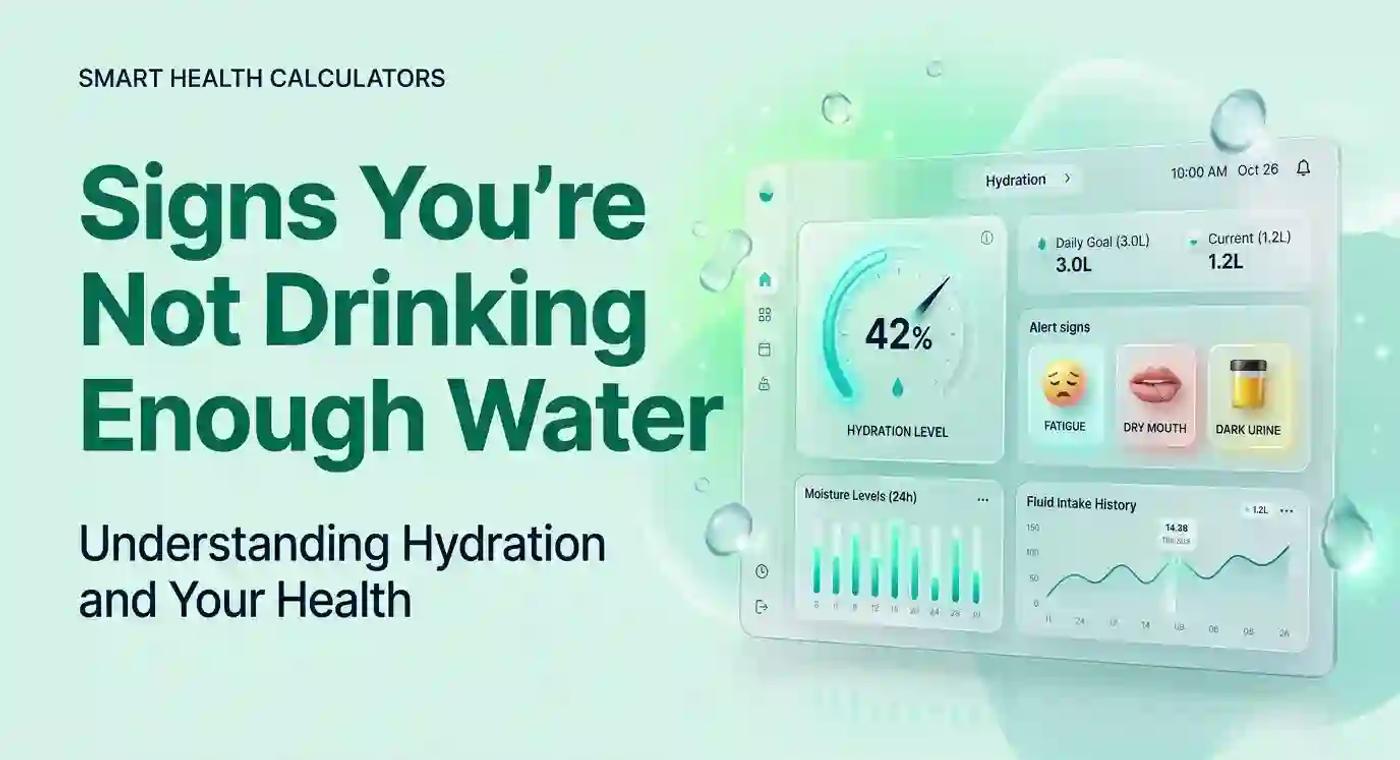
Signs You're Not Drinking Enough Water (& How to Fix It)
Struggling with fatigue or headaches? Discover how to know if you are dehydrated using your body's warning signs, and calculate your exact fluid needs today.
Dehydration happens when your body loses more fluid than it takes in, and it usually creeps up quietly before it ever feels dramatic. Most people assume they'll "just feel thirsty" if they're low on water, but in reality, your body sends out a whole list of warning signals — fatigue, headaches, dry skin, dark urine, and even brain fog — long before thirst kicks in. By the time you actually feel thirsty, you're often already mildly dehydrated.
In this guide, we'll break down the most common signs you're not drinking enough water, explain why each symptom happens, and show you exactly how much water your body actually needs. We'll also cover special cases like dehydration in hot weather, during exercise, and in older adults, plus quick FAQs you can scan in seconds.
If you want a faster, more personalized way to track this, you can use our free Water Intake Calculator to see exactly how many glasses of water you should be drinking based on your weight, activity level, and climate.
What Happens When You Don't Drink Enough Water
Water makes up roughly 50–60% of your total body weight, and it's involved in nearly every function your body performs — regulating temperature, cushioning joints, flushing out waste, delivering nutrients to cells, and keeping your blood volume stable. When your fluid intake drops below what your body loses through sweat, urine, and breathing, your cells and organs start to struggle.
This imbalance is called dehydration, and it ranges from mild (easily fixed by drinking water) to severe (a medical emergency requiring IV fluids). The tricky part is that mild dehydration doesn't always come with an obvious "I'm thirsty" signal — especially in older adults, whose thirst response weakens with age.
That's exactly why learning to recognize the early, subtle signs of dehydration is so important. Catching it early means you can fix it with a glass of water instead of a trip to urgent care.
Signs You're Not Drinking Enough Water (At a Glance)
Here's a quick checklist before we go deeper into each symptom:
- Persistent thirst or a dry, sticky mouth
- Dark yellow or amber-colored urine
- Fatigue and low energy throughout the day
- Headaches, especially in the afternoon
- Dizziness or lightheadedness when standing up
- Dry, flaky, or less elastic skin
- Constipation or irregular bowel movements
- Muscle cramps, especially during or after exercise
- Bad breath
- Difficulty concentrating or "brain fog"
- Sugar or salt cravings
- Sunken eyes (in more advanced dehydration)
Let's look at why each of these happens.
1. Persistent Thirst and Dry Mouth
This one seems obvious, but it's worth explaining why it matters. Thirst is your body's emergency alarm, not its early warning system. When your blood volume and sodium concentration shift even slightly, your brain triggers thirst to get you to act — but this usually means you're already running a small fluid deficit.
A dry mouth happens because your salivary glands need adequate hydration to produce saliva. When fluid is limited, saliva production drops, leaving your mouth feeling sticky, dry, or even producing bad breath, since saliva normally washes away odor-causing bacteria.
Quick fix: Don't wait until you feel parched. Sip water consistently throughout the day instead of chugging large amounts when you finally notice thirst.
2. Dark or Strong-Smelling Urine
Urine color is one of the easiest, most reliable signs of dehydration status. When you're well hydrated, urine should be pale yellow, almost straw-colored. As dehydration sets in, your kidneys conserve water by concentrating waste products, which makes urine darker and more pungent.
A simple at-home hydration check:
- Pale yellow: Well hydrated
- Yellow: Adequate, but drink a bit more
- Dark yellow or amber: Mild to moderate dehydration
- Brown or orange: Significant dehydration — increase fluids immediately and monitor symptoms
If you notice consistently dark urine along with reduced urination frequency, it's a strong signal to increase your daily water intake.
3. Fatigue and Low Energy
Feeling tired all the time? Dehydration is often an overlooked cause. Water plays a role in transporting oxygen and nutrients to your cells and in regulating blood volume. When fluid levels drop, your heart has to work harder to pump a smaller volume of blood, which can leave you feeling sluggish, foggy, and low on energy — even after a full night's sleep.
This is one of the most commonly missed signs of dehydration because fatigue has so many other possible causes (poor sleep, stress, low iron, etc.). If you've ruled those out and you're still tired, try increasing your water intake for a few days and see if your energy improves.
4. Headaches
Dehydration headaches are real, and they're surprisingly common. When fluid levels drop, your brain can temporarily shrink slightly due to fluid loss, pulling away from the skull. This is thought to trigger pain receptors, resulting in a dull, throbbing headache — often worse with movement.
These headaches typically improve within 30 minutes to a few hours of rehydrating, which is one way to distinguish a dehydration headache from a migraine or tension headache.
5. Dizziness or Lightheadedness
When you're dehydrated, your blood volume drops, which can lower your blood pressure. This is especially noticeable when you stand up quickly — a sensation called orthostatic hypotension. If you frequently feel dizzy or lightheaded after standing, alongside other symptoms like thirst or dark urine, dehydration could be a contributing factor.
6. Dry, Less Elastic Skin
Skin is one of the largest organs in your body, and it relies on adequate hydration to stay plump, smooth, and elastic. When you're dehydrated, skin can become dry, flaky, or appear dull.
Try the skin pinch test: Gently pinch the skin on the back of your hand and release it. In well-hydrated skin, it snaps back almost instantly. In dehydrated skin, it may take a few extra seconds to flatten out — this is sometimes called reduced skin turgor and is used clinically as a quick dehydration indicator.
7. Constipation and Digestive Issues
Water plays a key role in digestion, helping soften stool and keep things moving through your intestines. When you're not drinking enough, your colon absorbs more water from waste material, leading to harder stools and constipation.
If you've increased your fiber intake but you're still constipated, check your water intake before assuming it's a diet problem — fiber actually needs water to do its job properly.
8. Muscle Cramps
Ever gotten a sudden calf cramp during a workout or in the middle of the night? Dehydration disrupts your body's electrolyte balance — particularly sodium, potassium, and magnesium — which are essential for normal muscle contraction and relaxation. When fluid and electrolyte levels drop, muscles become more prone to involuntary spasms and cramps.
This is especially common after intense exercise, in hot weather, or after sweating heavily without replacing fluids.
9. Difficulty Concentrating (Brain Fog)
Even mild dehydration — as little as 1–2% loss of body water — has been associated with reduced concentration, slower reaction time, and short-term memory issues. Your brain is roughly 75% water, and even small fluid deficits can affect mood, alertness, and cognitive performance.
If you find yourself struggling to focus during the day, especially in the afternoon, try drinking a full glass of water before reaching for coffee or a snack.
10. Sugar or Salt Cravings
Mild dehydration can sometimes be mistaken for hunger, leading to unnecessary snacking — particularly cravings for salty or sugary foods. This happens partly because your body is trying to retain fluid (sodium helps with that) or because dehydration and hunger signals can overlap in the brain. Next time you feel a sudden craving, try drinking a glass of water first and waiting 15–20 minutes.
Signs of Severe Dehydration (Seek Medical Attention)
While mild dehydration is easily fixed at home, severe dehydration is a medical emergency. According to Mayo Clinic, warning signs of severe dehydration include extreme thirst, very dark urine or no urination, sunken eyes, rapid heartbeat, rapid breathing, confusion, and lethargy. If you or someone else shows these signs — especially confusion, fainting, or an inability to keep fluids down — seek medical care immediately rather than trying to rehydrate at home.
How Much Water Should You Actually Drink?
There's no single universal number, since water needs depend on body weight, activity level, climate, and overall health. A commonly cited general guideline is around 8 glasses (about 2 liters) per day, but this is a simplified starting point rather than a precise target for everyone.
Factors that increase your water needs include:
- Hot or humid weather
- High-altitude environments
- Intense exercise or physical labor
- Pregnancy and breastfeeding
- Fever, vomiting, or diarrhea
- High caffeine or alcohol intake
For a more accurate, personalized number based on your weight and lifestyle, try our Water Intake Calculator — it's free and takes less than a minute. You can also read our in-depth Daily Water Intake Guide for a full breakdown by age, weight, and activity level.
Dehydration in Hot Weather and During Exercise
In hot or humid climates, your body loses significantly more fluid through sweat — sometimes over a liter per hour during intense activity. Signs of dehydration tend to appear faster in these conditions, including muscle cramps, dizziness, and rapid heartbeat. If you live somewhere with hot summers, it's worth proactively increasing your water intake during peak heat hours rather than waiting for symptoms to appear.
Athletes and people doing physical labor outdoors should also pay attention to electrolyte balance, not just plain water, since heavy sweating depletes sodium and potassium as well.
Dehydration in Older Adults
Older adults are at higher risk of dehydration for a few reasons: the natural thirst response weakens with age, kidney function changes can affect fluid regulation, and certain medications (like diuretics) increase fluid loss. Because of this, dehydration in older adults can present differently — sometimes showing up as confusion, increased fatigue, or dizziness rather than obvious thirst. Caregivers and family members should encourage regular fluid intake throughout the day, rather than relying on the person to feel thirsty first.
Simple Habits to Stay Properly Hydrated
- Keep a reusable water bottle with you and refill it throughout the day
- Drink a glass of water first thing in the morning
- Eat water-rich foods like cucumbers, watermelon, and oranges
- Set reminders if you tend to forget to drink water during busy workdays
- Monitor urine color as a quick daily hydration check
- Increase intake during exercise, hot weather, illness, or pregnancy
Small, consistent habits are far more effective than trying to drink large amounts of water all at once.
Frequently Asked Questions
What are the early signs of dehydration? The earliest signs are usually thirst, dry mouth, dark yellow urine, and mild fatigue. These symptoms typically appear before more noticeable issues like headaches or dizziness develop.
What color is urine when you're dehydrated? Dehydrated urine is usually dark yellow, amber, or brownish, compared to the pale yellow color seen with adequate hydration.
Can dehydration cause headaches? Yes. Mild fluid loss can trigger dull, throbbing headaches, often caused by temporary shrinkage of brain tissue due to reduced fluid volume. These headaches usually improve within a few hours of rehydrating.
How many glasses of water should I drink a day? A common starting guideline is around 8 glasses (about 2 liters) daily, though exact needs vary by weight, activity level, and climate. Use a Water Intake Calculator for a personalized number.
Can not drinking enough water cause fatigue or brain fog? Yes. Even mild dehydration can reduce blood volume and oxygen delivery to your brain and muscles, leading to tiredness, sluggishness, and difficulty concentrating.
Does coffee or tea count toward daily water intake? Yes, in moderation. While caffeine has a mild diuretic effect, normal coffee and tea consumption still contributes to your overall fluid intake, though water remains the best primary source.
Final Thoughts
Your body is constantly signaling when it needs more water — through thirst, fatigue, headaches, dark urine, or even unexpected sugar cravings. The key is learning to recognize these early dehydration signs before they escalate into something more serious. Staying consistently hydrated isn't about drinking large amounts all at once; it's about building small daily habits that keep your fluid levels balanced.
If you're not sure how much water your body actually needs, take the guesswork out of it with our free Water Intake Calculator, or explore more practical health tools at Smart Health Calculators to take the next step toward better daily health habits.
Medical Disclaimer
This article is for general education only. It is not medical advice, diagnosis, treatment, prescription guidance, or a replacement for professional healthcare. Speak with a qualified healthcare professional for personal medical concerns, symptoms, pregnancy concerns, mental health crisis, medication questions, or before making major health changes.