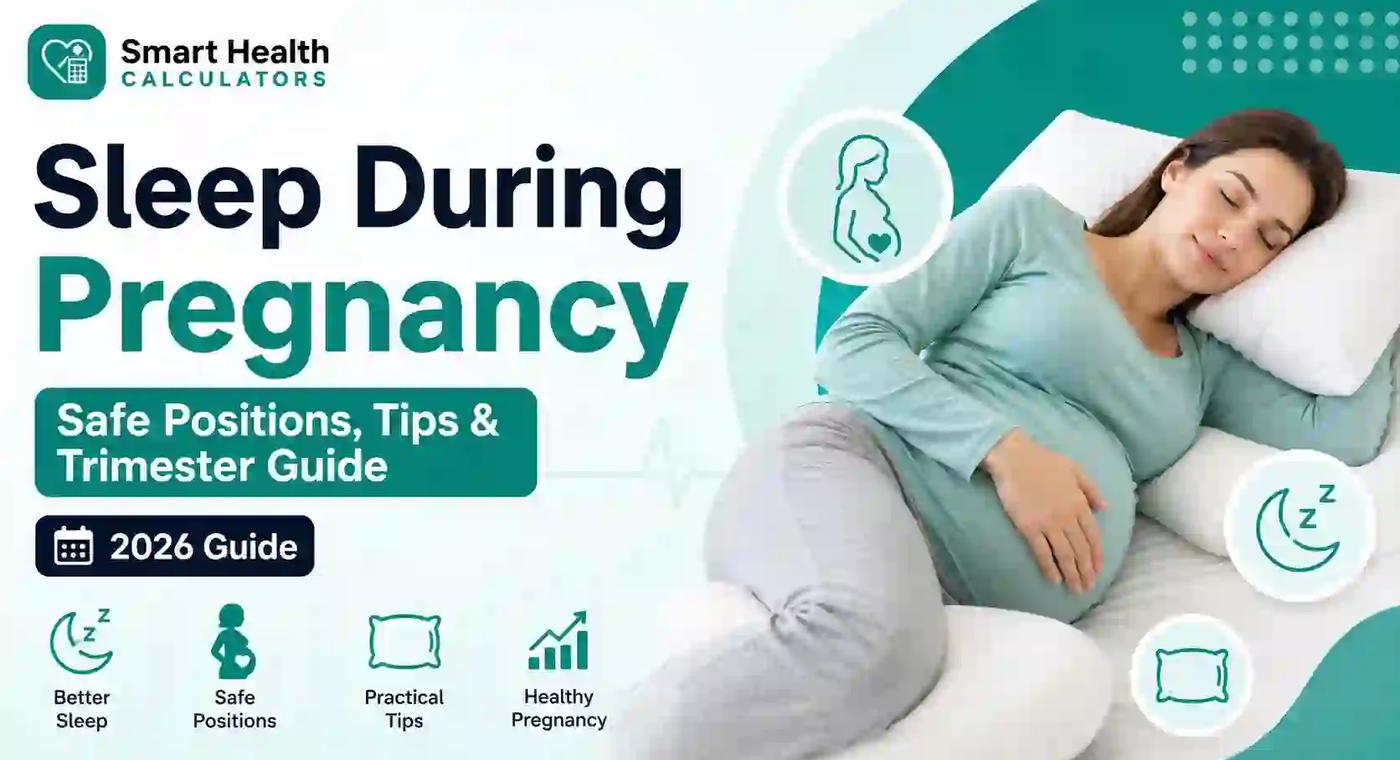
Sleep During Pregnancy: Safe Positions, Tips & Trimester Guide
Learn how to sleep better during pregnancy, including safe positions, trimester changes, pregnancy insomnia, pillows, naps, and when to call your doctor.
Sleep during pregnancy isn't just about feeling rested — it's tied to hormone regulation, fetal development, and your own physical recovery. As your body produces more progesterone and your blood volume increases, sleep architecture shifts in ways that can leave you exhausted in the first trimester and wide awake at 3 a.m. in the third. Research has also linked chronically poor sleep in pregnancy to a higher likelihood of complications such as gestational hypertension and preterm labor, though it's important to note this connection is associative, not proven as a direct cause.
This guide walks through exactly what changes trimester by trimester, which sleep positions are actually safe, how to tell normal discomfort apart from something worth mentioning to your provider, and practical steps that make a real difference at 2 a.m. when nothing seems to work.
Why Sleep Matters More During Pregnancy
Sleep isn't a passive activity — it's when your body does much of its repair and regulation work. During pregnancy, that workload doubles. Growth hormone release, immune regulation, and cardiovascular recovery all happen predominantly during deep sleep, and your body is now supporting two systems instead of one.
According to the American College of Obstetricians and Gynecologists (ACOG), inadequate sleep during pregnancy has been associated with longer labors, higher rates of cesarean delivery, and increased risk of gestational diabetes and hypertensive disorders. These aren't guarantees — plenty of people with disrupted sleep have straightforward pregnancies — but the pattern shows up consistently enough in research that sleep deserves the same attention as diet or prenatal vitamins.
There's also a same-day payoff. Poor sleep amplifies pregnancy fatigue, worsens nausea, increases pain sensitivity, and makes emotional regulation harder. If you've ever noticed that everything feels more manageable after a decent night's sleep and unbearable after a bad one, pregnancy intensifies that effect rather than dulling it.
If you want a broader picture of what else shifts week to week, our pregnancy calculator can help you track your due date and trimester timeline alongside the sleep changes discussed below.
How Much Sleep Do Pregnant Women Actually Need?
Most sleep researchers, including those cited by the National Sleep Foundation, recommend 7 to 9 hours per night during pregnancy — the same general range as non-pregnant adults, but harder to achieve given the physical changes involved.
A few nuances worth knowing:
- First trimester often requires more sleep than usual, sometimes 9–10 hours, because progesterone has a sedating effect and your body is building the placenta from scratch.
- Second trimester tends to be the easiest stretch, with sleep quality often improving as nausea fades and the uterus hasn't yet grown large enough to cause major discomfort.
- Third trimester is where total sleep time often drops, not because you need less, but because physical discomfort, bathroom trips, and anxiety interrupt it repeatedly.
Quality matters as much as quantity. Six broken hours with frequent waking is not equivalent to six consolidated hours. If you're unsure whether your sleep patterns are within a healthy range, our sleep quality checker can give you a quick, personalized read on where you stand.
How Sleep Changes Trimester by Trimester
Sleep disruption in pregnancy isn't one static problem — it evolves. What keeps you up in week 8 is rarely what keeps you up in week 34.
| Trimester | Common Sleep Issues | Why It Happens | What Helps |
|---|---|---|---|
| First (Weeks 1–12) | Excessive daytime sleepiness, needing naps, nausea disrupting sleep | Progesterone surges rapidly; body is building the placenta | Earlier bedtime, short naps under 30 minutes, ginger tea for nausea |
| Second (Weeks 13–27) | Vivid dreams, mild snoring, some restlessness | Increased blood volume, nasal congestion from hormonal changes | Humidifier, side sleeping habit-building, light evening stretching |
| Third (Weeks 28–40) | Frequent urination, back pain, restless legs, difficulty finding a comfortable position, shortness of breath | Growing uterus presses on bladder and diaphragm; joint laxity increases | Pregnancy pillow support, left-side sleeping, reduced fluids before bed, short walks |
For a deeper breakdown of what's happening physically at each stage, see our guide on pregnancy symptoms by trimester.
Is It Safe to Sleep on Your Back While Pregnant?
This is one of the most searched — and most anxiety-inducing — questions in pregnancy sleep. Here's the direct answer:
Early pregnancy: Back sleeping is generally considered safe through roughly the first 20 weeks, before the uterus has grown large enough to significantly compress major blood vessels.
Later pregnancy (after ~20 weeks): Most obstetric guidance, including advice from ACOG, recommends avoiding prolonged back sleeping. As the uterus enlarges, lying flat on your back can compress the inferior vena cava — the large vein returning blood from your lower body to your heart — potentially reducing blood flow to both you and the baby. This can cause dizziness, shortness of breath, or a drop in blood pressure known as supine hypotensive syndrome.
A few practical clarifications people often ask about:
- Falling asleep on your back occasionally isn't dangerous. Your body typically shifts position on its own during sleep, and waking up on your back doesn't mean harm has occurred.
- A slight recline (30 degrees or so) is a safer middle ground than flat if side sleeping feels impossible for a nap.
- If you wake up on your back, simply roll to your side — there's no need for panic; this is a common and manageable occurrence.
Why Left-Side Sleeping Is Recommended
Left-side sleeping (often abbreviated as "SOS" — sleep on side) is repeated so often in pregnancy advice that it can start to feel like an empty recommendation. The physiological reasoning is actually specific: sleeping on your left side keeps the weight of the uterus off the inferior vena cava, which runs slightly to the right of the spine. This supports better blood flow, which in turn supports oxygen and nutrient delivery to the placenta.
Right-side sleeping isn't dangerous or forbidden — it's simply considered slightly less optimal than the left for circulation. If you wake up on your right side, there's no cause for alarm; alternating sides throughout the night is completely normal and expected.
To make left-side sleeping easier to maintain:
- Place a pillow between your knees to reduce hip and lower back strain.
- Use a wedge or full-length pregnancy pillow behind your back to discourage rolling onto it.
- Try the "tuck and tilt" position — knees bent, top leg supported by a pillow, slight forward lean.
Common Pregnancy Sleep Problems
Pregnancy Insomnia
Insomnia in pregnancy often isn't about being unable to fall asleep — it's about staying asleep. Hormonal shifts, an increasingly active mind, and physical discomfort combine to cause frequent night waking, particularly in the third trimester.
What tends to help:
- A consistent wind-down routine starting 30–45 minutes before bed.
- Limiting screens in the hour before sleep, since blue light delays melatonin release.
- Writing down tomorrow's worries on paper before bed, which reduces late-night mental looping for many people.
Restless Legs Syndrome (RLS)
Restless legs syndrome — an uncomfortable, often described as "crawling" sensation in the legs paired with an urge to move them — affects a meaningful percentage of pregnant people, especially in the third trimester. It's frequently linked to lower iron or folate levels, so it's worth mentioning to your provider, who may check your levels through routine bloodwork.
Simple relief measures include leg stretches before bed, warm baths, and avoiding caffeine in the afternoon, since caffeine can worsen RLS symptoms.
Sleep Apnea During Pregnancy
Sleep apnea — repeated pauses in breathing during sleep — can develop or worsen during pregnancy due to weight gain, nasal swelling, and hormonal changes affecting the airway. Loud snoring, gasping awake, or excessive daytime sleepiness despite a full night in bed are signs worth raising with your doctor.
This is distinct from ordinary pregnancy snoring, which is common and usually harmless. According to the National Heart, Lung, and Blood Institute, untreated sleep apnea during pregnancy has been associated with higher blood pressure and reduced oxygen delivery, which is why it's evaluated separately from routine discomfort-related sleep issues.
Heartburn, Frequent Urination, and Back Pain
These three are less exotic but arguably more disruptive night after night:
- Heartburn worsens as the growing uterus pushes on the stomach; sleeping slightly elevated and avoiding meals within 2–3 hours of bedtime helps.
- Frequent urination results from the uterus pressing on the bladder; reducing fluids in the two hours before bed (without restricting daytime hydration) can reduce trips.
- Back pain stems from loosening ligaments and shifting center of gravity; a supportive mattress and knee pillow reduce strain significantly.
Does Poor Sleep During Pregnancy Affect the Baby?
This is a question that deserves a careful, accurate answer rather than an alarmist one. Research has found associations between chronically poor or insufficient sleep and outcomes like preterm birth, lower birth weight, and longer labor. The March of Dimes and other maternal health organizations note these connections while also emphasizing that sleep is one factor among many — not a standalone predictor.
In plain terms: occasional bad nights are normal and not a cause for worry. What research flags is a pattern of chronic, severe sleep restriction (regularly under 6 hours, combined with poor quality) sustained over weeks. If that describes your situation, it's worth discussing with your provider — not because one rough week is dangerous, but because persistent sleep loss is manageable with the right support, and there's no benefit to pushing through it silently.
Practical Tips to Sleep Better During Pregnancy
Small, consistent changes tend to outperform dramatic overhauls. Here's what actually moves the needle for most people:
- Set a consistent sleep and wake time, even on weekends — circadian rhythm regulation matters more in pregnancy, not less.
- Front-load your fluids earlier in the day and taper off in the evening to reduce nighttime bathroom trips.
- Keep the bedroom cool, around 65–68°F (18–20°C) — pregnancy raises your baseline body temperature, so a warm room compounds discomfort.
- Use pillows strategically: one between the knees, one supporting the belly, and one behind the back if you tend to roll.
- Try a short walk after dinner — light movement supports digestion and can reduce heartburn and restless legs later.
- Practice a wind-down ritual: dim lights, stretch gently, or try slow breathing for five minutes before bed.
- Limit caffeine after early afternoon, since pregnancy slows caffeine metabolism significantly, meaning a 2 p.m. coffee lingers in your system much longer than it would pre-pregnancy.
If stress is a major factor keeping you up, our article on how stress affects sleep quality breaks down the physiological loop between anxiety and wakefulness, along with ways to interrupt it.
Best Pregnancy Pillow and Sleep Setup Tips
A dedicated pregnancy pillow isn't essential, but for many people it's the single highest-impact purchase for sleep comfort in the second half of pregnancy. The main types:
- Wedge pillows — small, targeted support for the belly or lower back; easiest to travel with.
- C-shaped pillows — support the back, belly, and knees simultaneously; good for people who move around at night.
- U-shaped (full body) pillows — maximum support on both sides, though they take up significant bed space and may not suit shared beds well.
Whichever style you choose, the goal is the same: keep your spine neutral, support the belly's weight so it doesn't pull on your lower back, and make left-side sleeping the path of least resistance.
Naps During Pregnancy: Helpful or Harmful?
Naps are generally safe and often necessary during pregnancy, particularly in the first and third trimesters when nighttime sleep is most disrupted. The key is keeping naps strategic rather than open-ended:
- Aim for 20–30 minutes for a quick energy reset without grogginess.
- Nap before 3 p.m. to avoid interfering with nighttime sleep onset.
- If fatigue is overwhelming and you need a longer nap, that's fine occasionally — just notice if it's consistently pushing bedtime later and later.
Naps are not a sign of laziness or poor planning; they're a legitimate response to a body doing significant physiological work. Many workplaces and cultures still stigmatize daytime rest, but from a purely physical standpoint, a short nap is one of the most efficient tools available for managing pregnancy fatigue.
Sleep Tips by Situation
First trimester: Prioritize early bedtimes over willpower — fighting first-trimester sleepiness rarely works. Keep a snack by the bed for nausea-related early waking.
Third trimester: Focus on positioning and reducing pain triggers rather than expecting to "fix" fragmented sleep entirely. Some disruption at this stage is developmentally normal, not a failure of sleep hygiene.
Back pain specifically: A firmer mattress topper combined with a knee pillow often outperforms softer surfaces, which can let the hips sink and misalign the spine.
Heartburn-prone nights: Elevate the head and upper back with a wedge rather than just stacking pillows, which can crane the neck uncomfortably.
Carrying twins: Physical discomfort tends to arrive earlier and more intensely; left-side sleeping with heavier pillow support often becomes necessary sooner than in singleton pregnancies.
Working through pregnancy: Protect a wind-down window even on demanding days — a rushed transition from screen-heavy work straight into bed tends to worsen sleep onset time.
Sleep and mental health: Sleep loss and mood are tightly linked in pregnancy — poor sleep can worsen anxiety, and anxiety can worsen sleep, creating a loop that's hard to break alone. If this feels like your situation, our mental health checker can help you get a clearer picture of what you're experiencing, and talking with your provider is a reasonable next step rather than something to push through quietly.
When to Talk to Your Doctor About Sleep
Most pregnancy sleep disruption is uncomfortable but medically unremarkable. That said, certain signs are worth flagging rather than waiting out:
- Loud, persistent snoring or gasping awake (possible sleep apnea)
- Legs that feel unbearable to keep still, especially with low iron symptoms like fatigue or pale skin
- Sudden, significant swelling paired with poor sleep and headaches (possible signs worth ruling out for preeclampsia)
- Sleep loss severe enough to affect daytime functioning for more than two consecutive weeks
- Persistent low mood or anxiety alongside sleep disruption
None of these are meant to cause alarm — they're simply the specific situations where a conversation with your provider adds real value rather than just reassurance you could get elsewhere.
Frequently Asked Questions
How much sleep do pregnant women need? Most guidance recommends 7–9 hours per night, though the first trimester often calls for more due to hormonal sedation, and the third trimester frequently sees more fragmented sleep despite similar total need.
What is the best sleeping position during pregnancy? Left-side sleeping is generally recommended after the first trimester, as it supports optimal blood flow to the placenta by keeping uterine weight off the inferior vena cava.
Why is it hard to sleep during pregnancy? A combination of hormonal shifts, physical discomfort, frequent urination, and anxiety disrupts normal sleep patterns, with different causes dominating each trimester.
Is it safe to sleep on your back while pregnant? It's generally considered fine in early pregnancy, but after about 20 weeks, prolonged back sleeping is typically discouraged because it can compress a major vein and reduce blood flow.
Can poor sleep during pregnancy harm the baby? Chronic, severe sleep restriction has been associated with outcomes like preterm birth in research, but occasional poor sleep is normal and not considered a significant risk on its own.
Is snoring during pregnancy a concern? Mild snoring is common due to nasal swelling from hormonal changes. Loud snoring with gasping or breathing pauses is different and worth mentioning to your provider, as it can signal sleep apnea.
Final Thoughts
Sleep during pregnancy is rarely perfect, and chasing perfection usually backfires. What actually helps is understanding why each stage feels the way it does, adjusting your position and routine accordingly, and knowing which symptoms are simply uncomfortable versus which ones deserve a conversation with your care provider.
If you're tracking your pregnancy timeline alongside these changes, our pregnancy calculator and sleep quality checker are both free tools designed to help you stay informed at every stage — no guesswork required.
This article is for informational purposes and does not replace personalized medical advice. Always consult your obstetrician or midwife about symptoms specific to your pregnancy.
Medical Disclaimer
This article is for general education only. It is not medical advice, diagnosis, treatment, prescription guidance, or a replacement for professional healthcare. Speak with a qualified healthcare professional for personal medical concerns, symptoms, pregnancy concerns, mental health crisis, medication questions, or before making major health changes.