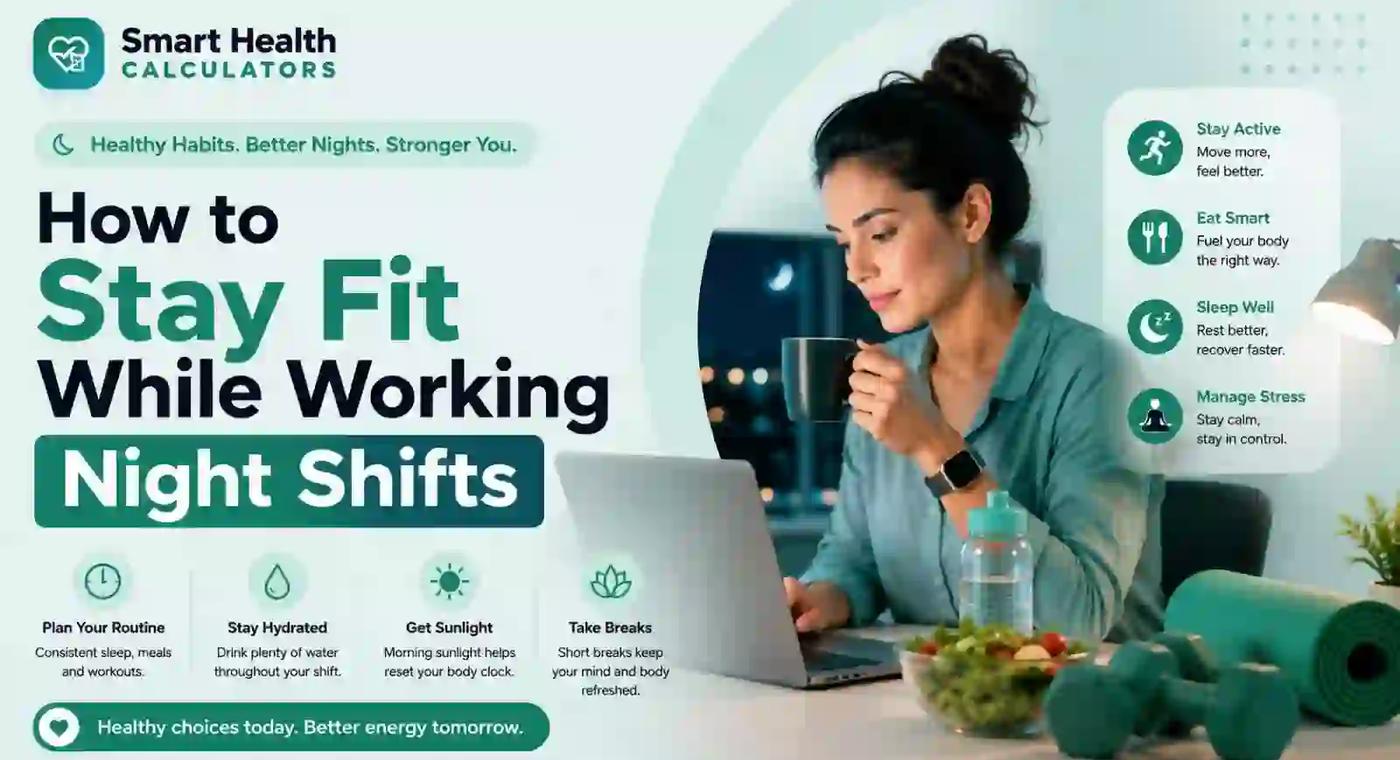
How to Stay Fit While Working Night Shifts: Complete Guide
Struggling to stay fit on night shifts? Get proven tips on workouts, meal timing, sleep, and energy management designed for shift workers.
Working the night shift changes more than just your clock — it changes how your body burns energy, recovers, and stays healthy. If you're a nurse, security guard, factory worker, or warehouse employee clocking in after dark, you already know the struggle: irregular meals, disrupted sleep, and workouts that never seem to fit anywhere in your schedule.
The good news? Staying fit while working night shifts is absolutely possible. It just requires a different playbook than the standard 9-to-5 fitness advice you'll find everywhere else. In this guide, you'll learn exactly how to build a sustainable fitness routine, eat right around odd hours, sleep better during the day, and protect your long-term health — without quitting your job or burning out.
Why Night Shift Work Affects Fitness and Health
Your body runs on an internal 24-hour clock called the circadian rhythm. This clock controls when you feel hungry, when you feel sleepy, and when your metabolism runs fastest. Night shift work forces you to fight against this natural rhythm — staying awake and active when your body expects darkness and rest.
This mismatch, often called shift work sleep disorder, can lead to several downstream effects:
- Slower metabolism and increased fat storage due to disrupted meal timing
- Higher cortisol (stress hormone) levels from irregular sleep
- Reduced motivation to exercise due to chronic fatigue
- Poor food choices driven by vending machines and convenience stores
- Increased risk of weight gain, and over time, cardiovascular strain
According to the Centers for Disease Control and Prevention, shift workers face a higher risk of sleep problems, obesity, and metabolic issues compared to daytime employees. That's exactly why night shift workers need a fitness and nutrition strategy built specifically around their schedule — not a copy-pasted daytime routine.
Is It Possible to Stay Fit While Working Night Shifts?
Yes, it is absolutely possible to stay fit while working night shifts. Thousands of nurses, pilots, factory workers, and security professionals maintain excellent fitness levels despite irregular hours. The key is consistency, not perfection — building small, repeatable habits around sleep, movement, and nutrition that fit your actual schedule rather than an idealized one.
Building a Night Shift Exercise Routine That Actually Works
One of the biggest questions night shift workers ask is: when should I even work out? There's no single "correct" answer — it depends on your body, your commute, and your sleep window. Here are the three most common approaches.
Option 1: Exercise Before Your Shift
Working out a few hours before you clock in can boost alertness and energy for the night ahead. A 20–30 minute moderate workout — brisk walking, cycling, or light strength training — raises your core body temperature and mental focus without exhausting you before a long shift.
Option 2: Exercise After Your Shift (Before Sleep)
Some night shift workers prefer to exercise right after finishing work, before heading home to sleep. This works well for high-intensity training since your body is already awake and warmed up. However, avoid workouts too close to bedtime, as elevated heart rate and adrenaline can delay sleep onset.
Option 3: Exercise During Your Break
If your job allows it, even 10–15 minutes of bodyweight exercises, stretching, or stair climbing during a break can offset the health effects of prolonged sitting or standing. This is especially useful for night shift nurses and warehouse staff who don't have time for a full workout session.
Pro tip: Consistency beats timing. Whether you train before or after your shift, what matters most is doing it regularly. Use a structured plan like our 30-minute workout plan for busy people to build a routine that fits around irregular hours, or start with our beginner weekly workout plan if you're just getting started.
Sample Night Shift Workout Schedule
Sample Night Shift Workout Schedule
2–3 hours before shift — Brisk walk or light cardio — 20–30 min
During break — Bodyweight stretches, squats — 10 min
After shift (2–3x/week) — Strength training — 30–40 min
Rest days — Yoga or mobility work — 15–20 min
You can plan and adjust your personal routine using our free Workout Planner tool, which helps you map exercise sessions around any work schedule, including rotating and overnight shifts.
Night Shift Diet Plan: What to Eat Before, During, and After Work
Nutrition is arguably more important than exercise when it comes to staying fit on night shifts. Eating at the wrong times or relying on processed snacks is one of the biggest contributors to night shift weight gain.
What to Eat Before a Night Shift
Have a balanced meal 1–2 hours before your shift starts. Focus on:
- Lean protein (chicken, eggs, tofu, fish)
- Complex carbohydrates (brown rice, oats, whole grain bread)
- Healthy fats (avocado, nuts, olive oil)
This combination provides steady energy release instead of a quick sugar spike followed by a crash a few hours into your shift.
What to Eat During a Night Shift
Avoid heavy, greasy meals in the middle of the night — they slow digestion and increase sleepiness. Instead, aim for light, protein-rich snacks:
- Greek yogurt with berries
- A handful of almonds or walnuts
- Boiled eggs
- Hummus with vegetable sticks
- Protein shake
Small, frequent meals help maintain blood sugar and energy without triggering the "food coma" effect.
What to Eat After a Night Shift (Before Sleep)
Keep your post-shift meal light. A heavy meal right before sleep can interfere with digestion and sleep quality. Try:
- A small bowl of oatmeal
- Herbal tea and a banana
- Light soup
To build a nutrition plan tailored to your calorie needs and schedule, try our Diet Plan Generator or check your daily needs with the Calorie Intake Planner. It also helps to understand the difference between calorie intake vs. calories burned so you're not accidentally overeating during long, low-activity night hours.
Hydration Matters More Than You Think
Dehydration is common among night shift workers because thirst cues weaken when you're tired. Poor hydration worsens fatigue, headaches, and concentration. Keep a water bottle at your station and sip consistently through your shift. Use our Water Intake Calculator to find your ideal daily amount, and read our daily water intake guide for practical hydration strategies during long shifts.
How to Sleep Better During the Day After a Night Shift
Sleep is the foundation of fitness, and it's the hardest part of night shift life to get right. Poor daytime sleep leads to poor food choices, low motivation to exercise, and long-term health risks.
Tips for Better Daytime Sleep
- Block out light completely — Use blackout curtains or a quality sleep mask. Light exposure is the number one disruptor of daytime sleep.
- Keep a consistent sleep schedule — Even on days off, try to sleep and wake at similar times to avoid constantly resetting your body clock.
- Use white noise or earplugs — Daytime noise (traffic, deliveries, family activity) can fragment sleep cycles.
- Avoid caffeine at least 6 hours before bed — Time your last coffee carefully so it doesn't interfere with falling asleep after your shift.
- Cool your room down — A cooler bedroom temperature supports deeper, uninterrupted sleep.
- Limit blue light exposure before bed — Phone and screen use right before sleep delays melatonin release, making it harder to fall asleep.
According to the National Sleep Foundation, shift workers should aim for 7–9 hours of total sleep, even if it needs to be split into a main block and a short nap. You can evaluate your current sleep habits using our Sleep Quality Checker to identify specific areas for improvement.
How Many Hours Should a Night Shift Worker Sleep?
Night shift workers should aim for the same 7–9 hours of sleep recommended for all adults, even though it happens during daylight hours. Many find it helpful to split this into a longer 5–6 hour block plus a 60–90 minute nap before their next shift, which helps offset the effects of fragmented daytime sleep.
Managing Energy and Fatigue Without Relying on Caffeine
While coffee is the go-to fix for many shift workers, over-reliance on caffeine can backfire, disrupting sleep further and creating a fatigue cycle. Here are alternative strategies:
- Strategic napping: A 20-minute nap before your shift (often called a "prophylactic nap") significantly improves alertness without causing grogginess.
- Bright light exposure at the start of your shift: This signals your brain to stay alert, similar to how sunlight works during the day.
- Movement breaks: Short walks or stretching every couple of hours boost circulation and mental clarity far more sustainably than sugar or caffeine.
- Protein-rich snacks: Unlike sugary snacks, protein provides steady energy without a crash.
Does Working Night Shifts Cause Weight Gain?
Working night shifts can contribute to weight gain, but it isn't inevitable. The main causes are disrupted circadian rhythms affecting metabolism, irregular eating patterns, increased cortisol from poor sleep, and reliance on convenience foods. With planned meals, consistent sleep, and regular movement, night shift workers can maintain or even improve their weight and fitness levels.
Mental Health and Night Shift Work
Fitness isn't just physical — mental wellbeing plays a huge role too. Night shift work has been linked to higher rates of stress, isolation, and mood changes due to disrupted social rhythms and sleep deprivation. Since the body's melatonin and serotonin regulation is closely tied to light exposure and sleep timing, irregular schedules can affect mood stability over time.
To support mental wellness alongside physical fitness:
- Stay connected with friends and family, even if schedules don't align perfectly
- Get natural sunlight exposure during your off hours when possible
- Practice stress-reduction techniques like deep breathing or short meditation sessions
- Monitor your mental health regularly using our Mental Health Self-Check-In Guide
The World Health Organization notes that maintaining social connections and routine, even in non-traditional work schedules, is a key protective factor for long-term mental health.
How Nurses and Healthcare Workers Stay Fit on Night Shifts
Healthcare professionals are some of the most experienced night shift veterans, and their strategies offer useful lessons:
- Meal prepping in bulk on days off to avoid relying on hospital cafeteria or vending machine food
- Using short breaks efficiently for stretching or quick bodyweight circuits between patient rounds
- Wearing supportive footwear to reduce fatigue during long standing shifts
- Prioritizing sleep hygiene as strictly as their patient care schedule
- Tracking steps and activity, since many healthcare roles already involve significant walking
If your job is largely on your feet, that daily movement counts. Track it with our Step Counter Goal Planner to make sure you're hitting a healthy activity target even without formal workouts.
Long-Term Health Considerations for Night Shift Workers
Long-term night shift work is associated with elevated risks for cardiovascular issues, metabolic syndrome, and vitamin D deficiency due to reduced sun exposure. This doesn't mean night shift work is inherently dangerous — it means it requires proactive health management.
Steps to protect long-term health:
- Get regular health check-ups, including blood pressure and metabolic screening
- Consider a vitamin D supplement if sun exposure is limited (consult a doctor first)
- Monitor your body composition and overall health trends using our Body Fat Estimator and Health Age Calculator
- Maintain a healthy BMI range, which you can check anytime with our BMI Calculator
Mayo Clinic recommends that shift workers pay particular attention to routine preventive screenings, since irregular schedules often lead to missed or delayed medical appointments.
Sample Weekly Fitness and Wellness Routine for Night Shift Workers
Sample Weekly Fitness and Wellness Routine for Night Shift Workers
Monday — Strength — 30-min full body workout after shift
Tuesday — Active recovery — Light walk + stretching
Wednesday — Cardio — 20-min brisk walk before shift
Thursday — Strength — Upper body workout
Friday — Active recovery — Yoga or mobility
Saturday — Cardio — 30-min cycling or walking
Sunday — Rest — Full recovery + meal prep
Adjust this template based on your actual shift pattern using the Workout Planner and pair it with balanced eating from the Diet Plan Generator.
Adjust this template based on your actual shift pattern using the Workout Planner and pair it with balanced eating from the Diet Plan Generator.
Frequently Asked Questions
Is it okay to exercise during night shifts? Yes, light exercise like stretching, walking, or short bodyweight circuits during breaks is safe and beneficial. It boosts circulation, reduces stiffness, and helps combat fatigue during long shifts.
Is it better to work out before or after a night shift? Both work, depending on your body and schedule. Exercising before a shift boosts alertness for the hours ahead, while exercising after can use up excess energy before sleep. The best time is whichever one you can consistently stick to.
How should I sleep if I work night shift? Sleep in a dark, quiet, cool room immediately after your shift, aiming for 7–9 total hours, ideally split into one longer block and a short nap before your next shift if needed.
Does working night shift affect your sleep quality? Yes, night shift work often reduces total REM sleep and increases fragmented sleep due to daytime noise and light exposure, which is why blackout curtains and consistent routines are essential.
Can shift work cause weight gain or health issues over time? Yes, without proper diet and sleep management, shift work can contribute to weight gain, metabolic changes, and increased long-term health risks. Structured meal timing and regular activity significantly reduce these risks.
Is shift work good or bad for your overall health? Shift work itself isn't inherently harmful, but it does require more deliberate health management than a standard daytime schedule. With the right sleep, nutrition, and exercise strategy, night shift workers can maintain excellent health.
Final Thoughts: Making Night Shift Fitness Sustainable
Staying fit while working night shifts isn't about following a rigid daytime fitness formula — it's about building a routine that respects your body's unique schedule. Prioritize consistent sleep, plan your meals around your shift rather than the clock, and fit movement into whatever windows you actually have available.
Small, sustainable habits — a 20-minute walk before your shift, a protein-rich snack instead of vending machine chips, blackout curtains for better daytime sleep — add up to real, lasting results over time.
Ready to build your personalized plan? Explore our full suite of free tools, including the Workout Planner, Sleep Quality Checker, and Diet Plan Generator, all designed to help you stay healthy no matter what hours you work. Book a seat at the Advance Free Tools offered by Smart Health Calculators and take the next step toward a fitter, healthier night shift lifestyle.
Medical Disclaimer
This article is for general education only. It is not medical advice, diagnosis, treatment, prescription guidance, or a replacement for professional healthcare. Speak with a qualified healthcare professional for personal medical concerns, symptoms, pregnancy concerns, mental health crisis, medication questions, or before making major health changes.