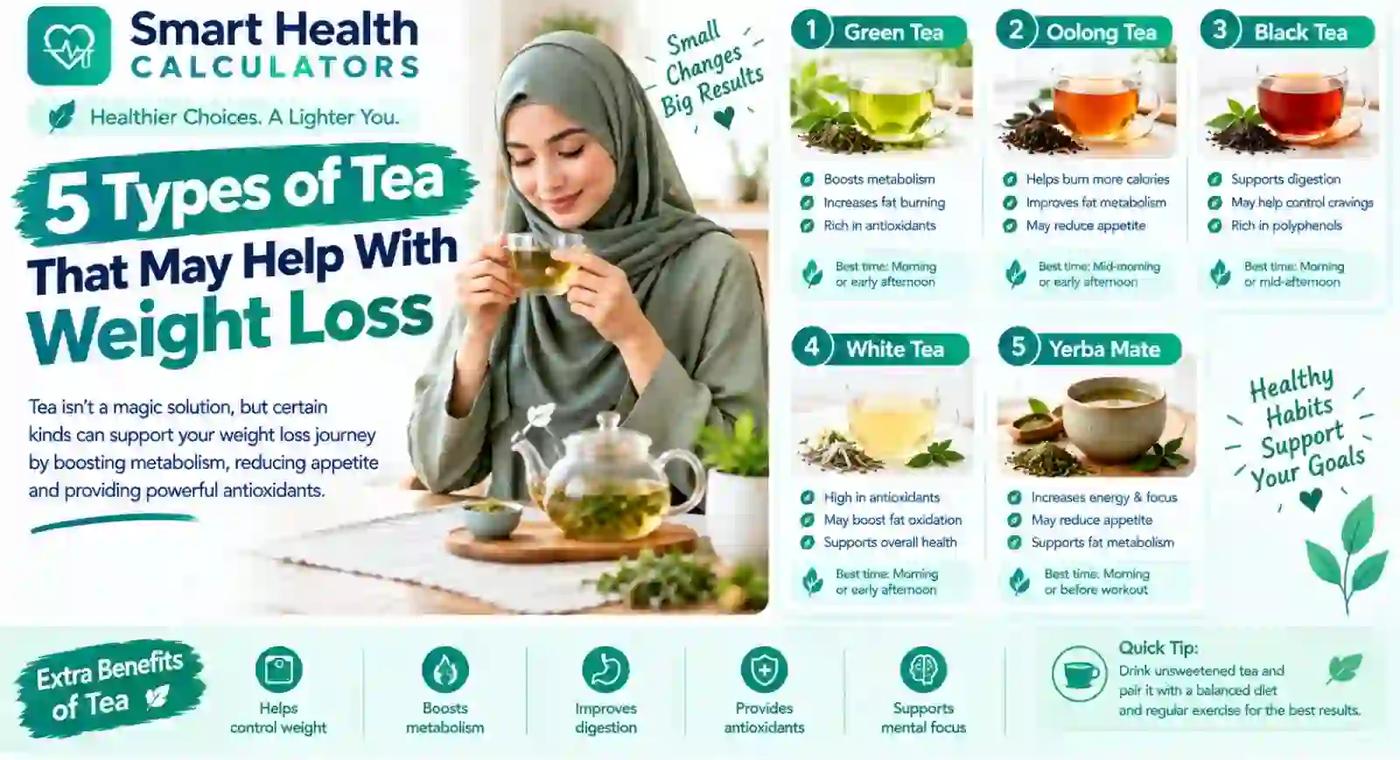
5 Types of Tea That May Help With Weight Loss (2026)
Discover 5 types of tea that may support weight loss, backed by NCCIH and clinical research. Learn what green, oolong, black, white & ginger tea can — and can't — do.
Walk into any pharmacy or scroll through social media, and you'll find tea marketed as everything from a "fat burner" to a "detox miracle." The honest, evidence-based picture is more modest than the marketing suggests — but that doesn't mean tea has nothing to offer someone working toward a healthy weight. It just means the real story is about small, supportive effects layered on top of overall diet and lifestyle, not a magic solution.
This guide walks through five types of tea most commonly associated with weight management research, what the actual science says about each, and — just as importantly — what current health authorities say tea cannot do, so you can make an informed choice rather than an oversold one.
The Honest Starting Point: What NCCIH Actually Says
Before getting into individual teas, it's worth stating the baseline clearly, since this shapes everything else in this article. The National Center for Complementary and Integrative Health (NCCIH) states that green tea is a common ingredient in weight-loss products, but it does not cause significant weight loss in adults with overweight or obesity, and it does not appear to help people maintain weight loss over time. NCCIH does note that the catechins and caffeine in green tea and its extracts may have a modest effect on body weight, though effects vary depending on the specific product and the individual's physical activity level.
This distinction — "modest effect" versus "causes weight loss" — is the difference between an honest health claim and an overstated one, and it applies across most of the teas covered here.
What Makes These Teas Different: A Quick Entity Primer
Four of the five teas in this guide — green, black, oolong, and white — all come from the same plant, Camellia sinensis. What differs between them is the processing method (how much the leaves are oxidized), which changes their flavor, caffeine content, and the specific polyphenol compounds present. Herbal teas, like ginger tea, come from entirely different plants and don't contain the same catechin compounds found in true teas from Camellia sinensis.
1. Green Tea
Green tea is the most studied of all teas in weight-management research, largely due to its high concentration of catechins, particularly epigallocatechin gallate (EGCG), combined with a moderate amount of caffeine.
What the research shows: A 2012 Cochrane systematic review of randomized controlled trials found the evidence for green tea's effect on weight loss and maintenance in overweight or obese adults was generally small and often not statistically significant across pooled results. More recent research has been mixed — some individual randomized trials using high-dose green tea extract (rather than brewed tea) have reported modest reductions in weight, BMI, and waist circumference over 12-week periods, while broader reviews continue to describe the overall evidence as inconsistent.
The practical takeaway: Brewed green tea, consumed as part of an otherwise calorie-conscious diet, is a genuinely reasonable low-calorie beverage choice. It is not a substitute for the fundamentals of weight management — a sensible eating pattern and regular activity — covered in our guide on why your diet isn't working.
Safety note: NCCIH advises that green tea is generally safe at moderate intake, but high doses — particularly of concentrated green tea extract in supplement or pill form, rather than brewed tea — have in rare cases been linked to liver problems. Green tea can also interact with certain medications, including reducing blood levels of the beta-blocker nadolol. Anyone on prescription medication should check with a healthcare provider before significantly increasing green tea intake.
2. Oolong Tea
Oolong sits between green and black tea in processing — partially oxidized, giving it a distinct flavor profile and a somewhat different polyphenol composition than either fully fermented black tea or unoxidized green tea.
What the research shows: Some smaller studies have examined oolong tea's effect on fat oxidation and energy expenditure, with a few reporting modest short-term increases in metabolic rate following consumption. However, this body of research is considerably smaller than the green tea literature, and robust, large-scale randomized trials specifically isolating oolong tea's effect on body weight are limited. The honest summary: oolong shows some biologically plausible mechanisms worth further study, but the current evidence doesn't support strong weight-loss claims specific to this tea type.
The practical takeaway: If you enjoy oolong tea's flavor, there's no reason to avoid it while managing weight — it's a low-calorie beverage with the same general profile as other true teas. Just don't expect it to outperform green tea's already modest evidence base.
3. Black Tea
Black tea is fully oxidized, which converts much of its catechin content into different compounds called theaflavins and thearubigins — giving black tea its characteristic color and flavor, and a somewhat different polyphenol profile than green tea.
What the research shows: Research on black tea specifically and weight management is less extensive than green tea research, though some observational studies have associated regular tea consumption more broadly (including black tea) with lower measures of adiposity in certain populations. Observational associations, however, cannot establish that black tea itself causes weight changes, since people who drink tea regularly may differ in other health-relevant ways from those who don't.
The practical takeaway: Black tea's real, practical value in a weight-management context is less about a specific fat-burning mechanism and more about being a genuinely satisfying, essentially calorie-free replacement for sugary beverages — which brings a real, measurable calorie reduction if it's replacing soda or sweetened coffee drinks in your routine.
4. White Tea
White tea is the least processed of the four true teas, made from young leaves and buds with minimal oxidation, which some research suggests may preserve a higher concentration of certain catechins compared to more processed teas.
What the research shows: White tea has been studied considerably less than green tea in human weight-management trials. Some laboratory and animal studies have examined its effects on fat cell development, but this early-stage research doesn't yet translate into confident claims about human weight loss. It would be inaccurate to claim white tea has stronger evidence than green tea simply because it's less processed — the research base for white tea specifically is smaller, not more conclusive.
The practical takeaway: White tea is a reasonable, low-calorie beverage choice with a genuinely different, often more delicate flavor profile than green or black tea, but it shouldn't be marketed or chosen specifically for superior weight-loss properties over better-studied alternatives.
5. Ginger Tea
Ginger tea is an herbal tea, meaning it doesn't come from Camellia sinensis and doesn't contain the same catechin compounds as the four teas above — its potential mechanisms, where studied, relate more to digestive comfort and possible mild effects on appetite and metabolism through different bioactive compounds (gingerols and shogaols).
What the research shows: Some small studies have suggested ginger may have modest effects on satiety and thermogenesis, and ginger has well-established evidence for reducing nausea, which can indirectly support healthier eating patterns for some people. However, evidence specifically linking ginger tea to meaningful weight loss remains limited and preliminary compared to the greater (though still modest) body of green tea research.
The practical takeaway: Ginger tea is caffeine-free, generally well-tolerated, and a reasonable addition to a varied beverage routine, but it shouldn't be positioned as a stronger weight-loss tool than the actual evidence supports.
Comparing the Five Teas at a Glance
| Tea Type | Source Plant | Key Compounds | Strength of Weight-Loss Evidence |
|---|---|---|---|
| Green tea | Camellia sinensis | Catechins (EGCG), caffeine | Most studied; modest, inconsistent effects |
| Oolong tea | Camellia sinensis | Partially oxidized catechins | Limited, smaller studies |
| Black tea | Camellia sinensis | Theaflavins, thearubigins | Limited direct evidence; mostly observational |
| White tea | Camellia sinensis | Minimally oxidized catechins | Very limited human trial data |
| Ginger tea | Zingiber officinale (herbal) | Gingerols, shogaols | Preliminary, indirect evidence |
Why "Detox" and Commercial Slimming Teas Deserve Extra Caution
This is worth addressing directly, since these products are heavily marketed alongside genuine tea. Commercially marketed "detox" or "slimming" teas are a different category from the brewed true teas and ginger tea covered above — they're often blended with laxative herbs (like senna) or diuretics, producing rapid but temporary water-weight loss rather than genuine fat reduction.
A 2026 peer-reviewed review found limited evidence supporting these commercial diet and detox teas for actual weight loss, while also documenting reported adverse events in some cases, including electrolyte disturbances, cardiovascular events, and liver injury linked to certain products. NCCIH's broader guidance on weight-loss supplements similarly cautions that many products marketed for rapid weight loss don't produce lasting results and some carry genuine safety risks. If a tea product promises dramatic, fast results, that marketing claim itself is a signal to be skeptical rather than reassured.
How Much Tea Is Safe to Drink?
For caffeinated teas, the relevant safety reference point is caffeine intake overall, not tea specifically. The FDA cites 400 mg of caffeine per day as an amount generally not associated with negative effects for most healthy adults, while noting that individual sensitivity varies considerably. NCCIH's guidance on green tea specifically suggests up to about 6 cups daily (roughly 300 mg of caffeine) as a generally safe range for most adults, with lower limits recommended for pregnant or breastfeeding individuals given caffeine's ability to cross the placenta.
Since tea's caffeine content varies by type and brewing method, someone drinking multiple cups of strongly brewed black or green tea alongside coffee or other caffeinated beverages could realistically approach or exceed these limits without realizing it — worth actually tallying total daily caffeine intake across all sources rather than assuming tea alone.
Does It Matter When You Drink Tea?
There isn't strong, consistent evidence that timing tea consumption around meals produces a meaningfully different weight effect than simply incorporating it consistently into your day. Some people prefer tea before meals as a lower-calorie alternative to a sugary drink alongside food, which is a reasonable practical strategy for reducing overall calorie intake — but this is a behavioral substitution benefit, not evidence of a specific metabolic timing effect from the tea itself.
A Practical Way to Think About Tea and Weight Management
Consider someone who currently drinks two cans of regular soda daily and switches both to unsweetened green tea instead. The realistic, well-supported benefit here isn't a "metabolism boost" from the tea's catechins — it's the straightforward calorie reduction from removing roughly 280-300 calories of added sugar from their daily intake, replaced with an essentially calorie-free beverage. Over weeks and months, that substitution alone, done consistently, is a meaningfully larger contributor to weight change than any modest catechin effect reported in the research.
This reframing matters: the most reliable "weight loss" benefit tea offers most people isn't a special fat-burning property — it's serving as a genuinely satisfying substitute for higher-calorie beverages, which fits naturally into the broader calorie-balance principles covered in our calorie intake vs calories burned guide.
Frequently Asked Questions
Can tea actually help you lose weight?
Tea may offer a modest supportive effect, primarily through catechins and caffeine in true teas, but NCCIH states it does not cause significant weight loss on its own and works best as part of a broader healthy eating and activity pattern.
Which tea is most effective for weight management?
Green tea has the most research behind it among the teas covered here, though even this evidence is described as modest and inconsistent by current systematic reviews rather than strongly conclusive.
Does green tea help burn body fat?
The catechins and caffeine in green tea may have a modest effect on body weight according to NCCIH, but green tea has not been shown to cause significant fat loss in adults with overweight or obesity.
Is ginger tea good for people trying to lose weight?
Ginger tea shows some preliminary evidence related to satiety and digestion, but the research specifically linking it to meaningful weight loss is limited compared to green tea, and it should be viewed as a reasonable beverage choice rather than a proven weight-loss tool.
Are detox teas safe and effective for losing weight?
Current evidence does not strongly support commercial detox or slimming teas for genuine weight loss, and some products have been associated with adverse effects including electrolyte disturbances and, in rare cases, liver injury — caution and skepticism toward dramatic marketing claims is warranted.
How much tea is safe to drink daily?
For caffeinated teas, staying within the FDA's general guidance of 400 mg of caffeine per day (roughly 6 cups of green tea, per NCCIH) is a reasonable ceiling for most healthy adults, accounting for caffeine from all sources, not tea alone.
Final Takeaway: Tea as Support, Not a Solution
The genuinely honest summary of the science is this: tea, particularly green tea, may offer a modest supportive role in weight management through its catechin and caffeine content, but no current evidence supports it as a standalone weight-loss solution. Its most reliable practical benefit is often simpler than any metabolic claim — replacing higher-calorie beverages with an essentially calorie-free option you'll actually enjoy drinking consistently.
Approach any tea marketed with dramatic, fast-result claims with real skepticism, and treat tea as one small, reasonable piece of a broader approach that includes genuine calorie awareness and regular activity. For a clearer picture of your actual calorie needs and how small changes like beverage swaps fit into your overall plan, explore the calorie intake planner and BMR calculator at Smart Health Calculators — tools built around your real numbers, not marketing claims.
Medical Disclaimer
This article is for general education only. It is not medical advice, diagnosis, treatment, prescription guidance, or a replacement for professional healthcare. Speak with a qualified healthcare professional for personal medical concerns, symptoms, pregnancy concerns, mental health crisis, medication questions, or before making major health changes.