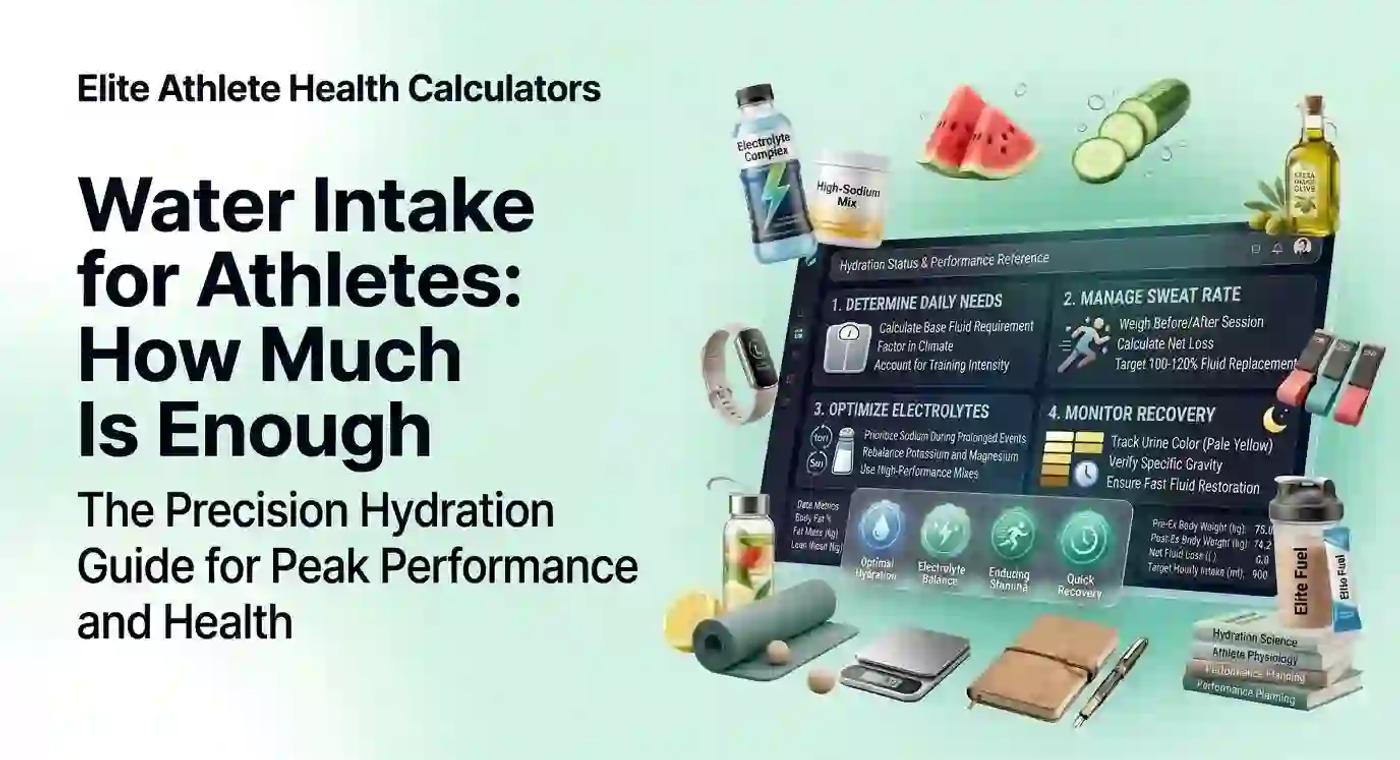
Water Intake for Athletes: How Much Is Enough?
Water intake for athletes — how much do you really need before, during & after exercise? Get science-backed hydration guidelines and timing.
If you've ever finished a hard training session feeling foggy, cramped, or wiped out for the rest of the day, dehydration might be the hidden culprit — even if you thought you were drinking enough. Athletes lose fluid at rates far higher than sedentary people, and generic hydration advice like "drink 8 glasses a day" simply doesn't cut it once you're sweating through intense training sessions.
Here's the practical answer: most athletes need roughly 91–125 ounces (2.7–3.7 liters) of total daily fluid as a baseline, plus an additional 16–24 ounces (500–700ml) for every hour of intense exercise, adjusted upward significantly in hot or humid conditions. The most accurate approach, though, is calculating your personal sweat rate rather than relying on generic numbers. In this guide, we'll break down exactly how much water athletes need before, during, and after exercise, how to calculate your own sweat rate, and when plain water isn't enough on its own.
Why Athletes Need More Water Than Average People
Hydration for athletes isn't just about quenching thirst — it's directly tied to athletic performance and safety. During intense exercise, your body can lose 1–2 liters of sweat per hour, and even mild dehydration (as little as 2% of body weight lost through fluid) can measurably reduce endurance, strength, and cognitive function during competition or training.
This is why generic daily water intake recommendations designed for sedentary adults fall short for anyone training regularly. Athletes need to actively replace fluid lost through sweat, not just maintain baseline hydration for normal bodily function.
How Much Water Should Athletes Drink Daily?
As a baseline, most active adults need approximately:
- Men: ~125 oz (3.7 liters) total daily fluid
- Women: ~91 oz (2.7 liters) total daily fluid
This baseline already accounts for typical activity, but athletes training intensely need to add fluid specifically to replace exercise-induced sweat losses on top of this daily foundation. This total includes fluid from all beverages and water-rich foods, not just plain water alone.
If you want a personalized daily target based on your specific weight and activity level, our free Water Intake Calculator gives you a tailored number rather than a generic average.
Hydration Timing Table: Before, During, and After Exercise
Athlete Hydration Timing Guide
2–3 Hours Before Exercise — 17–20 oz (500–590ml) | Pre-hydrate without causing discomfort during activity
20–30 Minutes Before Exercise — 8 oz (240ml) | Top off fluid levels immediately pre-activity
Every 15–20 Minutes During Exercise — 7–10 oz (200–300ml) | Replace ongoing sweat losses in real time
Immediately After Exercise — 16–24 oz per lb lost (500–700ml per 0.5kg) | Rehydrate based on actual fluid lost during the session
How Much Water Should You Drink Before a Workout?
Pre-hydration matters more than most athletes realize. The American College of Sports Medicine (ACSM) recommends drinking roughly 17–20 ounces of fluid 2–3 hours before exercise, followed by another 8 ounces about 20–30 minutes before starting. This gives your body time to absorb fluid and reach a stable hydration state before you start losing sweat, rather than starting your session already behind.
Skipping this step is one of the most common mistakes athletes make — showing up to training already mildly dehydrated puts you at a disadvantage before you've even begun.
How Much Water Should You Drink During Exercise?
During activity, the general guideline is 7–10 ounces every 15–20 minutes, though this should scale with exercise intensity, duration, and environmental heat. For sessions under 60 minutes in moderate conditions, plain water is typically sufficient. For longer or more intense sessions — particularly in heat — sodium and electrolyte replacement becomes increasingly important alongside fluid volume.
This is where calculating your personal sweat rate becomes genuinely useful, since generic guidelines can significantly underestimate needs for heavy sweaters or overestimate them for lighter sweaters.
How to Calculate Your Sweat Rate
This is the single most accurate way to personalize your hydration strategy, and it's simpler than it sounds:
- Weigh yourself nude, immediately before exercise.
- Complete your typical training session, tracking exactly how much fluid you drank during it (in ounces).
- Weigh yourself again immediately after, before eating or drinking anything further.
- Calculate: (Pre-exercise weight − Post-exercise weight) + fluid consumed during exercise = total sweat loss.
For example, if you lost 1.5 lbs during a 60-minute session while drinking 16 oz of water, your total sweat loss is roughly 1.5 lbs + 16 oz ≈ 40 oz per hour — meaningfully more than the generic 7–10 oz per 15-20 minutes many guidelines suggest, and a clear sign this athlete needs a more aggressive hydration strategy than average.
How Much Water Should You Drink After a Workout?
Post-exercise rehydration should be based on your actual fluid losses, not a flat number. The standard guideline is to drink 16–24 ounces of fluid for every pound (0.5kg) of body weight lost during exercise. This is exactly why the sweat rate calculation above matters — without it, you're essentially guessing at your recovery hydration needs.
Rehydrating fully within 2–4 hours post-exercise supports better recovery, reduces next-day fatigue, and helps prepare your body for subsequent training sessions.
Water vs Sports Drinks: Which Do Athletes Actually Need?
This depends heavily on exercise duration, intensity, and environmental conditions.
- Under 60 minutes, moderate intensity: Plain water is generally sufficient for most athletes.
- Over 60 minutes, or high intensity/heat: Sports drinks with electrolytes (particularly sodium) become increasingly valuable, since sweat carries away meaningful amounts of sodium alongside water, and replacing water alone without electrolytes can actually worsen performance and, in extreme cases, contribute to hyponatremia.
Hyponatremia — dangerously low blood sodium levels — is a genuine risk for endurance athletes who drink excessive plain water without replacing electrolytes during very long events, making this one case where "more water" isn't automatically better.
Signs of Dehydration in Athletes
Recognizing dehydration early prevents performance decline and safety risks. Watch for:
- Dark yellow urine (a lighter, pale yellow color generally indicates good hydration)
- Unusual fatigue or reduced endurance mid-session
- Headache or dizziness during or after exercise
- Muscle cramping, particularly in longer sessions
- Reduced sweat output despite continued exertion (a warning sign of more advanced dehydration)
The urine color check remains one of the simplest, most practical daily hydration indicators available — pale yellow generally signals adequate hydration, while dark yellow or amber suggests you need more fluid.
Can Athletes Drink Too Much Water?
Yes, and this is an underappreciated risk, particularly for endurance athletes. Overhydration, especially drinking large volumes of plain water without adequate sodium replacement during very long events, can dilute blood sodium levels and lead to hyponatremia — a genuinely dangerous condition. Signs of overhydration include nausea, confusion, and swelling, and in severe cases require immediate medical attention.
The practical takeaway: hydration strategy should match actual sweat losses (calculated via sweat rate testing) rather than simply "drinking as much as possible," which can occasionally do more harm than good during extended endurance events.
Hydration for Different Types of Athletes
Endurance Athletes
Marathon runners, cyclists, and triathletes face the highest hydration and electrolyte demands due to extended exercise duration. Sweat rate testing is particularly valuable here, since fluid losses compound significantly over multi-hour sessions.
Strength Training Athletes
Weightlifters and strength athletes typically train for shorter durations with lower sweat rates than endurance athletes, meaning plain water is often sufficient, though intense circuit-style training in heat still warrants closer attention to fluid replacement.
Youth Athletes
Young athletes are particularly vulnerable to dehydration since their thermoregulation is less efficient than adults', and they often don't recognize thirst cues as reliably. Coaches and parents should encourage scheduled hydration breaks rather than relying on young athletes to self-monitor.
Hydration in Hot Weather: What Changes?
Heat and humidity dramatically increase sweat rate and fluid needs. In hot conditions, athletes should:
- Increase pre-hydration volume beyond standard guidelines
- Drink more frequently during exercise, even before feeling thirsty
- Prioritize electrolyte replacement earlier, since sweat rate and sodium loss both increase substantially in heat
- Monitor for heat illness symptoms (dizziness, nausea, stopped sweating) as signs requiring immediate action, not just increased fluid intake
If you're training in consistently hot or humid climates, building a proactive hydration schedule rather than reactive drinking (waiting until thirsty) becomes especially important, since thirst is already a lagging indicator of fluid deficit even in moderate conditions.
Building a Complete Hydration Strategy
Water intake doesn't exist in isolation from your broader training and recovery approach. If you're optimizing performance holistically, consider how hydration connects to:
- Sleep quality — Dehydration can disrupt sleep, and poor sleep in turn affects next-day hydration regulation. Our Sleep Quality Checker can help identify if hydration timing might be affecting your rest.
- Overall calorie and nutrition needs — Athletes training intensely often need adjusted caloric intake alongside hydration; our Calorie Intake Planner can help you build a complete nutrition strategy.
- General hydration and weight management — Our detailed guide on hydration and weight loss explores how fluid intake affects body composition goals beyond just athletic performance, and our daily water intake guide covers baseline hydration needs for non-training days.
Common Hydration Mistakes Athletes Make
- Relying on thirst alone — By the time you feel thirsty, you're often already mildly dehydrated; scheduled hydration beats reactive drinking.
- Using generic guidelines instead of personal sweat rate — Individual sweat rates vary dramatically; a one-size-fits-all number can significantly under- or over-hydrate specific athletes.
- Ignoring electrolytes during long sessions — Plain water alone during extended, intense exercise can dilute sodium levels rather than truly rehydrating effectively.
- Overhydrating without replacing electrolytes — More water isn't automatically better, particularly during multi-hour endurance events.
- Skipping pre-hydration — Starting a session already behind on fluid puts athletes at a measurable performance disadvantage from the outset.
Why Choose Smart Health Calculators
Understanding your hydration needs shouldn't require guesswork or generic advice that ignores your actual training intensity, body size, and environment. At Smart Health Calculators, our tools are built around evidence-based formulas that give you a personalized, accurate starting point — not a one-size-fits-all number pulled from a generic chart.
Explore our full collection of free health and fitness tools to build a hydration and training strategy that's actually built around you, not a population average.
FAQs About Water Intake for Athletes
How much water should athletes drink daily? Most athletes need a baseline of roughly 91–125 ounces (2.7–3.7 liters) of total daily fluid, plus an additional 16–24 ounces for every hour of intense exercise, adjusted higher in hot or humid conditions.
How much water should I drink before exercising? The ACSM recommends about 17–20 ounces 2–3 hours before exercise, followed by another 8 ounces roughly 20–30 minutes before starting, to ensure you begin your session properly hydrated.
Do athletes need more water than average people? Yes. Athletes lose significant fluid through sweat during training, requiring active fluid replacement beyond the baseline hydration needs of sedentary individuals.
What are the signs of dehydration during exercise? Common signs include dark yellow urine, unusual fatigue, dizziness, headache, muscle cramping, and reduced sweat output despite continued effort, all of which signal a need for immediate fluid replacement.
Should athletes drink sports drinks instead of water? For sessions under an hour at moderate intensity, plain water is usually sufficient. For longer or more intense sessions, especially in heat, sports drinks with electrolytes help replace sodium lost through sweat more effectively than water alone.
Can athletes drink too much water? Yes. Excessive plain water intake without adequate electrolyte replacement, particularly during long endurance events, can lead to hyponatremia — a dangerous drop in blood sodium levels requiring medical attention in severe cases.
Final Thoughts
Proper hydration for athletes goes well beyond generic "drink more water" advice — it requires understanding your personal sweat rate, timing fluid intake strategically around training, and knowing when electrolytes matter as much as water itself. Whether you're a weekend runner or training for competition, dialing in your specific hydration needs can meaningfully improve both performance and recovery.
Ready to find your personalized hydration target? Try our free Water Intake Calculator to get a daily fluid target tailored to your body and activity level, and pair it with our Workout Planner to build training and hydration strategies that work together.
For further authoritative reference, the American College of Sports Medicine's position stand on exercise and fluid replacement provides detailed, evidence-based hydration guidelines worth reviewing.
Medical Disclaimer
This article is for general education only. It is not medical advice, diagnosis, treatment, prescription guidance, or a replacement for professional healthcare. Speak with a qualified healthcare professional for personal medical concerns, symptoms, pregnancy concerns, mental health crisis, medication questions, or before making major health changes.