Whole Foods Diet: Benefits, Foods to Eat & Beginner Guide
Learn what a whole foods diet is, what foods to eat and limit, its health benefits, and simple tips for starting a whole-foods diet as a beginner.
If you've ever stood in a grocery store aisle wondering whether that "healthy" granola bar actually counts as real food, you've already bumped into the exact question this guide answers. A whole-foods diet isn't a rigid program with strict rules and forbidden food lists — it's an eating pattern built around foods in their natural or minimally altered state, with highly processed products taking a smaller, more occasional role.
This distinction has actually become the centerpiece of U.S. federal nutrition policy. The newly released Dietary Guidelines for Americans, 2025-2030 summarize their entire message in three words: "eat real food." This guide walks through exactly what that means in practice — what counts as a whole food, what doesn't, how to build meals around this pattern, and how to start without overhauling your entire kitchen overnight.
What Is a Whole-Foods Diet?
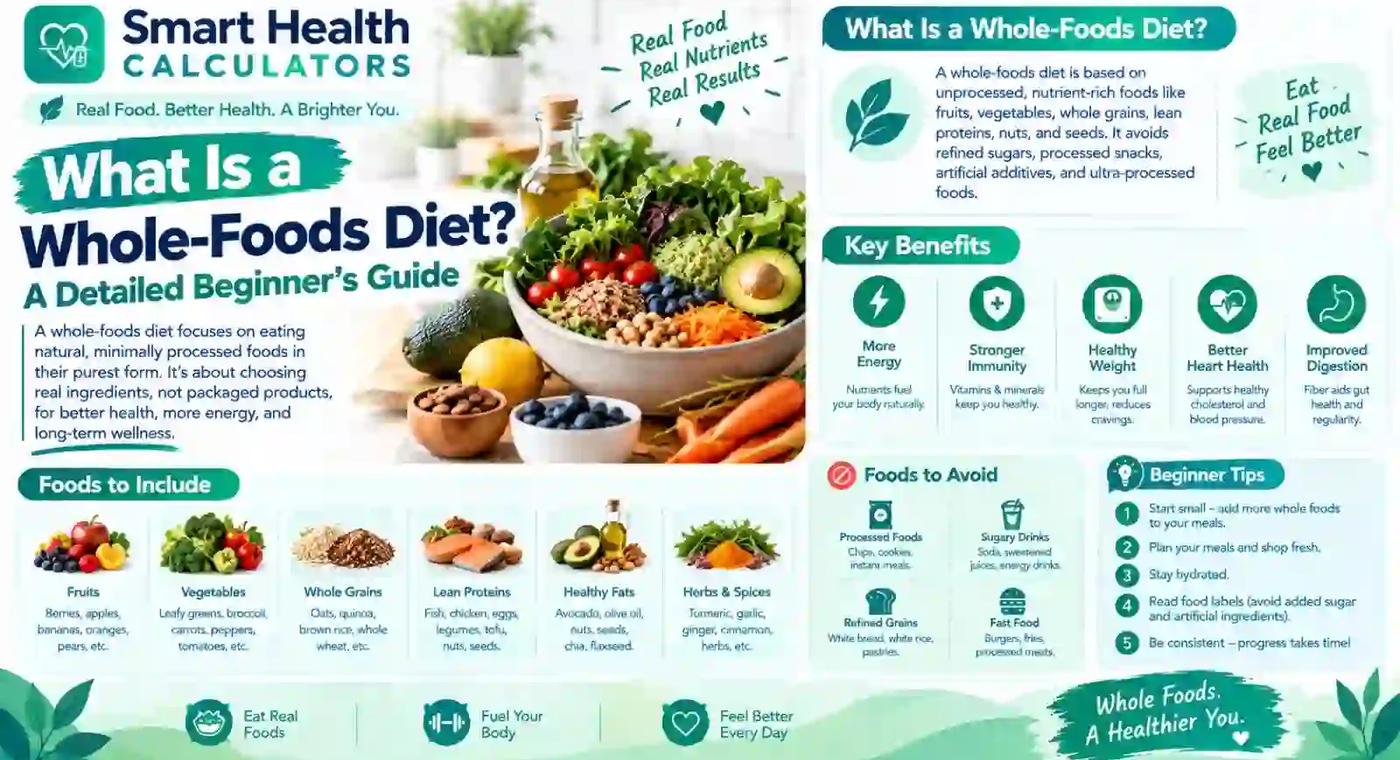
A whole-foods diet is an eating pattern centered on foods that are unprocessed or minimally processed — meaning they're close to their natural state, without extensive industrial processing, added chemical preservatives, or significant amounts of added sugar, sodium, or refined ingredients.
This isn't a single standardized medical diet with an official rulebook. It's better understood as a general approach to food choices — prioritizing vegetables, fruits, whole grains, lean proteins, nuts, seeds, and healthy fats, while limiting highly processed packaged foods, sugary drinks, and refined carbohydrates.
The current Dietary Guidelines for Americans, 2025-2030 — released January 7, 2026 by the USDA and HHS — describe this exact framework as the foundation of the new federal nutrition policy, built around protein, dairy, vegetables, fruits, healthy fats, and whole grains, while significantly reducing highly processed foods.
Whole Foods vs Processed Foods: The Distinction That Actually Matters
This is where a lot of confusion happens, and it's worth clearing up directly. Processing is a spectrum, not a switch. Harvard's T.H. Chan School of Public Health specifically notes that processing includes a wide range of methods — freezing, pasteurization, fermentation, grinding, and basic cooking — many of which don't make a food unhealthy at all.
| Processing Level | Examples | Fits a Whole-Foods Pattern? |
|---|---|---|
| Unprocessed / minimally processed | Fresh vegetables, fruits, plain nuts, eggs, plain yogurt, frozen vegetables | Yes |
| Processed for preservation | Canned beans (no added sugar/sodium), pasteurized milk, dried legumes | Generally yes |
| Processed with added ingredients | Flavored yogurt, canned soup with added sodium, jarred pasta sauce | Case-by-case, check the label |
| Highly/ultra-processed | Sugary cereals, packaged snack cakes, sodas, fast food, reconstituted meat products | Generally limited or avoided |
The practical takeaway: frozen vegetables, canned beans, and plain pasteurized dairy are not the enemy. They fit comfortably within a whole-foods approach. What the current guidelines specifically target is the highly processed category — foods engineered with refined carbohydrates, added sugars, excessive sodium, and chemical additives that displace nutrient-dense options.
What Can You Eat on a Whole-Foods Diet?
Since this isn't a restrictive program with a fixed food list, think of it as a framework of priorities rather than a checklist of allowed and forbidden items.
Vegetables and fruits — Fresh, frozen, or canned without added sugar or excess sodium, eaten in a wide variety of colors. The current guidelines recommend 3 servings of vegetables and 2 servings of fruit daily, prioritizing whole, colorful produce in its original form over juices or heavily processed fruit products.
Whole grains — Foods like brown rice, oats, quinoa, and whole wheat bread, targeting 2 to 4 servings per day according to current federal guidance, while significantly limiting refined carbohydrates like white bread, packaged breakfast cereals, and crackers.
Protein foods — A variety of both animal sources (eggs, poultry, seafood, red meat) and plant-based sources (beans, lentils, tofu), reflecting the current guidelines' increased emphasis on high-quality, nutrient-dense protein as a foundational food group.
Dairy — Milk, plain yogurt, and cheese, generally in minimally processed forms rather than heavily sweetened or flavored versions.
Healthy fats — Olive oil, nuts, seeds, avocados, and fatty fish, with the current guidelines specifically noting that saturated fat should generally stay under 10% of total daily calories.
Legumes, nuts, and seeds — Beans, lentils, chickpeas, almonds, and similar whole plant foods, valuable for both protein and fiber content.
What Should You Limit on a Whole-Foods Diet?
Rather than an absolute prohibition list, this is more accurately described as a "significantly reduce" category:
- Highly processed packaged snacks — chips, packaged pastries, snack cakes
- Sugar-sweetened beverages — sodas, sweetened coffee drinks, fruit juices with added sugar
- Refined carbohydrates — white bread, most packaged breakfast cereals, flour tortillas made with heavily refined flour
- Foods high in added sodium — many canned soups, processed deli meats, packaged sauces
- Ultra-processed reconstituted foods — items assembled from industrial ingredients rather than recognizable whole food components
Health Benefits of a Whole-Foods Approach
An eating pattern built around whole and minimally processed foods naturally tends to be higher in fiber, vitamins, minerals, and phytonutrients, while being lower in added sugar, excess sodium, and the kind of refined carbohydrates linked to poor metabolic outcomes in nutrition research. This isn't a claim that any single food produces dramatic health transformation — it's the cumulative effect of a diet quality pattern that current federal guidance and organizations like the American Heart Association consistently associate with better cardiovascular and metabolic health markers over time.
It's also worth being direct about something the guidelines themselves acknowledge: nearly 90% of U.S. healthcare spending currently goes toward treating chronic diseases, many of which are strongly influenced by long-term dietary patterns rather than being purely genetic in origin. A whole-foods approach is positioned as one meaningful lever within that larger picture, not a guaranteed cure for any specific condition.
Building a Balanced Whole-Foods Meal
A genuinely practical way to think about meal-building, echoing Harvard's Healthy Eating Plate framework, is filling roughly half your plate with vegetables and fruits, a quarter with whole grains, and a quarter with protein, adding healthy fats like olive oil in moderation rather than treating any single macronutrient as the enemy.
A simple example day might look like:
- Breakfast: Oatmeal (whole grain) with berries and a handful of walnuts
- Lunch: A grain bowl with brown rice, grilled chicken or chickpeas, mixed vegetables, and olive oil dressing
- Dinner: Baked salmon, roasted sweet potato, and steamed broccoli
- Snacks: Plain yogurt with fruit, or a small handful of almonds
None of this requires exotic ingredients or specialty stores — it's built around foods available in any standard grocery store.
Is a Whole-Foods Diet Expensive?
This is a genuinely fair concern, and the honest answer is: it depends heavily on which specific foods you prioritize. Fresh, out-of-season produce and premium cuts of meat can be expensive. But whole foods on a budget is entirely achievable through a few practical strategies:
- Buy frozen vegetables and fruits — nutritionally comparable to fresh in most cases, and significantly cheaper with a much longer shelf life.
- Rely on dried or canned legumes — beans and lentils are among the least expensive protein sources available and fit a whole-foods pattern well.
- Choose seasonal produce — prices drop significantly when fruits and vegetables are in season locally.
- Buy whole grains in bulk — rice, oats, and similar staples are inexpensive per serving when purchased in larger quantities.
- Limit reliance on pre-packaged "convenience" whole-food products — pre-cut vegetables and individually packaged snacks cost more than buying and preparing the same whole foods yourself.
How to Start a Whole-Foods Diet: A Beginner's Approach
Rather than an abrupt, all-or-nothing overhaul, a gradual transition tends to be more sustainable and realistic for most people.
- Start by adding, not just removing. Add one extra vegetable or fruit serving to meals you already eat, rather than immediately eliminating every processed food from your kitchen.
- Swap one refined grain for a whole grain each week. Replace white rice with brown rice, or white bread with whole wheat, one meal at a time.
- Read ingredient labels, not just calorie counts. A shorter ingredient list with recognizable food names is generally a good practical signal of a less processed product.
- Batch-cook whole grains and legumes. Preparing a large batch of rice, quinoa, or beans once or twice a week makes building whole-food meals faster on busy days.
- Replace one sugary beverage daily with water or unsweetened tea. This single change often has an outsized impact on added sugar intake without requiring any other dietary changes.
- Don't treat frozen or canned as failure. As covered earlier, minimally processed frozen and canned options are genuinely compatible with this eating pattern and make consistency far more realistic.
Whole-Foods Diet vs Other Eating Patterns
A common point of confusion is how "whole foods" relates to more specifically defined diets:
- Whole foods vs clean eating — largely overlapping concepts, though "clean eating" is an informal term without a standardized definition, while "whole foods" more directly maps onto current federal dietary guidance around processing level.
- Whole foods vs Mediterranean diet — the Mediterranean diet is a specific, well-researched pattern that happens to be built almost entirely around whole foods (vegetables, olive oil, fish, whole grains), making it one practical way to implement a whole-foods approach rather than a competing alternative.
- Whole foods vs plant-based or vegan diets — a whole-foods diet is not inherently vegetarian or vegan; it explicitly includes animal proteins like eggs, poultry, and fish alongside plant foods. A "whole-food plant-based" diet is a more specific variant that excludes animal products while still emphasizing minimal processing.
- Whole foods vs keto or low-carb diets — these focus specifically on restricting carbohydrate intake, which is a different axis entirely from processing level; a keto diet could theoretically include either whole or processed low-carb foods.
Can a Whole-Foods Diet Help With Weight Management?
Foods higher in fiber and protein — both hallmarks of a whole-foods eating pattern — tend to support satiety more effectively than heavily processed, refined-carbohydrate foods, which can support a calorie-conscious approach to weight management as a secondary effect rather than the diet's primary defined purpose. This connects directly to the underlying calorie balance principles covered in our guide on calorie intake vs calories burned — a whole-foods pattern doesn't override basic energy balance, but it can make maintaining an appropriate calorie intake genuinely easier for many people due to improved fullness and reduced impulse eating on highly palatable processed foods.
For a more complete, personalized picture of how dietary changes fit your specific goals, pairing this approach with our calorie intake planner gives you real numbers to work from rather than general guidance alone.
A Practical Example: A Realistic First Week
Consider someone who currently eats cereal for breakfast, a fast-food lunch most days, and a mix of frozen dinners and takeout in the evening. Rather than attempting a complete overhaul, a realistic first-week approach looks like: switching breakfast to oatmeal with fruit three days out of seven, packing a simple grain-and-vegetable lunch bowl twice a week instead of fast food, and replacing one frozen dinner with a simple baked protein and steamed vegetable meal. By week two, extending these same swaps to additional days becomes far more sustainable than the abrupt, often short-lived "clean slate Monday" approach many people attempt and abandon within days.
This gradual pattern reflects genuinely how sustainable dietary change tends to work — small, compounding shifts rather than dramatic short-term restriction that's difficult to maintain.
Frequently Asked Questions
What is a whole foods diet?
A whole foods diet is an eating pattern centered on unprocessed or minimally processed foods — vegetables, fruits, whole grains, lean proteins, nuts, and healthy fats — while limiting highly processed foods, added sugars, and refined carbohydrates.
What foods are considered whole foods?
Fresh, frozen, or canned (without added sugar/sodium) vegetables and fruits, whole grains like brown rice and oats, lean proteins including eggs and fish, legumes, nuts, seeds, and minimally processed dairy all count as whole or minimally processed foods.
Can you eat bread on a whole foods diet?
Yes, if it's made primarily from whole grains with a short, recognizable ingredient list. Highly refined white bread with added preservatives and refined flour is the type of product this eating pattern generally aims to limit.
Are frozen vegetables considered whole foods?
Yes. Freezing is a form of minimal processing that preserves most nutritional value, and current nutrition guidance treats frozen vegetables as a genuinely equivalent, often more affordable alternative to fresh produce.
Is a whole foods diet good for weight loss?
It can support weight management indirectly, since whole foods tend to be higher in fiber and protein, which support fullness and can reduce overall calorie intake — though it isn't a specifically defined weight-loss program on its own.
How much processed food can you eat on a whole foods diet?
There's no universal fixed limit, since this is a flexible eating pattern rather than a strict program. The current Dietary Guidelines for Americans emphasize significantly reducing, not necessarily eliminating, highly processed foods as part of an overall healthy pattern.
Final Takeaway: Progress Over Perfection
A whole-foods diet isn't about achieving some impossible standard of eating only foods picked straight from a garden — it's a flexible, practical framework prioritizing real, recognizable foods over heavily processed alternatives, exactly the message the current Dietary Guidelines for Americans, 2025-2030 center their entire framework around. Start with small, sustainable swaps rather than an all-or-nothing overhaul, and remember that frozen vegetables, canned beans, and plain dairy are genuine allies in this approach, not exceptions to avoid.
For the most current federal nutrition guidance, RealFood.gov remains the authoritative source worth bookmarking alongside your own tracking. And if you're ready to see exactly how dietary changes connect to your personal calorie needs, explore the calorie intake planner and BMR calculator at Smart Health Calculators — built to turn general nutrition guidance into numbers specific to you.
Medical Disclaimer
This article is for general education only. It is not medical advice, diagnosis, treatment, prescription guidance, or a replacement for professional healthcare. Speak with a qualified healthcare professional for personal medical concerns, symptoms, pregnancy concerns, mental health crisis, medication questions, or before making major health changes.