What Is Biological Age and How to Lower It
Biological age reflects how well your body is really aging, not just your birthday count. See what affects it and which habits may help lower it.
Two people can both turn 45 this year and be aging at completely different rates on the inside. Biological age reflects how well your cells, organs, and body systems are actually functioning, based on lifestyle, genetics, and measurable health markers, rather than simply counting the years since you were born. Unlike your chronological age, which ticks up automatically every birthday, research suggests biological age can genuinely be lowered through specific, consistent habits: better sleep, regular movement, a nutrient-dense diet, and stress management chief among them.
This guide breaks down exactly what biological age means, how it's measured, and what the evidence actually says about lowering it.
What Is Biological Age?
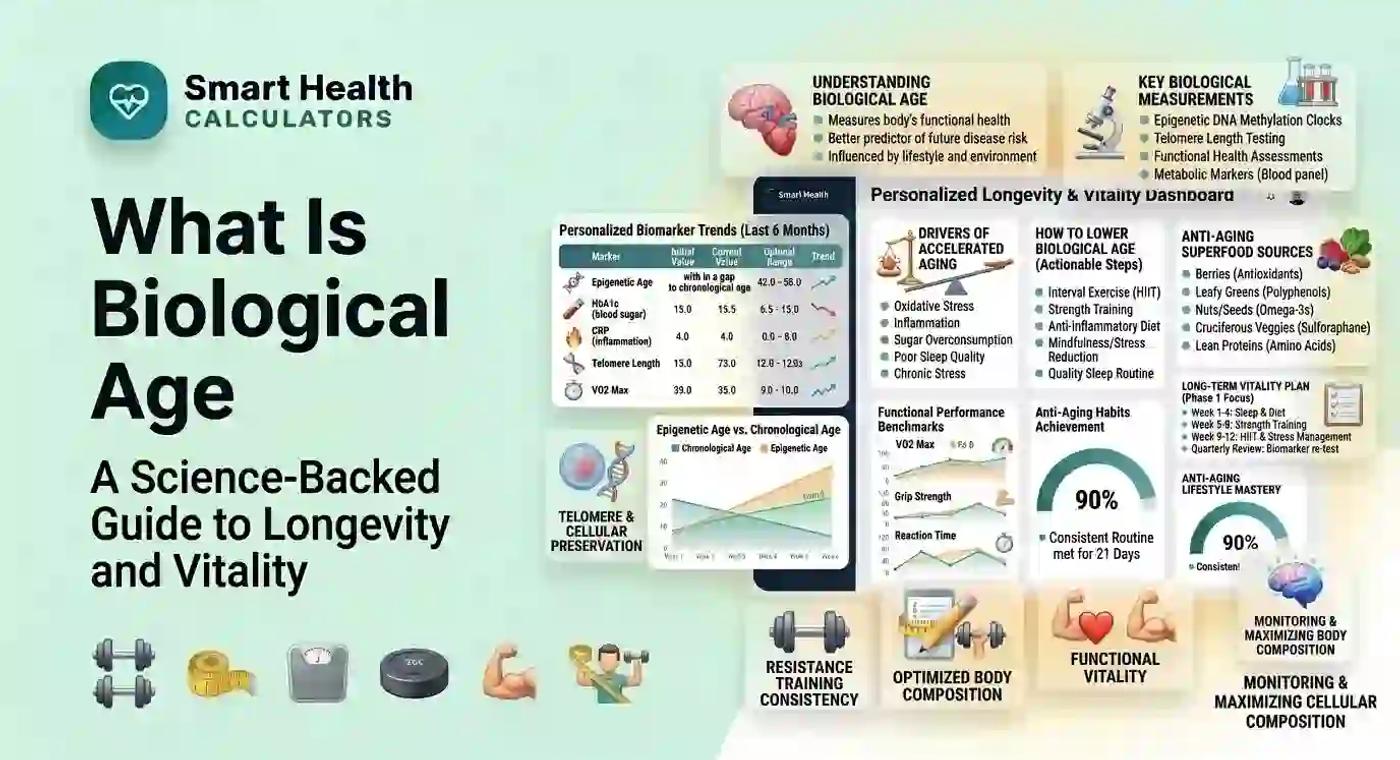
Biological age is an estimate of how "old" your body is functioning, based on physiological and molecular markers rather than your birth certificate. Two 50-year-olds can have wildly different biological ages, one might have a biological age of 42 thanks to strong cardiovascular health and low inflammation, while the other might measure closer to 58 due to years of poor sleep, chronic stress, or metabolic dysfunction.
Scientists estimate biological age using several different approaches, including:
- Epigenetic clocks (like the Horvath Clock), which analyze patterns of DNA methylation, chemical changes to your DNA that shift predictably with age and lifestyle
- Blood biomarker panels, measuring things like inflammation markers, cholesterol, blood sugar, and kidney/liver function
- Telomere length, the protective caps on the ends of chromosomes that tend to shorten with age and cellular stress
- Physical performance markers, such as grip strength, VO2 max, and mobility, which correlate with functional aging
No single test captures the full picture perfectly, which is why researchers increasingly combine multiple biomarkers for a more reliable estimate.
Biological Age vs. Chronological Age: What's the Difference?
Factor: What it measures
Chronological Age: Time elapsed since birth
Biological Age: How well your body is functioning at a cellular and systemic level
Factor: How it's determined
Chronological Age: Simple calendar calculation
Biological Age: Blood biomarkers, epigenetic testing, physical performance measures
Factor: Can it change?
Chronological Age: No, it only increases
Biological Age: Yes, research suggests it can be raised or lowered
Factor: What influences it
Chronological Age: Nothing, it's fixed
Biological Age: Sleep, diet, exercise, stress, smoking, alcohol, genetics
Factor: Practical use
Chronological Age: Legal and administrative purposes
Biological Age: Estimating health risk and the effectiveness of lifestyle changes
Chronological age is simply a number, useful for legal purposes, insurance, and administrative tracking, but it tells you very little about your actual health trajectory. Biological age, by contrast, is where the more medically meaningful story lives, and it's the number that responds to the choices you make day to day.
What Causes Biological Age to Increase Faster Than Chronological Age?
Several well-studied factors are associated with accelerated biological aging:
- Chronic inflammation, sometimes called "inflammaging," a low-grade, persistent inflammatory state linked to accelerated cellular aging
- Oxidative stress, an imbalance between damaging free radicals and the body's ability to neutralize them, which can damage cells over time
- Poor sleep quality, which disrupts cellular repair processes that largely occur during deep sleep
- Chronic stress, associated with elevated cortisol and, in some studies, shortened telomere length
- Smoking and excessive alcohol use, both strongly linked in research to accelerated epigenetic aging
- Sedentary lifestyle, associated with poorer metabolic and cardiovascular markers over time
- Poor diet quality, particularly diets high in processed foods and added sugar, linked to increased inflammation and metabolic aging
The encouraging counterpart to this list is that most of these factors are modifiable, which is precisely why biological age is often described as a more "actionable" number than chronological age.
Can Biological Age Actually Be Lowered?
Research increasingly suggests yes, at least to a meaningful degree, though the science is still evolving and individual results vary considerably. Multiple studies on epigenetic aging have found that structured lifestyle interventions, combining diet, exercise, sleep, and stress management, can measurably shift epigenetic age markers over a period of months. This doesn't mean anyone can "turn back the clock" indefinitely, but it does suggest the trajectory of biological aging isn't fixed the way chronological aging is.
It's worth being precise here: biological age tests are wellness and research tools, not diagnostic medical tests, and no single lifestyle change guarantees a specific numerical result. What the evidence does support is a strong, consistent association between certain habits and slower biological aging markers over time.
Lifestyle Habits That May Help Lower Biological Age
1. Prioritize Sleep Quality, Not Just Quantity
Deep sleep is when much of the body's cellular repair and detoxification happens. Poor sleep quality has been linked in research to accelerated epigenetic aging and increased inflammatory markers. Consistency matters here as much as duration, going to bed and waking at similar times daily appears to support healthier aging markers more than occasional long sleep followed by short nights.
2. Move Regularly, Not Just Occasionally
Both cardiovascular exercise and resistance training are associated with slower biological aging in observational studies. Regular movement supports mitochondrial health, the energy-producing structures inside cells that tend to decline in function with age, and improves markers like VO2 max, which itself correlates with biological age estimates.
3. Eat for Cellular Health
Diets rich in vegetables, fiber, healthy fats, and antioxidant-rich foods are consistently associated with lower inflammatory markers and slower biological aging in research. Highly processed foods and excess added sugar, conversely, are linked to increased inflammation and metabolic dysfunction, both associated with accelerated aging markers.
4. Manage Chronic Stress
Persistent psychological stress has been linked in multiple studies to shortened telomere length and elevated inflammatory markers. Practices like regular physical activity, adequate sleep, and structured relaxation techniques (meditation, breathing exercises) are associated with more favorable stress hormone patterns over time.
5. Limit Smoking and Excessive Alcohol
Smoking is one of the most consistently documented accelerators of epigenetic aging across multiple studies. Excessive alcohol consumption shows similar, though generally less pronounced, associations. Reducing or eliminating both is among the most evidence-backed steps for slowing biological aging markers.
6. Stay Adequately Hydrated
Proper hydration supports cellular function, circulation, and the body's natural detoxification processes, all of which play a supporting role in overall metabolic health. If you're unsure how your intake compares to what's recommended, our guide on daily water intake breaks down realistic targets based on body weight and activity level, and our Water Intake Calculator can give you a personalized number to work toward.
How Long Does It Take to Lower Biological Age?
This varies significantly based on the individual, the specific markers being measured, and the consistency of lifestyle changes. Some epigenetic aging studies have shown measurable shifts in biomarkers within just a few months of sustained intervention, while other markers, particularly those tied to long-term structural changes like arterial health, tend to shift more gradually over a year or more. The honest answer is that biological age isn't something you lower overnight, it responds to sustained, consistent habits rather than short-term fixes.
What Is a Good Biological Age Score?
Generally, a biological age lower than your chronological age is considered a favorable sign, suggesting your lifestyle and health markers are outperforming what would typically be expected for your years. That said, context matters significantly: a small gap of a year or two either direction is within normal variation, while a gap of a decade or more (in either direction) is generally considered more clinically meaningful. Rather than fixating on a single number, most researchers recommend tracking the trend over time, is your biological age moving in a favorable direction as you adjust your habits, rather than treating any single test result as definitive.
Is a Biological Age Test Accurate?
Accuracy varies considerably depending on the method used. Epigenetic clock tests (analyzing DNA methylation) are generally considered among the more research-validated approaches, though even these carry a margin of error and can vary somewhat between different testing methodologies. Blood biomarker panels and physical performance tests offer useful, complementary information but represent different aspects of aging rather than a single unified "true" biological age.
It's worth treating any biological age test as a helpful directional indicator rather than a precise, unchanging fact, particularly since testing methodologies continue to evolve and aren't yet standardized across providers the way something like a cholesterol test is.
Tracking Your Own Health Markers
While formal biological age testing (epigenetic or blood panel-based) typically requires a lab or specialized provider, many of the underlying lifestyle factors that influence biological aging can be tracked and improved using accessible daily tools. Our Health Age Calculator estimates how your everyday habits, sleep, activity, and other lifestyle factors, compare to general healthy-aging benchmarks, giving you a practical, ongoing way to monitor your trajectory between formal tests.
For a deeper dive into which specific daily habits move the needle most, our related article on lifestyle habits that lower biological age expands on the practical, day-to-day changes covered here.
Frequently Asked Questions
What is biological age? Biological age is an estimate of how well your body is functioning at a cellular level, based on markers like DNA methylation, inflammation, and physical performance, as opposed to chronological age, which simply counts years since birth.
How is biological age different from chronological age? Chronological age is a fixed number that only increases over time. Biological age reflects actual physiological function and can be influenced, and according to research, potentially lowered, by lifestyle factors like sleep, diet, exercise, and stress management.
Can you actually lower your biological age? Research suggests yes, to a meaningful degree. Studies on epigenetic aging have found that sustained lifestyle interventions, particularly combining diet, exercise, sleep, and stress reduction, can measurably shift biological aging markers over months.
How do I calculate my biological age? Formal methods include epigenetic (DNA methylation) tests, blood biomarker panels, and physical performance assessments, typically available through specialized labs. Everyday tools like our Health Age Calculator can also estimate how your lifestyle habits compare to healthy-aging benchmarks.
What lifestyle changes reduce biological age the most? Research most consistently points to improved sleep quality, regular exercise (both cardio and resistance training), a nutrient-dense diet low in processed foods, stress management, and limiting smoking and excessive alcohol.
Is a biological age test accurate? Accuracy varies by method. Epigenetic clock tests are among the more research-validated approaches, though all biological age tests carry some margin of error and should be treated as wellness indicators rather than precise diagnostic measurements.
Final Thoughts
Biological age offers something chronological age never can: a number that responds to your choices. While you can't stop the calendar from advancing, research increasingly supports the idea that sleep, movement, nutrition, and stress management genuinely influence how your body ages at a cellular level. The goal isn't chasing a perfect score on a single test, it's building habits that consistently move your biological trajectory in a healthier direction over time.
Curious how your everyday habits stack up? Try our Health Age Calculator to get a practical estimate, or explore more tools and guides at Smart Health Calculators to build a lifestyle that supports healthier aging at every stage.
Medical Disclaimer
This article is for general education only. It is not medical advice, diagnosis, treatment, prescription guidance, or a replacement for professional healthcare. Speak with a qualified healthcare professional for personal medical concerns, symptoms, pregnancy concerns, mental health crisis, medication questions, or before making major health changes.