Overhydration Explained: Signs You're Drinking Too Much Water
Overhydration can be dangerous. Discover the warning signs of water intoxication, how much water is too much, and how to stay safely hydrated.
Water is essential for life, but more isn't always better. Yes, you can drink too much water — a condition called overhydration or water intoxication, which dilutes sodium levels in your blood and can become medically dangerous. While rare in everyday life, it's a real risk for endurance athletes, people with certain health conditions, and anyone who overcorrects while trying to "stay hydrated."
In this guide, you'll learn exactly what overhydration is, how it happens, the warning signs to watch for, how much water is actually safe, and what to do if you think you've had too much. We'll also cover how overhydration differs from dehydration, who's most at risk, and practical ways to keep your fluid intake balanced.
What Is Overhydration?
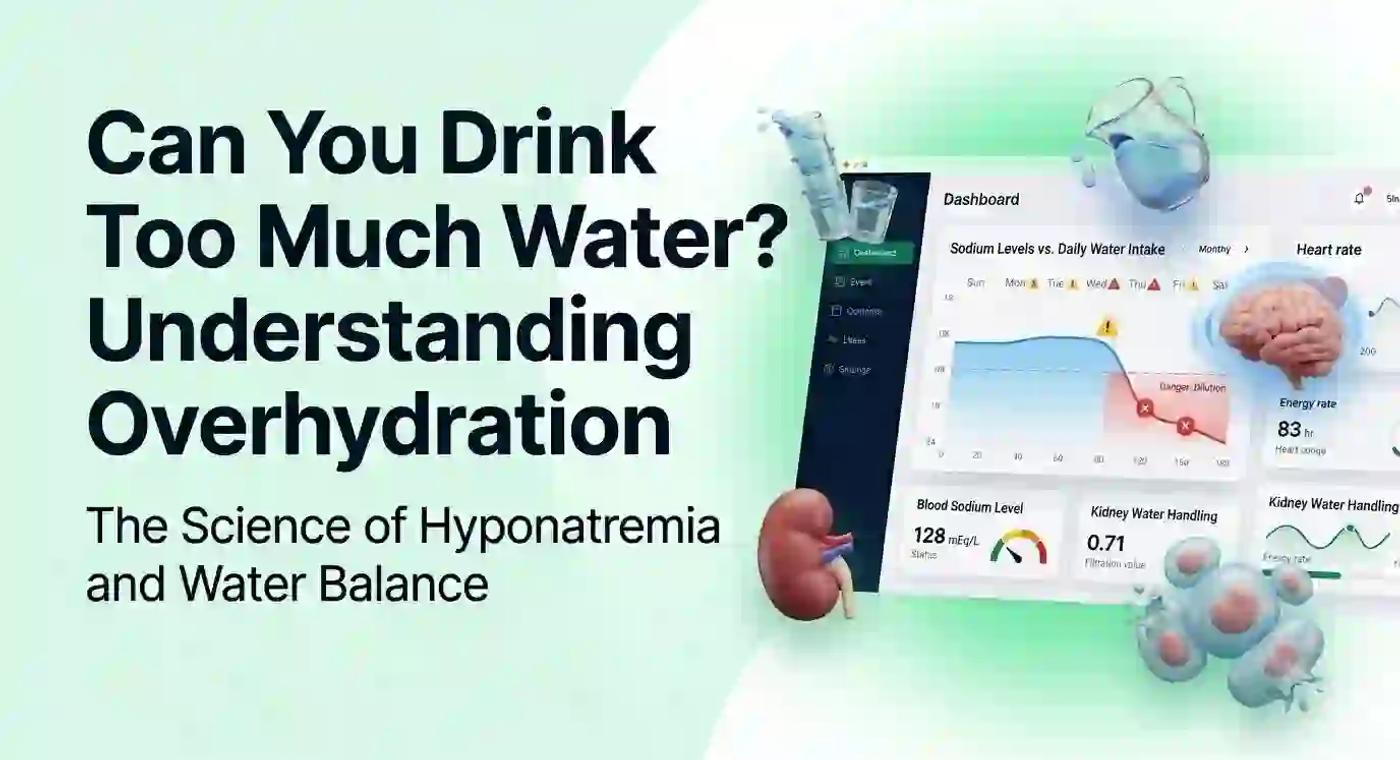
Overhydration happens when you drink more water than your kidneys can process and excrete, causing the sodium in your bloodstream to become diluted. This dilution is medically known as hyponatremia — a drop in blood sodium levels below the normal range.
Sodium plays a critical role in regulating fluid balance inside and outside your cells. When sodium levels drop too low, water shifts into your cells to balance concentration levels, causing them to swell. This is especially dangerous in brain cells, since the skull leaves little room for swelling, which can lead to serious neurological symptoms.
Your kidneys can typically flush out about 800–1,000 ml of water per hour under normal conditions. Overhydration usually occurs when someone drinks water faster than the kidneys can eliminate it, often over a short period, rather than from steady hydration throughout the day.
Overhydration vs. Dehydration: What's the Difference?
It's easy to assume more water is always the safer choice, but overhydration and dehydration are actually two ends of the same spectrum — both disrupt your body's fluid and electrolyte balance.
"Dehydration is caused by too little fluid intake or excessive fluid loss."
"Overhydration is caused by excessive fluid intake, often rapid."
"In dehydration, sodium levels can rise — a condition known as hypernatremia."
"In overhydration, sodium levels drop — a condition known as hyponatremia."
"Common symptoms of dehydration include thirst, dry mouth, dizziness, and dark urine."
"Common symptoms of overhydration include nausea, headache, confusion, and swelling."
"Dehydration can affect everyone, especially in heat or during illness."
"Overhydration is most common among endurance athletes, infants, and certain medical patients."
If you're unsure whether you're drinking enough — or too much — check out our detailed daily water intake guide and the signs you're not drinking enough water to understand both extremes.
Symptoms of Water Intoxication
Early signs of overhydration include nausea, headache, and bloating, while severe cases can cause confusion, seizures, and loss of consciousness.
Mild to Moderate Symptoms
- Nausea and vomiting
- Headache
- Bloating or a feeling of fullness
- Fatigue
- Frequent, clear urination
- Muscle cramps or weakness
Severe Symptoms (Require Immediate Medical Attention)
- Confusion or disorientation
- Slurred speech
- Seizures
- Muscle spasms
- Loss of consciousness
- Coma (in extreme, untreated cases)
Severe symptoms occur when sodium dilution triggers swelling in brain cells, a condition sometimes referred to as cerebral edema. According to the Mayo Clinic, symptoms of hyponatremia can range from mild to life-threatening depending on how quickly sodium levels drop and how low they go.
If you or someone near you shows confusion, seizures, or loss of consciousness after drinking large amounts of water, treat it as a medical emergency and seek help immediately.
How Much Water Is Too Much?
There's no single number that applies to everyone, but drinking more than 1 liter per hour over several hours, or several liters within a short period, significantly raises the risk of overhydration.
Healthy kidneys can generally process up to about a liter of water per hour. Problems tend to arise when:
- Someone drinks multiple liters in a very short window (such as during a competition or as part of a "water challenge")
- Fluid intake isn't balanced with electrolyte intake during intense or prolonged exercise
- An underlying health condition affects how the kidneys or hormones regulate fluid
For general guidance, health authorities like the National Academy of Medicine suggest an adequate daily intake of roughly 3.7 liters for men and 2.7 liters for women from all fluids and food combined — a helpful benchmark rather than a strict rule, since needs vary by body size, activity level, and climate.
Want a number tailored to you? Try our free Water Intake Calculator to get a personalized daily target based on your weight, activity level, and climate.
What Causes Overhydration?
Overhydration isn't just about drinking "too much" in a vague sense — it usually stems from a specific trigger.
1. Endurance Exercise (Exercise-Associated Hyponatremia)
Marathon runners, triathletes, and other endurance athletes are among the most common groups affected. Drinking large amounts of plain water during long events, without replacing lost sodium, can dilute blood sodium levels faster than the body can compensate.
2. Excessive Water Intake in a Short Time
"Water drinking contests" or rapid intake challenges have led to documented cases of severe, sometimes fatal, hyponatremia. The danger lies in the speed of intake, not water itself.
3. Underlying Medical Conditions
Conditions such as kidney disease, heart failure, liver disease, and syndrome of inappropriate antidiuretic hormone secretion (SIADH) can impair the body's ability to excrete excess water properly.
4. Certain Medications
Some diuretics, antidepressants, and pain medications (like NSAIDs) can affect how your kidneys handle water and sodium.
5. Psychogenic Polydipsia
This is a condition, sometimes associated with certain mental health disorders, involving an excessive and compulsive urge to drink water beyond what the body needs.
Who Is Most at Risk?
- Endurance athletes — marathoners, triathletes, and long-distance cyclists who drink large volumes of plain water without electrolyte replacement
- Infants — babies have small kidneys and low water-processing capacity, making water intoxication a genuine risk if they're given too much plain water instead of formula or breast milk
- People with kidney, heart, or liver conditions — organs that regulate fluid balance may not function properly
- People on certain medications — especially those affecting kidney function or hormone regulation
- People following extreme hydration trends — such as "gallon a day" challenges without medical guidance
If you're active or training for an endurance event, pairing your hydration strategy with proper nutrition matters just as much as water intake. Our article on hydration and weight loss breaks down how to balance fluids without overdoing it.
How to Prevent Overhydration
The safest approach to hydration is drinking according to thirst and activity level, rather than following a rigid, one-size-fits-all number.
- Drink to thirst, not by the clock. Your thirst mechanism is generally a reliable guide under normal conditions.
- Balance water with electrolytes during long exercise. For workouts or events lasting over an hour, consider a sports drink with sodium and potassium instead of plain water alone.
- Spread intake throughout the day. Sipping consistently is safer than drinking large volumes at once.
- Watch your urine color. Pale yellow generally indicates good hydration; completely clear, frequent urination can be a sign you're overdoing it.
- Be cautious with hydration challenges or trends. Rapid water intake for weight loss, skin, or detox trends isn't backed by strong medical evidence and can be risky.
- Know your personal needs. Body size, climate, activity level, and health conditions all affect how much water is right for you.
Use our Water Intake Calculator to build a hydration plan suited to your body rather than guessing.
When to See a Doctor
Seek medical attention if you or someone else experiences:
- Confusion, disorientation, or unusual behavior after drinking large amounts of water
- Seizures or muscle spasms
- Severe headache with nausea and vomiting
- Loss of consciousness
- Rapid swelling, especially after intense exercise combined with heavy water intake
These symptoms may indicate significant hyponatremia and should be treated as a medical emergency rather than something to "wait out" at home.
Frequently Asked Questions
What is overhydration? Overhydration is a condition where excess water intake dilutes sodium levels in the blood, a state known as hyponatremia, which can affect brain and muscle function if untreated.
Can drinking too much water be dangerous? Yes. In severe cases, overhydration can cause brain swelling, seizures, and, in rare extreme cases, death. It typically results from drinking very large amounts of water quickly rather than steady daily hydration.
How much water is considered too much in a day? There's no universal cutoff, but consistently drinking several liters more than your body needs, or more than a liter per hour for several hours, raises your risk. Individual needs vary by weight, activity, and climate.
Can you die from drinking too much water? In extremely rare and severe cases, yes. Documented cases, often linked to water-drinking contests or extreme endurance events, show that rapid, excessive intake without electrolyte balance can be fatal.
How long does it take to get water intoxication? It can develop within a few hours if someone drinks several liters of water rapidly, especially during intense exercise or a short-duration challenge.
Is a gallon of water a day too much? For most healthy adults with average activity levels, a gallon (about 3.8 liters) isn't inherently dangerous, but it exceeds what many people actually need. It depends heavily on body size, climate, and activity level — use a personalized calculator rather than a flat number.
Does overhydration affect the kidneys? Yes. Chronic excessive water intake forces your kidneys to work harder to filter and excrete the excess, and in people with existing kidney issues, this can worsen strain on the organs.
The Bottom Line
Water is vital, but like most things related to health, balance matters more than maximizing intake. Overhydration is uncommon in everyday life but is a real and sometimes serious risk for endurance athletes, infants, and people with certain medical conditions. The safest strategy is listening to your body's thirst signals, balancing electrolytes during intense activity, and personalizing your intake rather than chasing a generic daily target.
If you want a hydration plan built around your actual body and lifestyle, try our free Water Intake Calculator, and explore more tools on staying balanced and healthy at Smart Health Calculators.
This article is for general informational purposes and isn't a substitute for professional medical advice. If you're experiencing symptoms of overhydration or hyponatremia, seek medical attention promptly.
Medical Disclaimer
This article is for general education only. It is not medical advice, diagnosis, treatment, prescription guidance, or a replacement for professional healthcare. Speak with a qualified healthcare professional for personal medical concerns, symptoms, pregnancy concerns, mental health crisis, medication questions, or before making major health changes.