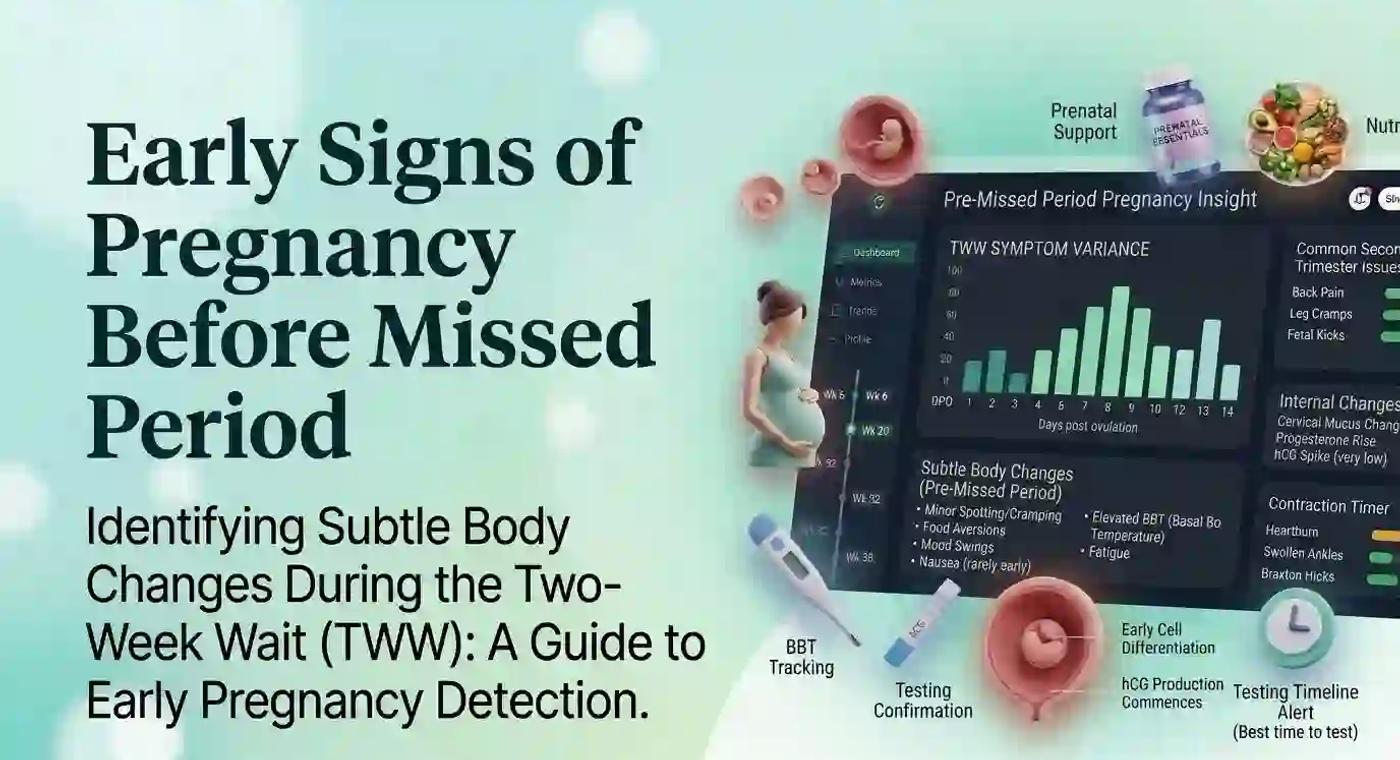
Early Signs of Pregnancy Before a Missed Period
A clear, medically-informed breakdown of first pregnancy signs — implantation symptoms, PMS overlap, and the right time to take a pregnancy test.
The two-week wait — the stretch of time between ovulation and a missed period — is often the hardest part of trying to conceive. It's natural to analyze every twinge, every wave of tiredness, wondering if it means something. This guide walks through what's actually known about early pregnancy symptoms before a missed period, what tends to overlap with regular PMS, and when a pregnancy test can actually give you a reliable answer.
A quick but important note before we start: every body responds differently, and many of these symptoms overlap heavily with normal premenstrual signs. This article is meant to help you understand what's medically documented, not to replace an actual pregnancy test or a conversation with your doctor.
Can You Really Feel Pregnant Before a Missed Period?
Technically, yes — some women report noticing subtle changes in the days leading up to a missed period. But there's an important biological detail here: implantation, when a fertilized egg attaches to the uterine lining, typically happens 6 to 12 days after ovulation. Since your body doesn't start producing meaningful levels of the pregnancy hormone hCG until implantation occurs, any symptoms before that point are unlikely to be pregnancy-related.
According to the American College of Obstetricians and Gynecologists (ACOG), early pregnancy symptoms generally become noticeable only after implantation, which is often just a few days before your period would be due — which is exactly why so many early signs get confused with regular PMS.
Early Signs of Pregnancy Before a Missed Period
Here's a breakdown of the most commonly reported early symptoms, and what may be happening in the body during each one.
Implantation Bleeding or Spotting
Light spotting, sometimes pink or light brown, can occur when the fertilized egg implants into the uterine lining. It's typically much lighter than a period and lasts only a day or two. Not everyone experiences this, and its absence doesn't mean anything is wrong.
Implantation Cramping
Mild, light cramping around the time of implantation is commonly reported. It tends to feel different from period cramps — often described as more of a light pulling or twinge rather than the deeper ache of menstrual cramps, though this varies from person to person.
Breast Tenderness or Sensitivity
Rising progesterone levels after conception can cause breasts to feel swollen, sore, or unusually sensitive, sometimes as early as a week after ovulation. This overlaps significantly with PMS, which is part of why it's not a reliable standalone indicator.
Fatigue
A noticeable drop in energy is one of the earliest and most commonly reported symptoms, largely linked to rising progesterone, which has a natural sedative effect on the body. Some women describe it as feeling suddenly, unusually tired even after normal sleep.
Nausea
While "morning sickness" is typically associated with weeks 6-8 of pregnancy, a smaller number of women report mild nausea slightly earlier, even before a missed period. It's less common at this stage but not unheard of.
Frequent Urination
Increased urination usually becomes more noticeable a few weeks into pregnancy as hCG levels rise and blood flow to the kidneys increases. Before a missed period, this symptom is less common but has been reported by some.
Heightened Sense of Smell
Some women notice a sudden sensitivity to smells that didn't bother them before, sometimes triggering nausea. This is thought to be linked to rising estrogen levels.
Mood Swings
Hormonal shifts, particularly rising progesterone, can affect mood in ways similar to PMS — irritability, tearfulness, or unexplained emotional sensitivity.
Bloating
A bloated, heavy feeling in the abdomen is common both in early pregnancy and in the days before a period, driven by similar hormonal shifts. This overlap makes it a particularly unreliable symptom on its own.
Food Aversions or Cravings
Sudden dislike for foods you normally enjoy, or a strange craving for something specific, is often reported in early pregnancy, though the exact hormonal mechanism isn't fully understood.
Early Pregnancy Symptoms vs. PMS: How to Tell Them Apart
This is where things get genuinely tricky, because early pregnancy and PMS share a long list of overlapping symptoms — bloating, breast tenderness, mood swings, fatigue, and cramping among them. There isn't a foolproof way to distinguish them just from symptoms alone.
A few small differences some women report:
- Implantation cramping tends to feel lighter and shorter than typical period cramps.
- Implantation spotting is usually much lighter in flow and color than a period.
- Fatigue in early pregnancy can feel more sudden or extreme than typical premenstrual tiredness.
That said, none of these differences are reliable enough to confirm pregnancy on their own. The only way to know for certain is a pregnancy test, ideally taken around the time your period is due or later, since testing too early can produce a false negative even if you are pregnant.
When Should You Take a Pregnancy Test?
Home pregnancy tests detect hCG in urine, and levels are usually high enough for accurate detection around the time of your missed period, or a few days after. Testing earlier than this increases the chance of a false negative simply because hCG levels may not yet be high enough to register, even if implantation has already occurred.
If your cycle is irregular and you're unsure when to expect your period, waiting about two weeks after a known ovulation date (if you're tracking it) tends to give more reliable results than guessing based on symptoms alone.
Why Some Women Have No Early Symptoms at All
It's worth saying clearly: not experiencing early symptoms does not mean you're not pregnant. Symptom presence and intensity vary enormously between individuals and even between different pregnancies in the same person. Some women sail through the first weeks with no noticeable signs at all and only find out via a missed period and a positive test.
A Note on Miscarriage-Related Symptoms
Some searches around this topic involve concern about symptoms like heavy cramping, significant bleeding, or sudden symptom loss potentially signaling a miscarriage or ectopic pregnancy. If you experience heavy bleeding, severe abdominal pain, or symptoms that concern you at any stage, it's important to contact a doctor promptly rather than trying to interpret symptoms on your own — this is not something general information online can safely diagnose.
Tracking Your Cycle Can Help
If you're actively trying to conceive, understanding your own cycle and rough ovulation window can make interpreting early symptoms slightly more informed, even though it still can't replace a test. Tools like a pregnancy calculator can help you estimate key dates once you do get a positive result, which is often the next question once symptoms are confirmed with a test.
General wellbeing also plays a role during this waiting period — staying hydrated, eating well, and managing stress won't create or prevent pregnancy symptoms, but they support your body regardless of the outcome. If hydration has been on your mind, this guide on signs you're not drinking enough water is a useful, low-stress read for the two-week wait.
Frequently Asked Questions
What are the earliest signs of pregnancy? The earliest commonly reported signs include implantation spotting or cramping, breast tenderness, fatigue, and mood changes — though these typically appear only after implantation, roughly 6-12 days after ovulation.
Can you feel pregnant before your missed period? Some women notice subtle symptoms in the days just before a missed period, once implantation has occurred, but many people have no noticeable symptoms this early at all.
How soon after conception do symptoms start? Since hCG only rises meaningfully after implantation, most symptoms don't appear until roughly a week to ten days after conception at the earliest, if they appear at all.
What is the difference between PMS and early pregnancy symptoms? There's significant overlap, including bloating, breast tenderness, and mood swings. Implantation spotting and unusually sudden fatigue are sometimes reported as slightly different from typical PMS, but symptoms alone can't reliably confirm pregnancy.
When should I take a pregnancy test? For the most accurate result, take a home pregnancy test around the time your period is due, or a few days after, since testing earlier increases the risk of a false negative.
Is it normal to have no pregnancy symptoms at all? Yes. Many women experience few or no early symptoms and only find out they're pregnant through a missed period and a positive test. Absence of symptoms doesn't indicate anything is wrong.
Final Thoughts
Early pregnancy symptoms before a missed period are real for some women, but they're also genuinely difficult to distinguish from ordinary PMS, and their absence means nothing on its own. If you're in the middle of the two-week wait, the most reliable next step is simply timing a pregnancy test correctly rather than trying to read your body for certainty it can't yet give you.
If you get a positive result, a pregnancy calculator can help you map out key upcoming dates and milestones. You'll find more free, judgment-free health tools at Smart Health Calculators to support you through whatever comes next.
If you're experiencing symptoms that worry you — heavy bleeding, severe pain, or anything that feels off — please reach out to a doctor or gynecologist rather than waiting it out. This article is meant to inform, not diagnose, and a healthcare provider is always the right next step for anything concerning.
Medical Disclaimer
This article is for general education only. It is not medical advice, diagnosis, treatment, prescription guidance, or a replacement for professional healthcare. Speak with a qualified healthcare professional for personal medical concerns, symptoms, pregnancy concerns, mental health crisis, medication questions, or before making major health changes.