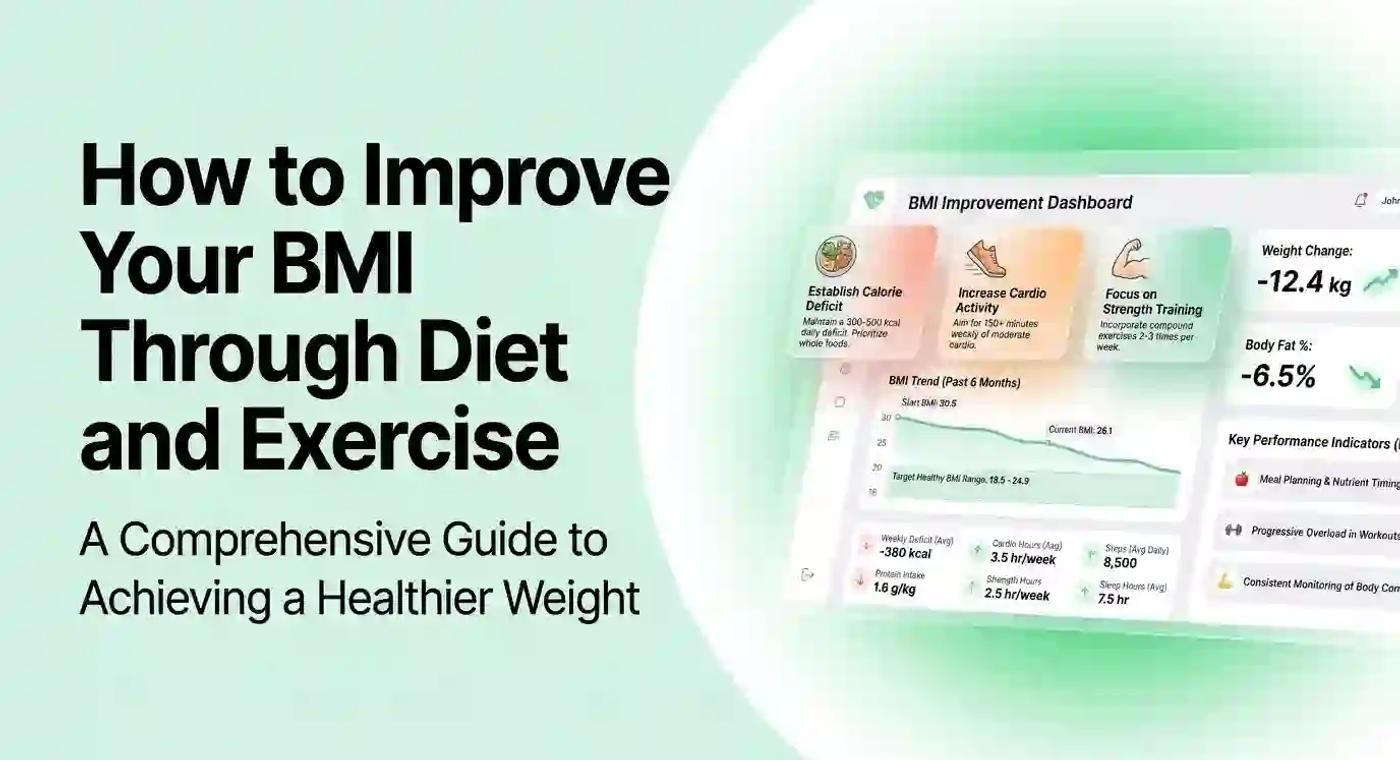
How to Improve Your BMI Through Diet & Exercise
Improve your BMI naturally with sustainable diet and exercise habits — real tips, timelines, and FAQs backed by CDC and WHO guidelines.
If you've ever calculated your BMI and felt confused about what the number actually means, you're not alone. Body Mass Index gets thrown around a lot, but very few people are told what to actually do with that information. This guide breaks down what BMI really measures, why it matters, and — most importantly — how to move it toward a healthier range through sustainable diet and exercise habits, not crash diets or extreme workouts.
What Is BMI and Why Does It Matter?
BMI, or Body Mass Index, is a simple calculation that uses your height and weight to estimate whether your weight falls within a range generally associated with lower health risk. According to the World Health Organization and CDC guidelines, adult BMI categories are typically classified as:
- Underweight: below 18.5
- Normal/Healthy weight: 18.5–24.9
- Overweight: 25–29.9
- Obese: 30 and above
It's worth saying clearly: BMI is a screening tool, not a diagnosis. It doesn't distinguish between muscle and fat, which is why a muscular athlete can show an "overweight" BMI despite having low body fat. It also doesn't account for bone density, age, or where fat is distributed on the body. Still, for most people, BMI remains a useful starting point for understanding general health risk, especially when tracked alongside other measures like waist-to-hip ratio or body fat percentage.
If you're not sure where you currently stand, a quick BMI calculator can give you an accurate starting number before you make any changes.
Why Improving Your BMI Matters
A BMI outside the healthy range — in either direction — is associated with higher risk for certain health conditions. Research consistently links higher BMI with increased risk of type 2 diabetes, high blood pressure, and cardiovascular disease. On the other end, a BMI that's too low can be linked to nutrient deficiencies, weakened immunity, and reduced bone density.
The goal isn't to chase a specific number for its own sake. It's to build habits that support your body's overall function — better energy, better sleep, better long-term health outcomes. Improving BMI is really just a side effect of improving how you eat, move, and recover.
How to Improve BMI Through Diet
Diet plays the larger role in most BMI changes, simply because it's easier to create an energy imbalance through food than through exercise alone. Here's what actually helps, without resorting to restrictive extremes.
Focus on Whole, Minimally Processed Foods
Vegetables, fruits, lean proteins, whole grains, and healthy fats naturally tend to be more filling per calorie than heavily processed foods. This makes it easier to manage portions without constantly feeling deprived.
Prioritize Protein
Protein supports muscle maintenance, which matters because muscle tissue burns more calories at rest than fat tissue. It also tends to be more satiating, which can naturally reduce overeating throughout the day.
Practice Portion Awareness, Not Restriction
Rather than eliminating entire food groups, pay attention to portion sizes. Using smaller plates, eating slowly, and stopping when comfortably full are simple habits that reduce excess intake without triggering the all-or-nothing mindset that often backfires.
Reduce Liquid Calories
Sugary drinks, sweetened coffee, and juice can add a surprising number of calories without much nutritional benefit. Swapping some of these for water is one of the simplest changes with a real impact over time. If you're unsure how much water you should actually be drinking, this guide on daily water intake breaks it down clearly.
Understand Your Calorie Needs
Whether you're aiming to reduce or increase your BMI, understanding your baseline calorie needs matters more than following a generic diet plan. A calorie intake planner can help you understand roughly where your maintenance level sits, so any changes you make are based on your actual body, not guesswork.
How to Improve BMI Through Exercise
Exercise supports BMI improvement in two ways: it burns energy directly, and over time, it builds muscle, which changes your body composition even if the scale doesn't move dramatically.
Cardiovascular Exercise
Activities like brisk walking, cycling, swimming, or jogging increase calorie expenditure and support heart health. Even 30 minutes of moderate activity most days of the week can make a measurable difference over a few months. If you're short on time, this 30-minute workout plan for busy people is a practical starting point.
Strength Training
Building muscle through resistance training — bodyweight exercises, resistance bands, or weights — helps maintain a healthy metabolism and improves body composition. This matters especially for people trying to lower BMI without losing lean muscle mass, since muscle loss can actually slow metabolic rate over time.
Consistency Over Intensity
A sustainable, moderate routine you can maintain for months will do more for your BMI than an intense program you quit after two weeks. If you're just getting started, a beginner weekly workout plan can help you build the habit gradually.
What If You Need to Increase Your BMI?
Not everyone reading this wants to lower their BMI. If your BMI falls below 18.5, the approach flips: you'll want a modest calorie surplus, combined with strength training rather than excessive cardio, so that added weight goes toward muscle rather than just fat. Nutrient-dense foods — nuts, dairy, whole grains, lean proteins, and healthy oils — are usually a better route than simply eating more processed, calorie-dense food, since the goal is still supporting overall health, not just moving a number.
How Long Does It Take to Improve BMI?
This varies significantly by individual, but a realistic, sustainable pace of weight change is generally considered to be about 0.5–1 kg per week for most adults. That means a noticeable shift in BMI category often takes several months, not weeks. Rapid changes are usually harder to maintain and more likely to reverse. Patience and consistency matter more than speed here.
Common Mistakes That Slow BMI Progress
- Overcorrecting with extreme diets. Very low-calorie diets often lead to muscle loss and rebound weight gain.
- Ignoring strength training. Cardio alone without resistance work can lead to muscle loss alongside fat loss, which isn't ideal for long-term metabolic health.
- Focusing only on the scale. Body composition changes don't always show up as dramatic BMI shifts right away, especially early on.
- Poor sleep and high stress. Both affect hormones that regulate hunger and fat storage. If sleep has been an issue, this guide on building a healthy morning routine touches on habits that support better rest and consistency.
BMI Isn't the Whole Picture
It's worth repeating: BMI is one data point, not a verdict on your health or worth. Two people with an identical BMI can have very different body compositions, fitness levels, and health markers. If you want a fuller picture, looking at body fat percentage alongside BMI gives a more complete understanding of where you actually stand.
According to the CDC's guidance on BMI, it should be used as a general screening tool alongside other health assessments, not as a standalone diagnostic measure — a good reminder to keep this number in perspective rather than fixating on it.
Frequently Asked Questions
What is a healthy BMI range? For most adults, a BMI between 18.5 and 24.9 is considered within the healthy range, based on WHO and CDC classifications.
How can I improve my BMI through diet? Focus on whole, minimally processed foods, adequate protein, portion awareness, and reducing sugary drinks. Small, consistent changes tend to outperform short-term restrictive diets.
What exercises help improve BMI most effectively? A combination of cardiovascular exercise and strength training tends to work best — cardio supports calorie balance, while strength training preserves and builds muscle.
How long does it take to see BMI improvement? Most people see gradual changes over 2–3 months with consistent habits, since a sustainable rate of change is roughly 0.5–1 kg per week.
Can you improve BMI without significant weight loss? Yes. Building muscle while reducing fat can improve body composition and health markers even if the number on the scale changes only slightly.
Is BMI an accurate measure of health on its own? Not entirely. It doesn't account for muscle mass, bone density, or fat distribution, so it's best used alongside other measures like body fat percentage or waist-to-hip ratio.
Final Thoughts
Improving your BMI isn't about chasing a perfect number — it's about building habits around food, movement, sleep, and consistency that support how your body actually functions. Small, sustainable changes in diet and exercise, maintained over months rather than days, tend to produce results that actually last.
If you're ready to get a clearer picture of where you're starting from, try the BMI calculator or explore the diet plan generator to build a plan around your own numbers. You'll find more free tools at Smart Health Calculators to help you track progress and make informed decisions about your health, one small habit at a time.
If BMI, weight, or body image have been a source of ongoing stress for you personally, it can help to talk it through with a doctor or registered dietitian — they can look at your full picture in a way a single number never can.
Medical Disclaimer
This article is for general education only. It is not medical advice, diagnosis, treatment, prescription guidance, or a replacement for professional healthcare. Speak with a qualified healthcare professional for personal medical concerns, symptoms, pregnancy concerns, mental health crisis, medication questions, or before making major health changes.