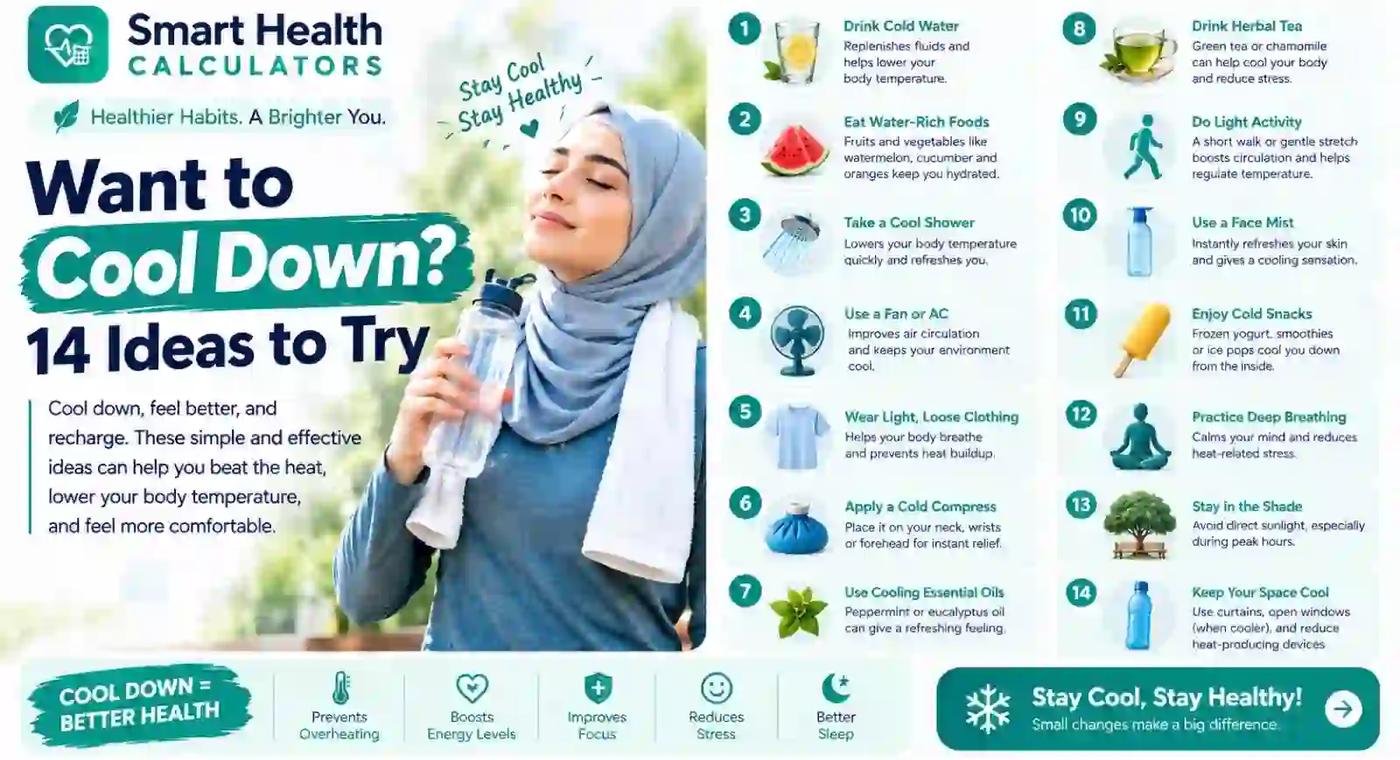
14 Ways to Cool Down Fast in Hot Weather
Discover 14 effective ways to cool down fast, stay hydrated, cool your home and car, and safely manage heat for babies, pets, and exercise.
When the temperature climbs past what your body can comfortably handle, guessing your way through it rarely works. Standing in front of an open fridge for relief, or drinking ice water and wondering why you still feel overheated ten minutes later, both point to the same problem: most people don't actually know which cooling methods work fast and which just feel like they should.
This guide walks through 14 genuinely effective ways to cool down — covering your body, your room, and situations like cooling a car, a baby, or a pet safely. Each one explains not just what to do, but why it actually lowers your temperature, so you can pick the right method for the situation you're actually in rather than reaching for whatever's familiar.
How Your Body Actually Cools Itself Down
Before getting into the 14 ideas, it helps to understand the mechanism you're working with. Your body regulates temperature through a process called thermoregulation, controlled by a part of your brain called the hypothalamus. When your core body temperature rises, your body responds by sweating (which cools you through evaporation) and by vasodilation — widening blood vessels near your skin's surface so heat can escape more efficiently.
This matters practically because the most effective cooling methods work with this system rather than against it. Techniques that target blood vessels close to the skin, support evaporation, or directly lower skin temperature at key points tend to outperform methods that just "feel cold" without actually helping your body release heat.
14 Effective Ways to Cool Down
1. Target Your Pulse Points First
Your wrists, neck, temples, and the insides of your elbows have blood vessels running close to the skin's surface. Applying a cold, damp cloth to these specific points cools the blood flowing just beneath them, which then circulates that cooler blood through your body more efficiently than cooling a larger, less vascular area like your back or thighs.
Practical tip: Keep a small cloth in the freezer in a sealed bag specifically for this — it's faster and more targeted than a full cold shower when you need quick relief.
2. Take a Lukewarm Shower, Not an Ice-Cold One
This surprises people, but a shower that's too cold can actually work against you. Extremely cold water triggers your blood vessels to constrict (vasoconstriction) rather than dilate, which traps heat inside your body's core instead of releasing it. A lukewarm shower cools your skin without triggering that defensive constriction response, making it more effective for sustained relief.
3. Try Cold Water Immersion for Your Feet and Hands
Soaking your feet or hands in cool water for 10–15 minutes takes advantage of the same principle as pulse-point cooling — these areas have a high concentration of blood vessels close to the surface relative to their size, making them efficient points for heat exchange.
4. Use Cross Ventilation Instead of a Single Fan
Placing one fan in a room rarely cools it — it just moves warm air around. Cross ventilation — opening windows on opposite sides of a room or house so air actively flows through — creates a genuine temperature drop by pulling cooler outside air in while pushing warm indoor air out.
Practical tip: This works best during early morning or late evening hours when outdoor air is actually cooler than indoor air; doing this during peak afternoon heat can backfire by pulling in hotter air.
5. Close Curtains During Peak Daylight Hours
Up to 30% of unwanted heat gain in a room can come through windows exposed to direct sunlight. Closing blackout curtains or blinds during the hottest part of the day (typically late morning through mid-afternoon) prevents that heat from building up in the first place, which is considerably more effective than trying to cool a room after it's already absorbed hours of direct sun.
6. Hydrate Before You Feel Thirsty
Thirst is a lagging indicator — by the time you feel thirsty, mild dehydration has often already begun, and dehydration directly impairs your body's ability to sweat effectively, which is one of its primary cooling mechanisms. Drinking water consistently throughout a hot day, rather than large amounts reactively, supports your body's natural cooling response rather than playing catch-up.
For anyone tracking this more precisely, especially during a heatwave or intense outdoor activity, our water intake calculator helps determine how much you actually need based on your activity level and conditions, rather than relying on a generic "8 glasses a day" rule that doesn't account for heat exposure.
7. Eat Water-Rich, Lighter Foods
Heavy, protein-dense meals require more metabolic energy to digest, which generates internal heat as a byproduct — something you genuinely don't want on a hot day. Water-rich foods like cucumber, watermelon, and citrus fruits contribute to hydration while requiring less digestive effort, making them a better fit than a large, heavy meal when you're already trying to cool down.
8. Choose Breathable, Loose-Fitting Fabrics
Cotton and linen allow air to circulate against your skin and absorb sweat effectively, supporting evaporative cooling — your body's natural mechanism. Synthetic fabrics like polyester trap heat and moisture against the skin, working directly against the cooling process your body is already trying to run.
9. Cool Down Properly After Exercise
Stopping exercise abruptly can leave blood pooled in your extremities and your core temperature elevated for longer than necessary. A proper cool-down — 5–10 minutes of gradually decreasing activity intensity followed by hydration — helps your heart rate and core temperature return to baseline more efficiently than sitting down immediately after intense activity.
If you're building or refining a workout routine that includes proper warm-up and cool-down structure, our workout planner can help you structure sessions that account for this rather than treating cool-down as an afterthought.
10. Use a Damp Cloth on the Back of Your Neck
The back of the neck sits close to major blood vessels supplying blood to the brain, making it a particularly effective cooling point — applying a cold, damp cloth here can produce a noticeably fast sense of relief compared to cooling less vascular areas of the body.
11. Avoid Alcohol and Excess Caffeine in Extreme Heat
Both alcohol and caffeine have diuretic effects, increasing fluid loss at exactly the time your body needs to retain hydration for effective sweating and temperature regulation. This doesn't mean total avoidance is necessary in normal conditions, but during a genuine heatwave, cutting back meaningfully supports your body's cooling capacity.
12. Cool Down a Car Before Getting In
A car parked in direct sun can reach dangerously high internal temperatures within minutes. Opening all doors for 30–60 seconds before entering, or briefly running the air conditioning with windows cracked, releases trapped superheated air before you're sealed inside it — a small step that makes a meaningful difference, especially for a car that's been parked for hours.
13. Cool Down a Baby Safely — Never With Ice-Cold Methods
Babies and young children regulate temperature less efficiently than adults, and rapid cooling methods used on adults (ice baths, very cold showers) can be genuinely dangerous for infants, potentially causing shock. Safe methods include lukewarm (not cold) sponge baths, dressing in a single layer of breathable cotton, and ensuring the room stays adequately ventilated rather than sealed and stuffy. If a baby shows signs of heat exhaustion — unusual lethargy, reduced urination, or a notably hot, dry appearance — this warrants immediate medical attention rather than home cooling attempts alone.
14. Cool Down Pets Without Shocking Their System
Like babies, pets are vulnerable to rapid temperature-change methods that seem intuitive for humans. Offering cool (not ice-cold) water, providing shaded, ventilated resting areas, and wetting paw pads or the underside of the belly with cool water are safer approaches than full submersion in cold water, which can cause a dangerous, rapid drop in core temperature.
Recognizing When "Cooling Down" Isn't Enough: Heat Exhaustion Warning Signs
Most of the ideas above address ordinary heat discomfort, but it's worth knowing the line between "uncomfortably hot" and a genuine medical concern. According to heat safety guidance from health authorities like the CDC, heat exhaustion symptoms include heavy sweating, weakness, cold or clammy skin, a fast but weak pulse, nausea, and dizziness.
Heatstroke — a more severe, medical emergency — involves a body temperature above 103°F (39.4°C), hot and dry (or damp) skin, a rapid strong pulse, confusion, and potential loss of consciousness. If heatstroke is suspected, this requires immediate emergency medical attention rather than home cooling remedies, since it's a genuine medical emergency, not something to manage independently.
Does Drinking Ice Water Really Cool You Down Faster?
This is a common question worth addressing directly, since the intuitive answer isn't quite the full picture. Very cold water can cause your stomach to briefly constrict blood vessels around the digestive tract, which some research suggests may slightly slow the rate of fluid absorption compared to cool (not ice-cold) water. For most people, cool water is genuinely effective for both hydration and a subjective sense of relief — the difference between ice-cold and cool water matters less than simply drinking enough water consistently throughout a hot day.
Fan vs Air Conditioning: When Each Actually Makes Sense
| Factor | Fan | Air Conditioning |
|---|---|---|
| How it cools | Moves air, supports evaporative cooling from sweat | Actively lowers air temperature and humidity |
| Effectiveness in extreme heat (above ~95°F) | Limited — can even feel counterproductive at very high temps | Significantly more effective |
| Energy cost | Low | Higher |
| Best use case | Mild-to-moderate heat, supporting natural cooling | Genuine heatwave conditions, health-vulnerable individuals |
A genuinely useful rule of thumb: fans work by helping your sweat evaporate faster, which only cools you if the air isn't already too hot and humid. In truly extreme heat, a fan alone can stop being effective and, in some cases, simply circulate hot air without meaningful relief — this is when air conditioning or another active cooling method becomes necessary rather than optional.
A Practical Example: Building a Heat-Safe Evening Routine
Consider someone dealing with consistently hot, humid evenings that disrupt sleep. A practical routine combining several of the ideas above might look like this: closing curtains by early afternoon to prevent heat buildup, opening windows for cross ventilation once outdoor temperatures drop in the evening, taking a lukewarm (not cold) shower an hour before bed, and applying a cool damp cloth to the neck and wrists while winding down. This combination addresses the room, the body, and the transition into sleep together, rather than relying on a single method and wondering why it isn't fully solving the problem.
For anyone whose heat-related sleep disruption is a recurring issue rather than an occasional one, it's worth reading how stress affects sleep quality alongside heat management, since poor sleep and heat discomfort often compound each other rather than existing as separate problems.
Why Choose Smart Health Calculators for Heat and Hydration Planning
Managing heat safely isn't just about individual tips — it's about understanding your own hydration needs, activity tolerance, and risk factors specifically. Why choose Smart Health Calculators comes down to having tools built around your actual numbers rather than generic advice that doesn't account for your body, activity level, or conditions.
Before a hot day, activity, or travel period, it's worth checking your needs directly through the water intake calculator, and if heat exposure is tied to physical activity specifically, our guide on water intake for athletes covers the additional considerations that apply during exercise in hot conditions.
Frequently Asked Questions
What is the fastest way to cool down your body? Applying a cold, damp cloth to pulse points — wrists, neck, and temples — cools blood near the skin's surface efficiently, often producing faster relief than a full cold shower since it directly targets areas with high blood vessel concentration.
How do you cool down a room without air conditioning? Use cross ventilation by opening windows on opposite sides of the room during cooler morning or evening hours, and keep curtains closed during peak afternoon sun to prevent heat buildup in the first place.
What foods help cool down your body in summer? Water-rich foods like watermelon, cucumber, and citrus fruits support hydration while requiring less digestive energy than heavy meals, which generate additional internal heat as a byproduct of digestion.
Does drinking ice water actually cool you down faster than regular water? Not meaningfully — cool water is generally just as effective for hydration and relief, and very cold water can slightly slow fluid absorption due to brief digestive vessel constriction.
How do you cool down a baby safely in hot weather? Use lukewarm (never ice-cold) sponge baths, dress in a single layer of breathable cotton, and ensure good room ventilation. Never use rapid or extreme cooling methods designed for adults on infants.
What are the warning signs of heat exhaustion? Heavy sweating, weakness, cold or clammy skin, a fast but weak pulse, nausea, and dizziness are common signs of heat exhaustion, which should prompt immediate cooling and rest, with medical attention sought if symptoms don't improve.
Final Takeaway: Match the Method to the Moment
Cooling down effectively isn't about picking one favorite trick and using it everywhere — it's about understanding that pulse-point cooling, room ventilation, hydration, and clothing choices all work through different mechanisms, and combining the right ones for your specific situation produces far better results than relying on a single method alone. Pay attention to genuine heat exhaustion warning signs, treat babies and pets with appropriately gentler methods, and remember that prevention (closing curtains early, hydrating before you're thirsty) consistently outperforms trying to cool down after you're already overheated.
Ready to build a hydration plan suited to your actual needs rather than a generic guideline? Try the water intake calculator at Smart Health Calculators, and explore the full range of health tools to plan for hot weather, workouts, and everyday wellness in one place.
Medical Disclaimer
This article is for general education only. It is not medical advice, diagnosis, treatment, prescription guidance, or a replacement for professional healthcare. Speak with a qualified healthcare professional for personal medical concerns, symptoms, pregnancy concerns, mental health crisis, medication questions, or before making major health changes.