Best Drinks for Heart Health: 8 Healthy Choices
Discover the best drinks for heart health, including water, green tea, coffee, hibiscus tea, and beetroot juice—and which drinks to avoid.
Your heart pumps about 2,000 gallons of blood a day, and what you pour into your body has a direct say in how easy or hard that job is. Sugary sodas can nudge blood pressure and triglycerides upward, while a simple cup of green tea can support healthier blood vessels. The good news is that you don't need a complicated diet overhaul — just smarter choices at the fridge, the coffee machine, and the drive-through.
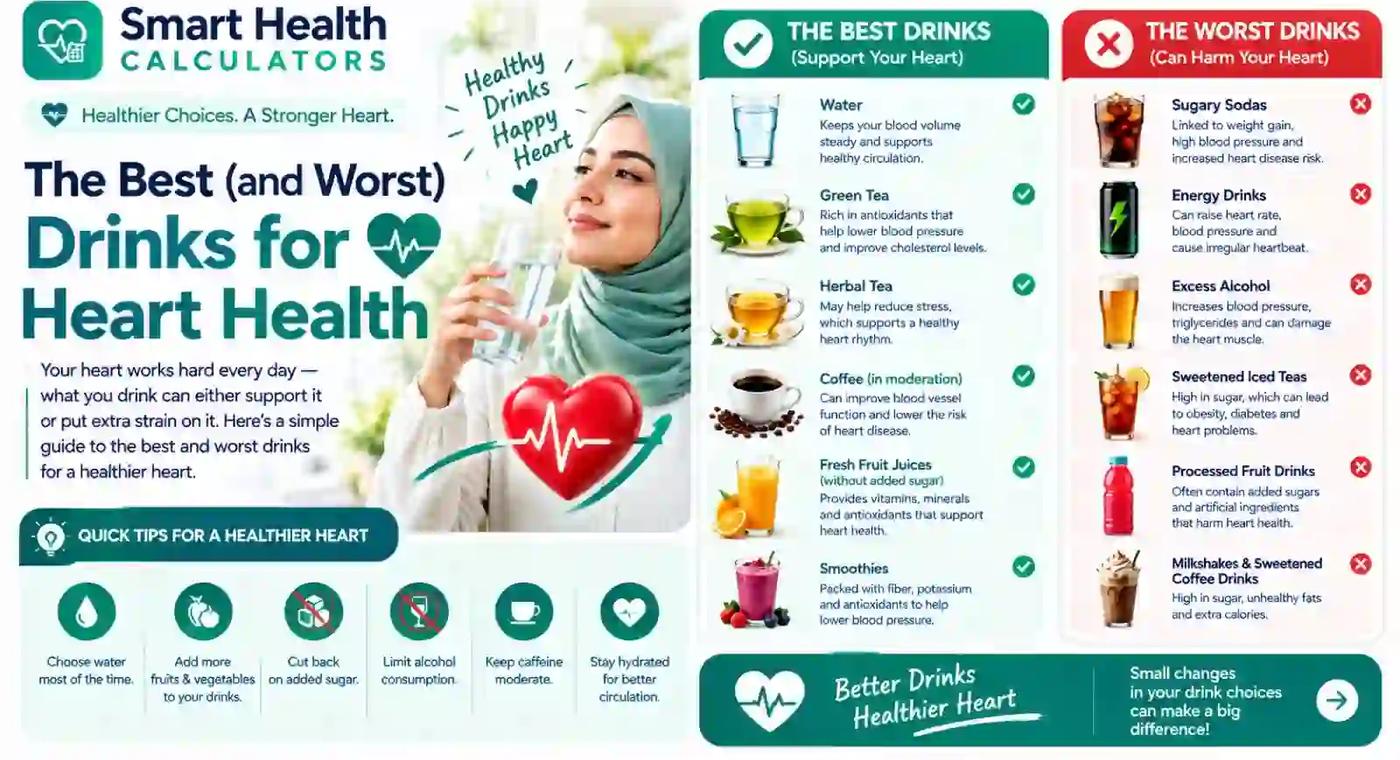
The best drinks for heart health are water, green tea, black coffee in moderation, hibiscus tea, and low-sodium vegetable juices like beetroot or tomato juice. The worst drinks for your heart are sugar-sweetened sodas, energy drinks, sweetened fruit juices, and heavy alcohol consumption. Below, you'll find the science behind each one, a quick-reference table, and practical guidance you can actually use today.
Quick-Reference Table: Drinks and Your Heart
| Drink | Effect on Heart Health | Recommended Frequency |
|---|---|---|
| Water | Supports healthy blood volume and blood pressure | 6–8 glasses daily (more in heat or during exercise) |
| Green tea | Linked to lower LDL cholesterol and better artery function | 1–3 cups daily |
| Black coffee | Neutral to modestly protective in most healthy adults | Up to 3–4 cups daily |
| Hibiscus tea | May modestly lower blood pressure | 1–2 cups daily |
| Beetroot juice | Nitrates may relax blood vessels and lower blood pressure | 1 small glass, a few times a week |
| Pomegranate juice | Antioxidant-rich, may support artery health | 4–8 oz, a few times a week |
| Low-sodium tomato juice | Potassium supports blood pressure balance | 1 glass daily (choose no-salt-added) |
| Unsweetened plant or low-fat milk | Provides protein without excess saturated fat | Daily, in moderation |
| Regular soda | Added sugar linked to higher triglycerides and heart disease risk | Avoid or treat as an occasional treat |
| Energy drinks | High caffeine and sugar linked to blood pressure spikes and arrhythmia risk | Avoid, especially with existing heart conditions |
| Sweetened fruit juice | Concentrated sugar without the fiber of whole fruit | Limit to occasional small servings |
| Alcohol (any amount) | No amount is proven risk-free; heavy or binge drinking clearly raises risk | If you drink, keep it minimal and talk to your doctor |
Why Your Drink Choices Matter More Than You Think
Most people focus on food when they think about heart health, but beverages are often where the biggest hidden risks live. A single 20-ounce soda can contain more added sugar than the American Heart Association recommends for an entire day. Meanwhile, a daily habit like green tea or plain water costs nothing extra and quietly supports healthier blood vessels over years.
Three mechanisms matter most here:
- Blood pressure regulation — sodium-heavy and alcohol-heavy drinks can push blood pressure up, while potassium- and nitrate-rich drinks like beetroot juice can help ease it down.
- Cholesterol and triglycerides — added sugar in sodas and juices raises triglycerides and can lower protective HDL cholesterol over time.
- Inflammation and artery health — polyphenols and flavonoids in tea, coffee, and pomegranate juice appear to support healthier, more flexible blood vessels, while chronic high sugar intake promotes inflammation and atherosclerosis (the buildup of plaque in arteries).
If you're also working on your weight or activity levels alongside your heart health, it's worth pairing this with a broader look at hydration and weight loss and tracking your heart rate zones during exercise, since cardiovascular fitness and drink choices work together, not in isolation.
The Best Drinks for Heart Health
1. Water — The Non-Negotiable Baseline
Plain water doesn't get much attention in "heart healthy drinks" lists, but it's the foundation everything else builds on. Chronic mild dehydration thickens the blood slightly and forces the heart to work harder to circulate it. Staying well hydrated helps maintain healthy blood volume and blood pressure.
There's no single magic number that fits everyone — needs shift with body size, climate, and activity level. If you want a number tailored to you rather than a generic "8 glasses a day" rule, the water intake calculator gives a personalized estimate, and the daily water intake guide breaks down how that number changes with age, weight, and exercise. It's also worth knowing that more isn't always better — drinking too much water can dilute sodium levels and create its own problems, so balance matters more than volume alone.
2. Green Tea — Small Habit, Real Cardiovascular Payoff
Green tea is rich in catechins, a type of flavonoid antioxidant that has been associated with lower LDL ("bad") cholesterol and improved function of the endothelium — the thin layer of cells lining your blood vessels. Healthier endothelial function generally means arteries that dilate and constrict more efficiently, which supports normal blood pressure.
A practical habit: swap one sugary drink a day for unsweetened green tea. It contains far less caffeine than coffee, so it's a gentler option for people who are caffeine-sensitive but still want the metabolic and cardiovascular benefits of polyphenols.
3. Coffee — Is It Good or Bad for Your Heart?
This is one of the most searched, most debated questions in nutrition, so let's answer it directly: for most healthy adults, moderate coffee consumption (roughly 3–4 cups a day) is not harmful to the heart and may even be modestly protective. Coffee contains polyphenols and chlorogenic acid, compounds linked to reduced inflammation and improved insulin sensitivity, both of which matter for cardiovascular health.
The caveats matter, though:
- Caffeine sensitivity — some people experience real spikes in heart rate or blood pressure after coffee. If you notice palpitations, cut back.
- What you add to it matters more than the coffee itself. A daily flavored latte loaded with syrup and whipped cream is a very different drink from black coffee.
- Existing arrhythmia or uncontrolled hypertension — if you have a diagnosed heart rhythm condition, talk to your cardiologist about your personal caffeine ceiling rather than relying on general guidance.
4. Hibiscus Tea — An Underrated Blood Pressure Ally
Hibiscus tea has one of the more consistent small bodies of clinical research behind it for a specific heart-related outcome: modestly lowering systolic blood pressure. Several controlled studies have found reductions comparable to some lifestyle interventions, though not as strong as prescription medication.
One important caution: hibiscus tea can interact with certain blood pressure medications and diuretics. If you're on medication for hypertension, check with your doctor or pharmacist before making it a daily habit — this is a case where "natural" doesn't automatically mean "risk-free."
5. Beetroot Juice — The Nitrate Effect
Beets are naturally high in dietary nitrates, which your body converts into nitric oxide — a molecule that helps blood vessels relax and widen. Several clinical trials have shown measurable, short-term drops in blood pressure after drinking beetroot juice, along with modest improvements in exercise performance.
A small glass (roughly 4–8 oz) a few times a week is a reasonable target. It doesn't need to be a daily ritual to contribute meaningfully, and the earthy taste is easier to manage in smaller servings anyway.
6. Pomegranate Juice — Antioxidant Density Worth Noting
Pomegranate juice is unusually concentrated in polyphenol antioxidants, and some studies link it to modest improvements in blood pressure and reduced oxidative stress on artery walls. The caveat is sugar content: pure pomegranate juice still carries natural sugars, so portion control (4–8 oz servings) keeps the benefit-to-sugar ratio favorable.
7. Low-Sodium Tomato Juice — A Potassium Source Hiding in Plain Sight
Tomato juice delivers potassium, an electrolyte that works against sodium's blood-pressure-raising effects. The catch is that standard tomato juice and V8-style blends are often loaded with added sodium, which cancels out the benefit. Always check the label and choose no-salt-added or low-sodium versions.
8. Unsweetened Plant Milk or Low-Fat Dairy Milk
Milk isn't usually framed as a "heart health drink," but it deserves a mention because of what it displaces. Swapping a sugary latte or soda for unsweetened almond, soy, or low-fat dairy milk cuts saturated fat and added sugar while still providing protein and, in fortified versions, potassium and vitamin D. Soy milk in particular has modest LDL-lowering associations in research, likely tied to its plant protein and isoflavone content.
The Worst Drinks for Heart Health
1. Sugar-Sweetened Soda — The Clearest Offender
Regular soda is consistently one of the strongest dietary contributors to cardiovascular risk, and the mechanism is well understood. Excess added sugar raises triglycerides, can lower HDL cholesterol, contributes to insulin resistance, and drives weight gain — all of which independently raise heart disease risk. Some research has linked habitual daily soda consumption to meaningfully higher rates of coronary heart disease compared with occasional or no consumption.
If you drink soda regularly, this is the single highest-leverage swap you can make for your heart. Sparkling water with a splash of juice, or unsweetened iced tea, gives you the carbonation or flavor without the sugar load.
2. Energy Drinks — Sugar and Stimulants in One Can
Energy drinks combine high caffeine doses (often 150–300 mg per can) with large amounts of added sugar, and sometimes additional stimulants like taurine or guarana. Case reports and observational studies have associated heavy energy drink consumption with elevated blood pressure, heart palpitations, and in rare cases, dangerous arrhythmias — particularly in people with undiagnosed heart conditions or when combined with intense exercise or alcohol.
This is one category where the caution should be strongest for teenagers, people with any diagnosed arrhythmia, and anyone combining energy drinks with pre-workout supplements.
3. Excess Alcohol — Where the Science Has Genuinely Shifted
For years, "a glass of red wine is good for your heart" was repeated as near-fact, largely based on the French Paradox and early observational studies like the Framingham Heart Study. That narrative deserves an update.
Newer, more rigorous research has complicated the picture considerably. The 2020–2025 U.S. Dietary Guidelines Advisory Committee had recommended limiting alcohol, if consumed, to one drink a day for women and two for men, but the 2025–2030 guidance moved toward recommending less alcohol overall. More significantly, the American Heart Association's 2025 blood pressure management guideline, developed with the American College of Cardiology, recommended avoiding alcohol intake entirely for the prevention or treatment of elevated blood pressure and hypertension.
At the same time, the picture isn't entirely one-sided. A 2026 American Heart Association scientific statement noted that available evidence suggests no added risk, and possibly some risk reduction, when alcohol is consumed in low amounts — around one to two drinks a day — for coronary artery disease, stroke, sudden death, and possibly heart failure. However, the same body of research comes with a major caveat: most of this evidence is observational and prone to bias and confounding, meaning it can't prove cause and effect the way a controlled clinical trial could.
What's much less ambiguous is the danger of drinking more than that. Heavy alcohol consumption, generally defined as more than two drinks a day, and binge drinking are consistently associated with worse cardiovascular outcomes, including hypertension, coronary artery disease, stroke, arrhythmias, cardiomyopathy, and heart failure.
The practical takeaway: if you already drink alcohol, keeping it to no more than one drink a day (women) or two (men) is the more cautious, current guidance — not a green light to start drinking for heart benefits. If you don't drink, current cardiology guidance does not recommend starting for cardiovascular reasons. If you have high blood pressure specifically, the newest blood pressure guidelines lean toward avoiding alcohol altogether. This is genuinely evolving science, so if alcohol and heart risk is a personal concern, it's worth a direct conversation with your physician rather than relying on older headlines.
4. Sports Drinks — Useful for Athletes, Unnecessary (and Risky) for Everyone Else
Sports drinks are formulated to replace electrolytes lost during prolonged, intense exercise — think an hour-plus of hard training in the heat. For everyday hydration, they're mostly sugar water with added sodium, and drinking them without the matching activity level contributes unnecessary sugar and sodium to your diet, both of which work against heart health over time.
5. Sweetened Fruit Juice — Concentrated Sugar Without the Fiber
Whole fruit and fruit juice are not nutritionally equivalent. Juicing removes the fiber that normally slows sugar absorption, so a glass of orange or apple juice can spike blood sugar similarly to soda, despite feeling like a "healthy" choice. If you enjoy juice, keep portions small (4 oz) and lean toward 100% juice without added sugar rather than fruit "drinks" or cocktails.
6. Diet Soda — Better Than Regular, But Not a Free Pass
Diet soda avoids the direct sugar and calorie load of regular soda, and for people trying to cut sugar, it can be a reasonable transitional step. However, some observational studies have linked very heavy daily diet soda consumption (multiple servings per day) to increased risk of metabolic syndrome and cardiovascular events, possibly through effects on gut bacteria or continued preference for intensely sweet flavors. The honest answer is that occasional diet soda is unlikely to meaningfully harm your heart, but it shouldn't be treated as equivalent to water or unsweetened tea.
How to Build a Heart-Healthy Drink Routine
Rather than trying to overhaul everything at once, most people do better making one or two swaps and building from there:
- Start your day with water, not coffee. A glass of water before your first coffee supports hydration after a night without fluids.
- Cap sugary drinks to one small serving a few times a week, not daily. This single change often has the biggest measurable impact on triglycerides within a few months.
- Add one heart-supportive drink daily — green tea, hibiscus tea, or a small glass of low-sodium tomato juice — rather than trying to add all of them at once.
- Check labels on "healthy-sounding" drinks. Tomato juice, sports drinks, and flavored waters often hide more sodium or sugar than expected.
- Reassess alcohol honestly. If you're drinking most days, even at what feels like a "moderate" level, it's worth tracking it for two weeks and comparing it against current guidance above.
- Adjust for your activity and climate. Someone training outdoors in summer heat has very different hydration needs than someone with a desk job — the water intake calculator and the guide on water needs in extreme heat can help you calibrate.
Stress also plays a quiet role in heart health that's easy to overlook when focusing purely on food and drink. Chronic stress raises blood pressure and can drive people toward sugary or alcoholic drinks as coping mechanisms, so pairing better drink choices with natural ways to reduce stress tends to produce better long-term results than diet changes alone.
Frequently Asked Questions
What is the best drink for heart health? Water is the essential baseline, but green tea and hibiscus tea are the two beverages with the most consistent research support for actively supporting healthy blood pressure and artery function beyond basic hydration.
What is the worst drink for your heart? Regular sugar-sweetened soda is generally considered the worst everyday drink for heart health, due to its strong, well-documented links to higher triglycerides, weight gain, and increased coronary heart disease risk.
Is coffee good or bad for your heart? For most healthy adults, moderate coffee intake (about 3–4 cups daily) is not harmful and may offer mild protective benefits, largely through its antioxidant content. People with diagnosed arrhythmias or caffeine sensitivity should moderate intake based on their own symptoms.
Does red wine actually benefit heart health? The evidence is weaker and more contested than popular belief suggests. Some observational data links low, moderate drinking to modestly lower cardiovascular risk, but current American Heart Association guidance on blood pressure specifically recommends avoiding alcohol, and no major health body recommends starting to drink for heart benefits.
How much alcohol is considered heart-healthy? There is no amount proven to be risk-free. If you already drink, current guidance leans toward no more than one drink daily for women and two for men, with a general trend toward recommending less alcohol overall compared to previous decades.
Are energy drinks dangerous for the heart? They can be, particularly for people with undiagnosed heart conditions, teenagers, or anyone combining them with intense exercise or alcohol. Their high caffeine and sugar combination has been linked to blood pressure spikes and, in rare cases, dangerous heart rhythm changes.
Is diet soda safer than regular soda for heart health? It avoids the direct sugar load, making it a reasonable step-down option, but very heavy daily diet soda intake has been associated with metabolic and cardiovascular risks in some studies, so it's best treated as a transitional choice rather than a long-term default.
Can beetroot juice lower blood pressure quickly? Yes, clinical research has shown measurable short-term reductions in blood pressure within hours of drinking beetroot juice, thanks to its high dietary nitrate content, though the effect is temporary rather than a lasting fix on its own.
The Bottom Line
Your heart doesn't need a perfect diet — it needs consistent, sensible choices repeated over years. Water, green tea, moderate coffee, and a few nitrate- or potassium-rich juices genuinely support cardiovascular health, while sugary sodas, energy drinks, and heavy alcohol consumption work against it in well-documented ways. The alcohol question in particular is more nuanced than older headlines suggest, and current cardiology guidance leans more cautious than it did a decade ago.
If you want to see how your drink and lifestyle habits translate into real numbers, explore the free tools at Smart Health Calculators, including the water intake calculator and heart rate zone calculator, to build a heart-healthy routine that's tailored to your body rather than a generic checklist.
Medical Disclaimer
This article is for general education only. It is not medical advice, diagnosis, treatment, prescription guidance, or a replacement for professional healthcare. Speak with a qualified healthcare professional for personal medical concerns, symptoms, pregnancy concerns, mental health crisis, medication questions, or before making major health changes.