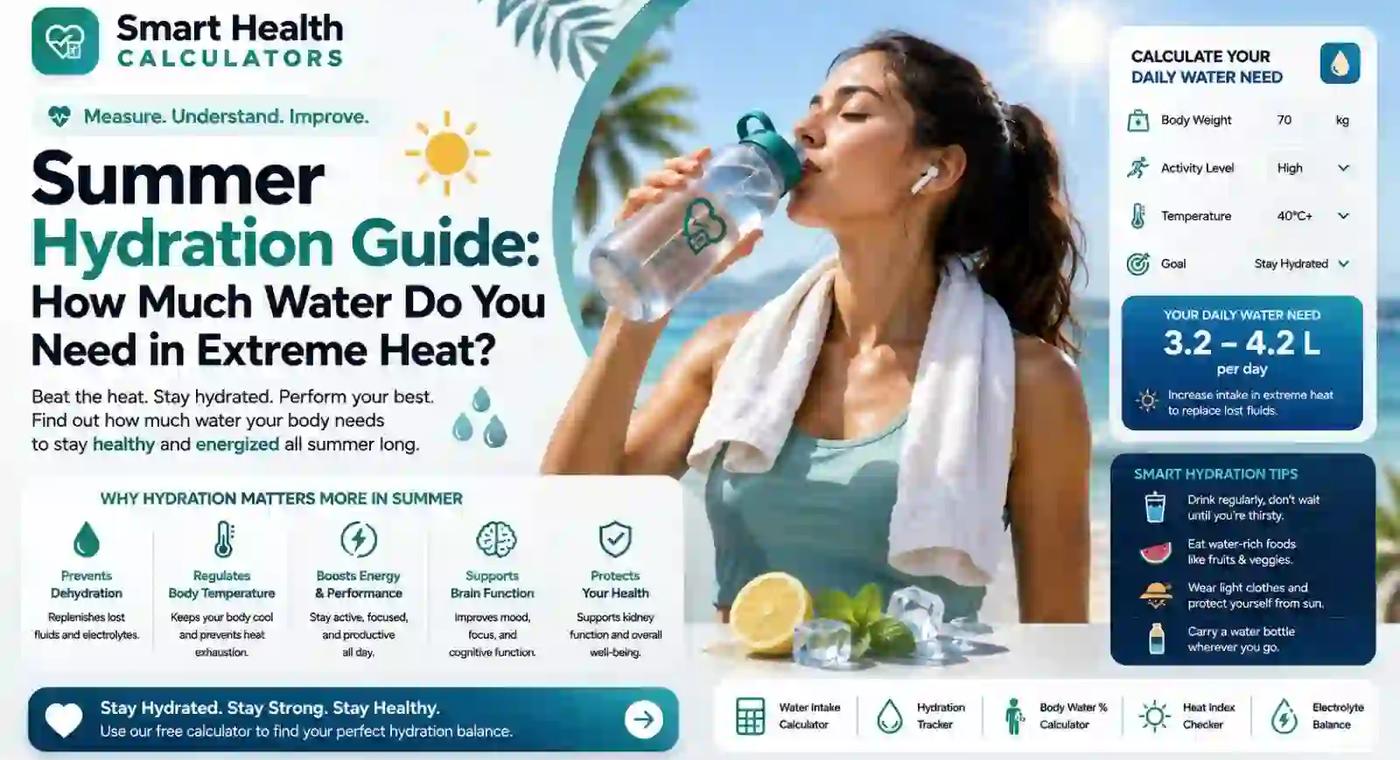
How Much Water Should You Drink in Extreme Heat?
Learn how much water to drink in extreme heat, including daily fluid needs, hydration per hour, electrolytes, dehydration signs, and heat exhaustion vs. heatstroke.
In extreme heat, most adults need somewhere between 3 and 6 liters of fluid a day — meaningfully more than the standard 2.7 to 3.7 liter baseline most guidelines cite for normal conditions. The exact number depends on your body weight, activity level, and how much you're actually sweating, but a useful starting rule is adding roughly 1 to 1.5 liters for every hour spent working or exercising in significant heat. This guide breaks down exactly how those numbers shift by activity level, what dehydration actually looks like before it becomes dangerous, and where the line sits between heat exhaustion and heatstroke.
Why Heat Changes Your Water Needs So Dramatically
Your body cools itself primarily through sweat evaporation, and in extreme heat, that process runs into overdrive. A person doing moderate outdoor activity in high heat can lose 1 to 1.5 liters of sweat per hour — sometimes more in high humidity, since sweat evaporates less efficiently when the air is already saturated with moisture, forcing your body to produce even more of it to achieve the same cooling effect.
This is the mechanism most generic hydration advice skips entirely. It's not just about replacing water lost through normal daily function — it's about matching an accelerated fluid loss rate that can spike within a single hour of heat exposure. Humidity matters just as much as raw temperature here: a 95°F day at 30% humidity is genuinely less taxing on your hydration needs than an 88°F day at 80% humidity, because sweat evaporation, not air temperature alone, drives how effectively your body actually cools down.
How Much Water You Actually Need: A Quick-Reference Table
| Activity Level | Normal Weather | Extreme Heat |
|---|---|---|
| Sedentary (mostly indoors) | 2–2.7 liters/day | 3–3.5 liters/day |
| Light activity (walking, errands) | 2.7–3 liters/day | 3.5–4 liters/day |
| Moderate activity (active job, exercise | 3–3.5 liters/day | 4.5–5.5 liters/day |
| Outdoor labor / intense exercise in heat | 3.5–4 liters/day | 5.5–7+ liters/day, plus electrolyte replacement |
These are general ranges, not fixed prescriptions — body weight, sweat rate, and individual physiology all shift the actual number meaningfully. Someone who sweats heavily needs noticeably more than someone with a lower sweat rate doing identical activity in identical heat. For a more personalized baseline before you factor in heat adjustments, our water intake calculator accounts for your weight and activity level directly, which is a far more useful starting point than a generic daily target.
How Much Water Per Hour During Heat Exposure
For anyone working outside, exercising, or simply spending extended time in extreme heat, the hourly framing matters more than the daily total. A widely used practical guideline: drink roughly 200–300 ml (about one cup) every 15–20 minutes during sustained heat exposure or physical activity, rather than trying to front-load your fluid intake or catch up after the fact.
This steady-pace approach matters because your body can only absorb fluid at a limited rate — drinking a large volume all at once doesn't hydrate you faster and can actually cause stomach discomfort during activity. Athletes and outdoor workers who've adapted to this pacing tend to perform better and avoid the sharp energy crashes that come with letting dehydration build up unnoticed over a few hours. Our guide on water intake for athletes breaks down sport-specific hydration timing in more detail if you're training rather than just managing daily heat exposure.
Water Alone vs. Electrolytes: When You Need More Than Plain Water
This is one of the more commonly misunderstood parts of heat hydration. For most people going about a normal day in the heat, plain water is entirely sufficient. But once you're sweating heavily for more than an hour — through intense exercise, manual outdoor labor, or extended heat exposure — you're losing meaningful amounts of sodium and potassium along with water, and replacing water alone without electrolytes can actually worsen the imbalance rather than fix it.
Signs that you've crossed into electrolyte-replacement territory rather than plain-water territory:
- Sweating heavily and visibly for more than 60–90 minutes continuously
- Noticing salt residue on your skin or clothing after sweating (a visible sign of significant sodium loss)
- Muscle cramping during or after heat exposure
- Persistent fatigue despite drinking adequate water
In these situations, a sports drink, oral rehydration solution, or electrolyte tablet added to water genuinely does more than plain water alone. For lighter daily heat exposure — running errands, a normal workday, casual outdoor time — plain water remains the better default, since most commercial sports drinks add unnecessary sugar for situations that don't actually demand electrolyte replacement.
Recognizing Dehydration Before It Becomes Dangerous
Catching dehydration early is far easier than reversing it once symptoms escalate. Here's the progression to watch for:
Early warning signs:
- Thirst (by the time you feel thirsty, mild dehydration has often already begun)
- Dark yellow urine, rather than pale yellow or clear
- Dry mouth or slightly dry, less elastic-feeling skin
- Mild headache or fatigue
More advanced signs, requiring immediate action:
- Dizziness or lightheadedness, especially when standing up
- Rapid heartbeat
- Reduced urination or notably dark, concentrated urine
- Confusion or difficulty concentrating
- Sunken eyes
Urine color remains one of the simplest, most reliable self-checks available — pale straw-colored urine generally indicates adequate hydration, while dark yellow or amber signals you're behind on fluids and should act before symptoms progress further. Our detailed breakdown of signs you're not drinking enough water covers this progression with more specific detail if you want to build a habit of self-monitoring throughout summer.
Heat Exhaustion vs. Heatstroke: Why This Distinction Actually Matters
This is the section worth reading most carefully, because the two conditions require genuinely different responses, and misjudging which one you're dealing with can be dangerous.
Heat exhaustion develops when your body overheats from a combination of high temperatures and dehydration, but before your core temperature regulation fully fails. Symptoms include heavy sweating, cold or clammy skin, weakness, dizziness, nausea, headache, and a fast but weak pulse. It's serious and requires attention, but it's generally manageable by moving to a cool space, hydrating, and resting — most people recover within an hour or so with proper care.
Heatstroke is a medical emergency. It occurs when the body's core temperature climbs above roughly 103°F (39.4°C) and the body loses its ability to cool itself effectively. Key distinguishing signs include hot, dry, or flushed skin (sweating often stops entirely, unlike heat exhaustion), confusion, slurred speech, rapid and strong pulse, and potentially loss of consciousness. Heatstroke requires immediate emergency medical care — call emergency services right away rather than trying to manage it at home, since untreated heatstroke can cause organ damage or be fatal.
The core distinguishing signal to remember: if sweating has stopped and skin feels hot and dry rather than clammy, combined with confusion or altered mental state, treat it as a heatstroke emergency rather than routine heat exhaustion.
Hydration Needs Across Different Groups
Not everyone needs the same amount of water in extreme heat, and a few groups deserve specific attention.
Children dehydrate faster than adults relative to their body size, partly because they sweat less efficiently and generate more heat per unit of body mass during activity. Encourage regular water breaks even before they express thirst, since kids often don't recognize or communicate early thirst cues as reliably as adults.
Elderly individuals face a double challenge: reduced thirst sensation with age, meaning they may not feel thirsty even when meaningfully dehydrated, combined with certain medications (diuretics, some blood pressure medications) that increase fluid loss. Scheduled water intake, rather than relying on thirst as a signal, tends to work better for older adults during extreme heat.
Outdoor workers face some of the highest fluid-loss rates of any group, given sustained heat exposure combined with physical exertion. OSHA heat stress guidelines specifically recommend structured water breaks (not just availability of water, but enforced pauses to actually drink it) as a core part of workplace heat safety programs.
Pregnant individuals have increased baseline fluid needs even before factoring in heat, since blood volume increases significantly during pregnancy. Extreme heat adds meaningful additional demand, and dehydration during pregnancy carries its own specific risks — this is a case where consulting a doctor about appropriate fluid targets is genuinely worthwhile rather than relying on generic guidelines.
Can You Drink Too Much Water in Extreme Heat?
Yes, and this deserves clarity because the instinct in extreme heat is often "more water is always better" — which isn't quite right. Drinking excessive amounts of plain water without replacing electrolytes, particularly during prolonged heavy sweating, can dilute sodium levels in the blood to dangerously low levels, a condition called hyponatremia. It's relatively rare in casual daily hydration but is a genuine risk for endurance athletes and outdoor workers drinking large volumes of plain water over many hours without any electrolyte replacement.
The practical takeaway isn't to drink less — it's to pair extended heavy sweating with electrolytes rather than plain water alone, and to space intake throughout the day rather than consuming very large volumes in short windows. Our detailed piece on whether you can drink too much water covers the hyponatremia risk and warning signs in more depth if this applies to your activity level.
How Climate and Acclimatization Affect Your Hydration Needs
Your body genuinely adapts to heat over time — a process called heat acclimatization — which changes how much you actually need to drink for the same conditions. Someone newly exposed to extreme heat (early summer, or arriving in a hot climate from a cooler one) typically sweats less efficiently and needs a higher conscious hydration effort during the first one to two weeks of exposure. After roughly 10–14 days of regular heat exposure, the body adjusts: sweat rate becomes more efficient, sweat itself becomes more dilute (conserving sodium better), and overall heat tolerance improves.
This is worth knowing because hydration needs during the first heatwave of the season are often higher than what the same person needs later in summer, once acclimatization has kicked in. Climate type also plays a role independent of raw temperature — dry desert heat and humid tropical heat present different hydration challenges even at similar temperatures, since evaporative cooling works very differently in each. Our guide on how climate affects water needs goes deeper into how humidity, altitude, and climate type each shift the numbers independently.
What to Avoid: Caffeine, Alcohol, and Common Hydration Mistakes
A few habits quietly undermine hydration efforts during extreme heat, even when someone thinks they're drinking enough:
- Excessive caffeine has a mild diuretic effect, though moderate coffee or tea consumption isn't as dehydrating as often assumed — the real issue is when caffeinated drinks replace water entirely rather than supplement it.
- Alcohol is genuinely and significantly dehydrating, both through its diuretic effect and through impaired judgment about heat exposure and thirst cues — a notably risky combination during heatwaves.
- Waiting until you're thirsty to drink, since thirst is a lagging indicator that shows up after mild dehydration has already begun, not before.
- Relying solely on water without food, since a meaningful portion of daily fluid intake in normal conditions comes from water-rich foods (fruits, vegetables, soups) — skipping meals during extreme heat removes this passive fluid source.
Building a Practical Daily Hydration Routine for Summer
Rather than tracking every glass consciously, a few structural habits tend to work better during sustained extreme heat:
- Start the day with water before coffee — overnight fluid loss through breathing and sweat means you're mildly dehydrated each morning regardless of season.
- Set consistent intake checkpoints rather than relying on thirst — water with each meal, plus a glass every couple of hours during waking hours.
- Increase intake proactively before outdoor exposure, not just during or after — arriving at an outdoor activity already well-hydrated matters more than trying to catch up mid-activity.
- Monitor urine color as your primary self-check — it's more reliable than thirst and requires no equipment.
- Add electrolytes specifically around extended heavy sweating, not as a default replacement for water in every situation.
If you want a fuller framework connecting hydration to overall diet and weight management during summer months, our guide on hydration and weight loss covers how proper fluid intake interacts with appetite regulation and metabolism, which is a useful companion if summer heat is disrupting your usual eating and activity patterns.
Frequently Asked Questions
How much water should you drink in extreme heat? Most adults need roughly 3 to 6 liters of fluid daily in extreme heat, compared to the standard 2.7–3.7 liter baseline for normal conditions. The exact amount depends on body weight, activity level, and sweat rate, with active outdoor exposure requiring the higher end of that range.
What are the early signs of dehydration? Early signs include thirst, dark yellow urine, dry mouth, mild headache, and fatigue. These often appear before more serious symptoms like dizziness or confusion, making them the best window to correct fluid intake before dehydration progresses further.
Is water enough, or do you need electrolytes in extreme heat? Plain water is sufficient for most daily activity, but once you're sweating heavily for over an hour — through exercise, manual labor, or extended heat exposure — electrolyte replacement becomes important to replace the sodium and potassium lost through sweat, not just the fluid volume.
Can you drink too much water in a heatwave? Yes. Drinking excessive plain water without electrolyte replacement during prolonged heavy sweating can dilute blood sodium to dangerously low levels, a condition called hyponatremia. This is more relevant for endurance activity than casual daily hydration.
What's the difference between heat exhaustion and heatstroke? Heat exhaustion involves heavy sweating, cold clammy skin, and weakness, and is generally manageable with rest and hydration. Heatstroke is a medical emergency marked by hot, dry skin (sweating often stops), confusion, and a dangerously high core body temperature, requiring immediate emergency care.
How much water should kids drink in summer heat? Children need proportionally more fluid relative to their body size than adults, since they sweat less efficiently and generate more heat per unit of body mass during activity. Regular scheduled water breaks, rather than waiting for thirst cues, work better for children during extreme heat.
Bottom Line
Extreme heat doesn't just call for "more water" in a vague sense — it calls for a specific, activity-adjusted increase, paired with electrolyte replacement once sweating becomes heavy and sustained, and close attention to the early warning signs that separate manageable dehydration from a genuine heat emergency. The daily ranges in this guide are a solid starting point, but your actual number depends on your body weight, activity level, and how acclimatized you are to the heat this season.
For a hydration target built around your specific weight and activity level rather than a generic range, use our water intake calculator to get a personalized daily baseline, then adjust upward for heat exposure using the guidelines above.
For official heat safety and hydration guidance, the CDC's extreme heat guidance remains the authoritative source, particularly for recognizing and responding to heat-related illness. If you have kidney, heart, or other medical conditions affecting fluid balance, consult a doctor before significantly increasing your fluid intake, since appropriate hydration targets can differ meaningfully for these conditions.
Medical Disclaimer
This article is for general education only. It is not medical advice, diagnosis, treatment, prescription guidance, or a replacement for professional healthcare. Speak with a qualified healthcare professional for personal medical concerns, symptoms, pregnancy concerns, mental health crisis, medication questions, or before making major health changes.