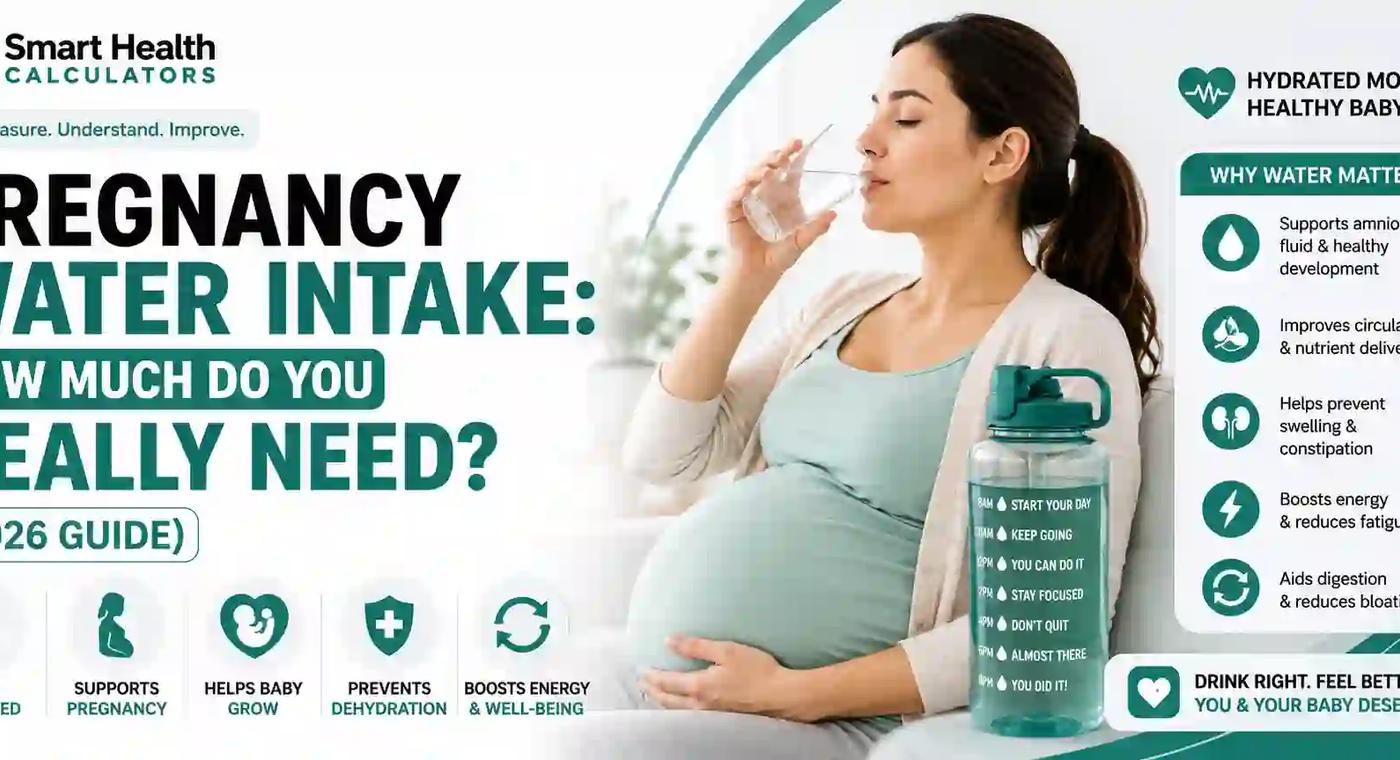
Pregnancy Water Intake: How Much Do You Really Need? (2026 Guide)
How much water should you drink while pregnant? ACOG recommends 8–12 cups daily. Get trimester-by-trimester guidance, dehydration signs, and hydration tips.
The American College of Obstetricians and Gynecologists (ACOG) recommends drinking 8 to 12 cups of water daily during pregnancy — roughly 64 to 96 ounces, or 1.9 to 2.8 liters. That's the clearest, most authoritative number available, and it's a genuinely useful starting point, though your actual needs shift depending on your trimester, activity level, climate, and whether morning sickness is making it hard to keep fluids down at all.
Water does more heavy lifting during pregnancy than most people realize — it supports amniotic fluid production, helps circulate nutrients to your baby, aids digestion, and supports the significant increase in blood volume your body undergoes. Here's a complete, practical breakdown of what you actually need, how to tell if you're falling short, and what to do about the specific situations that make hydration harder during pregnancy.
How Much Water Do You Actually Need While Pregnant?
ACOG's guidance of 8-12 cups (64-96 oz) daily is the benchmark most healthcare providers reference, and it applies across pregnancy rather than shifting dramatically by trimester in official guidance. That said, several sources note that this range should be understood as total fluid intake, not just plain water — meaning milk, herbal teas considered safe in pregnancy, and the water content in foods like soups, fruits, and vegetables all count toward the total.
It's also worth understanding why the number goes up compared to typical adult recommendations. During pregnancy, total body water increases substantially — by several liters — to support several distinct physiological demands simultaneously:
- Amniotic fluid production, which surrounds and cushions your growing baby
- Increased blood volume, which expands significantly to support the placenta and fetal circulation
- Enhanced kidney function, since your kidneys are working harder to filter waste for two
- Fetal circulation and nutrient delivery, all of which depend on adequate maternal fluid levels
If you're used to tracking water with a general adult target, our Water Intake Calculator can help you personalize a baseline, though pregnancy adds this additional layer on top of your usual needs that a general calculator alone won't fully capture.
Water Intake by Trimester and Circumstance
While ACOG's guidance doesn't split its recommendation by trimester, research has found that under-hydration is particularly common during the second trimester and early third trimester — which is worth knowing, since it's easy to assume the biggest hydration challenge is the nauseous first trimester alone.
| Stage or Situation | Practical Guidance |
|---|---|
| First trimester | Aim for the standard 8-12 cup range; morning sickness can make this genuinely difficult (see below) |
| Second trimester | Research suggests under-hydration is common here — a good stage to be deliberate about consistent intake |
| Third trimester | Blood volume and amniotic fluid needs are at their highest; continue the standard range, adjusting upward in heat or with swelling |
| Hot weather or high activity | Increase intake beyond the standard range to offset additional fluid loss through sweat |
| Morning sickness | Focus on small, frequent sips rather than large volumes; cold water or water with lemon is often better tolerated |
| Twin or multiple pregnancy | Fluid needs are generally higher; this is a good conversation to have directly with your provider rather than estimating |
Signs of Dehydration During Pregnancy
Recognizing dehydration early matters more during pregnancy than it might otherwise, since research has found the risk of becoming dehydrated during pregnancy is genuinely elevated — one study found over half of pregnant individuals experience some degree of dehydration at some point.
Common signs to watch for:
- Dark yellow or amber urine, ideally you're looking for pale yellow to nearly clear
- Noticeable urine odor, which tends to intensify with reduced hydration
- Dry mouth or unusual thirst that doesn't ease after a normal drink of water
- Dizziness or lightheadedness, particularly when standing
- Headache, which can be an early, easy-to-miss dehydration signal
- Reduced urination frequency compared to your normal pattern
- Braxton Hicks contractions becoming more frequent — dehydration is a documented trigger for these practice contractions
That last point deserves its own mention, since it directly answers one of the most common concerns people search for: can dehydration cause contractions? Yes — inadequate fluid intake is a recognized trigger for Braxton Hicks contractions specifically, and staying well-hydrated is one of the first practical steps typically recommended if these become frequent or uncomfortable. This isn't the same as dehydration directly causing preterm labor in every case, but the physiological link between fluid status and uterine irritability is real and worth taking seriously.
Can You Drink Too Much Water During Pregnancy?
This is worth addressing honestly rather than defaulting to "drink as much as possible" advice, since overhydration is a genuine if less common concern. Excessive water intake — well beyond the recommended range, particularly in short periods — can dilute blood sodium levels, a condition called hyponatremia, which is uncomfortable and potentially serious in severe cases regardless of pregnancy status.
For nearly everyone, staying within or modestly above the ACOG-recommended 8-12 cup range is both safe and appropriate. The concern about overhydration typically applies to genuinely excessive intake — several liters beyond the standard recommendation consistently — rather than someone simply drinking a bit more on a hot day or during exercise. If you're ever unsure whether your intake is appropriately calibrated, our guide on whether you can drink too much water covers the general physiology of overhydration in more depth, and it's always reasonable to raise fluid-intake questions directly with your prenatal care provider.
Does Water Intake Affect Amniotic Fluid Levels?
Yes, meaningfully, which is part of why hydration gets emphasized so specifically during pregnancy rather than treated as a generic wellness tip. Maternal hydration status has a documented relationship with amniotic fluid volume — inadequate maternal fluid intake is one contributing factor associated with lower amniotic fluid levels, a condition called oligohydramnios when clinically significant.
This doesn't mean every case of lower amniotic fluid stems from insufficient water intake — oligohydramnios has multiple potential causes, and it's diagnosed and managed by your healthcare provider, not something to self-assess based on hydration habits alone. But if your provider has flagged amniotic fluid levels as something to watch, hydration is genuinely one of the practical, controllable factors worth prioritizing alongside whatever specific guidance they've given you.
Does Drinking More Water Help With Pregnancy Swelling?
This is a common and reasonable question, since swelling (edema) is such a widely experienced pregnancy symptom, particularly in the feet, ankles, and hands during the third trimester. The relationship here is a little counterintuitive: adequate hydration actually helps reduce swelling, rather than making it worse, which surprises a lot of people who assume drinking less water would mean retaining less fluid.
The physiology behind this: when you're under-hydrated, your body tends to hold onto the fluid it does have more tightly as a protective response, which can actually worsen fluid retention and swelling. Staying consistently well-hydrated supports healthier fluid balance and kidney function, both of which help your body manage and eliminate excess fluid more effectively rather than retaining it defensively.
That said, some swelling in pregnancy, especially in the third trimester, is a normal physiological response to increased blood volume and pressure from the growing uterus on blood vessels — hydration helps manage it, but it won't eliminate it entirely, and sudden or severe swelling (particularly in the face or hands, or accompanied by headache or vision changes) should always be reported to your provider promptly, since it can occasionally signal a more serious condition.
Best Fluids to Drink During Pregnancy
Plain water is the foundation, but it's not the only fluid that counts toward your daily target, and knowing what else contributes — and what to limit — makes hitting your numbers genuinely more achievable.
Good options that count toward hydration:
- Plain water, the simplest and most reliable choice
- Milk, which also contributes calcium and protein
- Pregnancy-safe herbal teas, in moderation
- Water-rich foods — watermelon, cucumber, soups, and broths all contribute meaningfully to total fluid intake
- Diluted fruit juice, though whole fruit is generally preferable to juice for overall nutrition
Worth limiting or being mindful of:
- Caffeinated beverages — ACOG recommends capping caffeine at no more than 200 mg daily during pregnancy (roughly one 12-ounce cup of coffee), since caffeine has a mild diuretic effect and doesn't hydrate as efficiently as plain water
- High-sugar drinks, which add calories without proportionate hydration benefit and are worth limiting for broader nutritional reasons during pregnancy
- Very large volumes consumed rapidly, which is more relevant to the overhydration concern above than to typical daily sipping
Staying Hydrated When You Have Morning Sickness
This deserves specific attention, since "just drink more water" is genuinely difficult advice to follow when nausea makes even small sips feel unmanageable, and it's one of the most common practical struggles in early pregnancy.
Practical strategies that tend to help:
- Sip small amounts frequently rather than trying to drink a full glass at once, which can worsen nausea
- Try cold water or water with a small amount of lemon, which many people find easier to tolerate than room-temperature plain water
- Incorporate water-rich foods like watermelon, cucumber, or clear broths when drinking plain water feels difficult
- Experiment with timing — some people tolerate fluids better first thing in the morning before eating, others do better spacing fluids away from meals
- Contact your healthcare provider if vomiting is severe or persistent enough that you genuinely can't keep fluids down, since this may indicate hyperemesis gravidarum, a condition that sometimes requires medical treatment to prevent dehydration and its complications
If morning sickness is a significant daily struggle, it's worth mentioning to your provider directly rather than trying to power through — there are safe treatment options, and persistent dehydration from an inability to keep fluids down isn't something to manage alone.
Practical Tips to Remember to Drink Enough Water
Hitting 8-12 cups consistently, every day, for months, is a genuinely reasonable ask that still requires some intentional habit-building for most people:
- Keep a water bottle with you at all times — visibility alone meaningfully increases how much people actually drink throughout the day
- Set phone reminders at regular intervals if you tend to forget until you're already quite thirsty
- Pair drinking with existing habits — a glass with each meal, one after using the bathroom, one before and after any exercise
- Track your urine color as a simple, ongoing self-check — pale yellow to clear generally indicates adequate hydration, while dark yellow suggests you need more
- Front-load earlier in the day if nighttime urination is disrupting your sleep, tapering intake somewhat in the evening while still hitting your total daily target
Frequently Asked Questions
How much water should a pregnant woman drink daily? ACOG recommends 8 to 12 cups (64 to 96 ounces, or roughly 1.9 to 2.8 liters) of water daily during pregnancy, counting all fluid sources including water-rich foods and other beverages, not just plain water.
What are the signs of dehydration during pregnancy? Common signs include dark or strong-smelling urine, dry mouth, dizziness, headache, reduced urination, and increased Braxton Hicks contractions, all of which warrant increasing fluid intake and monitoring how you feel afterward.
Can dehydration cause contractions? Yes — inadequate hydration is a recognized trigger for Braxton Hicks contractions specifically, and improving fluid intake is a standard first step if these become more frequent or uncomfortable.
Does drinking water help with pregnancy swelling? Yes, somewhat counterintuitively — staying well-hydrated supports healthier fluid balance and kidney function, which helps your body manage fluid retention more effectively than under-hydration does, though some third-trimester swelling is a normal part of pregnancy regardless.
Is it possible to drink too much water while pregnant? Yes, though this is far less common than under-hydration — genuinely excessive intake well beyond the recommended range can dilute blood sodium levels, so staying within or modestly above the standard 8-12 cup guidance is the safer target for most people.
Does water intake affect amniotic fluid levels? Yes — maternal hydration status is one recognized contributing factor to amniotic fluid volume, though low amniotic fluid (oligohydramnios) can have multiple causes and should be evaluated and managed by your healthcare provider.
How much extra water do you need each trimester? ACOG's guidance doesn't officially differentiate by trimester, though research suggests under-hydration is particularly common in the second trimester and early third trimester, making consistent intake especially worth prioritizing during that window.
What are the best fluids to drink during pregnancy? Plain water is the foundation, with milk, pregnancy-safe herbal teas, and water-rich foods like soups and fruit also contributing meaningfully, while caffeinated and high-sugar beverages are worth limiting or moderating.
The Bottom Line
Hitting 8-12 cups of fluid daily is a genuinely achievable target for most pregnancies, even accounting for morning sickness or a busy schedule, once you build a few consistent habits around it — a water bottle you actually carry, a mental check on urine color, and small sips throughout the day rather than trying to catch up all at once in the evening. The payoff is real: better amniotic fluid support, reduced Braxton Hicks frequency, and genuinely more effective swelling management than under-hydrating ever provides.
If you want a personalized daily target based on your specific weight, activity level, and climate, our Water Intake Calculator is a useful starting point, and our broader guide on signs you're not drinking enough water covers the general dehydration signals in more depth if you want the non-pregnancy-specific baseline alongside this guidance. As always, if you have questions specific to your pregnancy — twins, existing kidney concerns, severe morning sickness — your prenatal care provider's individualized guidance should take priority over any general recommendation, including this one.
Medical Disclaimer
This article is for general education only. It is not medical advice, diagnosis, treatment, prescription guidance, or a replacement for professional healthcare. Speak with a qualified healthcare professional for personal medical concerns, symptoms, pregnancy concerns, mental health crisis, medication questions, or before making major health changes.