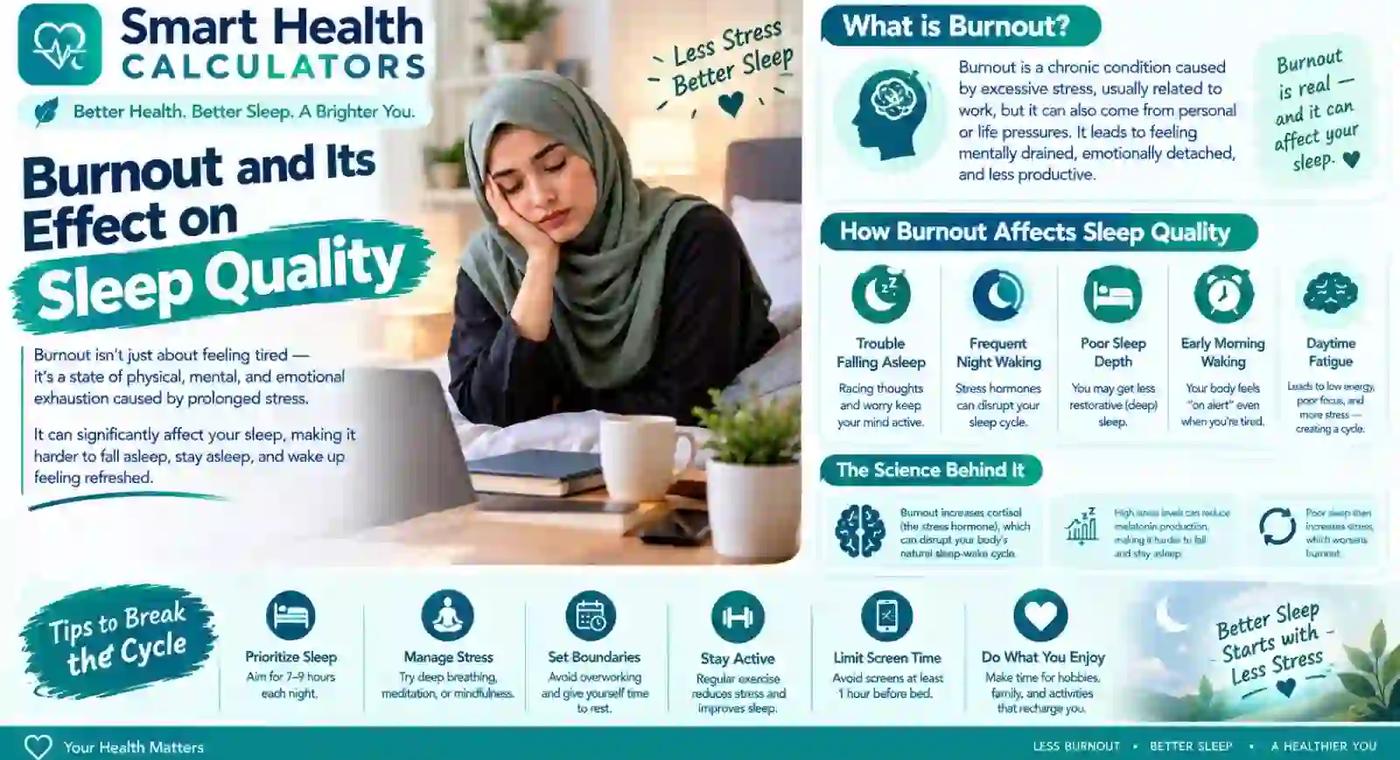
Burnout and Sleep: How Burnout Affects Your Sleep
Learn how burnout and sleep are connected, including sleep problems, stress, insomnia, poor sleep quality, and practical ways to improve sleep during burnout recovery.
You're exhausted by 9 PM, but somehow wide awake at midnight, mentally replaying a work conversation from three days ago. If that sounds familiar, you're not imagining a connection — burnout and disrupted sleep genuinely feed off each other, and understanding the mechanism behind that link is the first step toward breaking it.
Burnout doesn't just make you tired. It changes how you fall asleep, how deeply you sleep, and how much your body actually recovers overnight, which is exactly why so many burned-out people wake up feeling like they never slept at all. This guide walks through what burnout actually is, how it interacts with your sleep system, what current research does and doesn't support, and what genuinely helps when you're stuck in the cycle. If you want a quick read on where your own sleep patterns currently stand, our sleep quality checker is a useful starting point before diving into the details below.
What Burnout Actually Is (and What It Isn't)
Before going further, it's worth being precise about terminology, because "burnout" gets used loosely in everyday conversation, and that looseness causes real confusion.
The World Health Organization defines burn-out in the ICD-11 as an occupational phenomenon resulting specifically from chronic workplace stress that has not been successfully managed. Critically, the WHO is explicit that burn-out is not classified as a medical condition — it's characterized by three dimensions: feelings of energy depletion or exhaustion, increased mental distance from one's job or feelings of negativism and cynicism related to it, and reduced professional efficacy.
That distinction matters because burnout gets confused with clinical depression or generalized anxiety disorder, both of which are diagnosable medical conditions with their own criteria. Burnout is tied specifically to the workplace context — you can be burned out at your job and feel completely fine on vacation. That context-dependence is one of the clearer signals separating it from a mood disorder, which tends to follow you regardless of setting. If you're trying to untangle where general life stress ends and workplace burnout begins, our guide on the connection between sleep, stress, and mental health covers that broader relationship in more depth.
The Short Answer: How Does Burnout Affect Sleep?
Burnout is associated with a range of sleep disturbances, including difficulty falling asleep, difficulty staying asleep, poor overall sleep quality, and impaired sleep recovery that leaves people feeling tired even after a full night in bed. Research has found a meaningful relationship between higher burnout levels and sleep problems, though the strength of that relationship varies depending on the population studied and how the research was designed.
One of the more rigorous pieces of evidence comes from a 2022 systematic review and meta-analysis that pooled 12 studies covering 1,127 nurses, which found a positive correlation between burnout and sleep disorders, with a correlation coefficient of r = 0.39 (95% CI 0.29–0.48), according to research indexed on PubMed. That's a moderate, statistically meaningful relationship — not proof that burnout directly causes clinical insomnia, but strong evidence that the two commonly occur together, at least within this specific, heavily-studied population.
It's worth being careful here: that 0.39 correlation describes nurses specifically, a population that already deals with irregular shifts, high emotional labor, and disrupted circadian patterns as part of the job. It shouldn't be presented as a universal number that applies to every burned-out office worker or freelancer. The honest way to frame it is: burnout is associated with sleep problems, and the relationship has been measured and confirmed in specific, well-studied groups. If shift work is part of your own situation, our piece on staying healthy while working night shifts addresses some of the added circadian strain that comes with irregular schedules.
The Biology Behind Why Burnout Wrecks Your Sleep
Understanding why this happens makes the connection feel less mysterious and a lot more manageable.
Cortisol, Stress Hormones, and a Disrupted Wake-Sleep Signal
Under normal conditions, cortisol follows a predictable daily rhythm — it peaks shortly after waking to help you feel alert, then gradually declines throughout the day, reaching its lowest point around bedtime so your body can produce melatonin and wind down. Chronic stress disrupts this pattern. Instead of tapering off in the evening, cortisol can stay elevated later into the night in people under sustained psychological strain, which works directly against the hormonal signal your body needs to fall asleep.
This is sometimes described as a hormonal tug-of-war: melatonin is trying to rise and signal "time to sleep," while cortisol stays stubbornly high and signals "stay alert." When cortisol wins that battle, sleep onset gets pushed later, and the sleep that does happen tends to be lighter and more fragmented. If you regularly find yourself lying awake for what feels like forever before drifting off, our explainer on sleep latency and falling asleep faster breaks down exactly what's happening during that window and what tends to help.
Autonomic Arousal and the 2 AM Wake-Up
People experiencing chronic stress often show heightened autonomic arousal — their sympathetic nervous system (the "fight or flight" branch) stays more active than it should, even while they're lying in bed trying to rest. This shows up physiologically as reduced heart rate variability, a measurable sign that the nervous system isn't downshifting into a recovery state the way it does in someone who isn't chronically stressed.
This is also the likely mechanism behind something a lot of burned-out people report anecdotally: waking up in the middle of the night, often somewhere between 1 AM and 3 AM, wide awake and mentally alert, even though they were exhausted at bedtime. Sleep researchers describe this as a form of hyperarousal — the nervous system essentially interrupting deep sleep stages because it hasn't fully disengaged from a stress-response state.
What Happens to Sleep Architecture Itself
Sleep isn't a single uniform state — it cycles through stages, including slow-wave sleep (deep, physically restorative sleep) and REM sleep (associated with emotional processing and memory consolidation). Chronic stress and burnout have been linked to disruptions in this architecture, including more frequent micro-arousals — brief interruptions that don't always wake you up completely but fragment the deeper stages of sleep enough to reduce how restorative it feels. Our detailed comparison of REM sleep versus deep sleep explains why losing time in either stage produces very different symptoms the next day.
This is a big part of why so many burned-out people describe non-restorative sleep: you technically got seven or eight hours, but you wake up feeling like you barely slept. The total sleep time looks fine on paper. The quality and continuity of that sleep is where the real damage happens — and it's often the first thing to notice if you're unsure whether stress is actually affecting your rest. Our checklist of signs of poor sleep quality is a useful gut-check if you're not sure whether what you're experiencing counts as a genuine problem or normal tiredness.
Insomnia From Burnout vs. Insomnia From Anxiety: Is There a Difference?
This is a common point of confusion, and it's worth untangling because the two can look similar from the outside but feel different from the inside.
Anxiety-driven insomnia often involves a more generalized, diffuse sense of worry — racing thoughts about multiple, sometimes unrelated concerns, physical symptoms like a racing heart, and a fear response that isn't necessarily tied to one specific source.
Burnout-related sleep disruption tends to be more narrowly work-focused. People describe lying awake specifically replaying work conversations, mentally drafting emails, running through tomorrow's task list, or feeling a low-grade dread about returning to a specific job or workload. The content of the rumination is usually more targeted, even if the physiological experience — a racing mind, an inability to switch off — feels similar.
That said, burnout and anxiety aren't mutually exclusive, and they frequently overlap. Someone can be burned out from work and also meet criteria for a separate anxiety disorder. If sleep problems persist for weeks and start affecting daily functioning broadly, not just work performance, that's worth raising with a healthcare provider rather than assuming it's "just burnout." Our mental health self check-in guide offers a structured way to reflect on whether what you're experiencing looks more like situational stress or something that deserves professional attention, and our mental health checker tool can help you track patterns over time.
Bedtime Revenge Procrastination: The Behavioral Piece
Not all of this is purely biological. A significant part of the burnout-sleep problem is behavioral, and one pattern researchers and clinicians point to often is informally called "bedtime revenge procrastination" — deliberately delaying sleep to reclaim a sense of personal time and control after a day that felt entirely consumed by work demands.
If your entire day feels dictated by other people's priorities — meetings, deadlines, emails — staying up late scrolling your phone or watching TV can feel like the only part of the day that belongs to you. The problem is that this coping mechanism directly compounds the sleep debt burnout is already creating, and it often involves screens, which brings blue light exposure into the mix right when your body is trying to wind down melatonin production. Our piece on screen time and mental health covers this pattern in more detail, including why it feels so hard to put the phone down even when you know you're exhausted.
It's a genuinely understandable response to feeling burned out and time-starved. It's also one of the more fixable pieces of the puzzle, because unlike cortisol regulation, it's a choice point you have some direct control over.
The Vicious Cycle: How Poor Sleep Makes Burnout Worse
This relationship doesn't run in just one direction. Poor sleep doesn't just result from burnout — it actively makes burnout harder to recover from, creating a feedback loop that can be difficult to break without deliberate intervention.
Sleep deprivation impairs prefrontal cortex function, the part of the brain responsible for emotional regulation, decision-making, and impulse control. When that function is compromised by poor sleep, your capacity to handle workplace stress the next day is reduced — small frustrations feel bigger, emotional reactions are harder to manage, and cognitive tasks that would normally feel routine start to feel effortful.
That means a bad night of sleep doesn't just leave you tired. It leaves you less equipped to cope with the exact stressors that caused the poor sleep in the first place, which increases the likelihood of another bad night. Separate research examining people experiencing clinical burnout has specifically looked at impaired sleep recovery — essentially, the body's reduced ability to bounce back overnight even when time in bed is adequate — as a distinct mechanism connecting burnout and ongoing exhaustion.
This is why simply "pushing through" rarely works as a long-term strategy. The cycle tends to escalate rather than resolve on its own, which is exactly why our companion article on how stress affects sleep quality frames recovery as something that requires addressing both sides of the loop at once, not just one.
How Much Sleep Do You Actually Need?
This question comes up constantly during burnout recovery conversations, and the guidance from sleep authorities is fairly consistent: the American Academy of Sleep Medicine and the Sleep Research Society recommend that healthy adults get 7 or more hours of sleep per night on a regular basis, and the CDC echoes this, adding practical guidance around maintaining a consistent sleep schedule, getting natural daylight exposure, and minimizing artificial light close to bedtime.
The gap between recommendation and reality is significant. According to a 2026 CDC National Center for Health Statistics data brief, 30.5% of U.S. adults reported sleeping less than 7 hours on average in 2024, meaning nearly a third of adults are already falling short of the baseline recommendation before burnout-specific sleep disruption even enters the picture.
If you're consistently getting under 7 hours and also dealing with workplace burnout, you're layering a chronic sleep deficit on top of an already-taxed stress response system, which tends to accelerate the exhaustion-cynicism-reduced efficacy cycle that defines burnout itself.
Practical Strategies for Improving Sleep During Burnout Recovery
None of this is meant to suggest the solution is simple, but there are specific, evidence-informed approaches that address different parts of the burnout-sleep cycle.
Down-Regulating Your Nervous System Before Bed
Since a core part of the problem is a nervous system stuck in a heightened arousal state, techniques that specifically activate the parasympathetic ("rest and digest") response tend to be more effective than generic relaxation advice. A few worth knowing:
- The physiological sigh — two inhales through the nose followed by one long exhale through the mouth, shown in stress research to help quickly reduce physiological arousal
- Non-sleep deep rest protocols — structured relaxation exercises designed to shift the body out of a stress-activated state without requiring you to actually fall asleep during the exercise
- Slow, extended exhales — making your exhale longer than your inhale for a few minutes activates the vagus nerve and can measurably lower heart rate
These work by directly targeting the autonomic arousal piece of the puzzle, rather than just trying to distract your mind. Our guide on 5-minute breathing exercises to lower your stress score walks through several of these techniques step by step if you want something you can start using tonight.
Building a Circadian Hygiene Routine Specifically for Burnout
Standard sleep hygiene advice (dark room, cool temperature, consistent bedtime) still applies, but burnout recovery often benefits from a few additions specifically aimed at resetting a disrupted stress-cortisol rhythm:
- Getting bright natural light exposure within the first hour of waking, which helps anchor your circadian rhythm and supports a healthier cortisol curve throughout the day
- Building in a genuine transition period between "work mode" and "home mode" — even 15–20 minutes of a non-work activity before dinner can interrupt the mental carryover that fuels bedtime rumination
- Avoiding work email or messages in the hour before bed, since checking them reactivates the exact stress-response patterns you're trying to wind down
A consistent morning structure makes a bigger difference here than most people expect. Our guide to building a healthy morning routine covers how the way you start the day actually shapes your cortisol pattern and, in turn, how well you sleep that night.
Setting Boundaries That Actually Lower Evening Stress
A lot of burnout-driven sleep disruption is downstream of unclear boundaries between work and personal time. Concrete boundary-setting — turning off work notifications after a set time, communicating explicit availability windows to colleagues, or physically closing a laptop rather than leaving it visible — reduces the ongoing low-grade vigilance that keeps your evening nervous system activated.
This isn't about eliminating stress entirely, which usually isn't realistic. It's about creating clearer start and stop points so your body gets a genuine signal that the workday is over. Our broader roundup of natural ways to reduce stress covers boundary-setting alongside other lifestyle levers worth trying, and journaling in particular has shown up repeatedly in self-awareness research — our piece on journaling for mental health and self-awareness explains how a short nightly brain-dump can reduce the rumination that keeps people awake.
When to Seek Professional Support
Self-directed strategies help, but they have limits. It's worth talking to a healthcare provider, therapist, or sleep specialist if:
- Sleep problems persist for several weeks despite consistent efforts to address them
- Daytime functioning is significantly impaired — missed work, difficulty concentrating, or increased errors
- Symptoms extend beyond the workplace context, which may point toward a separate condition like clinical depression or an anxiety disorder rather than occupational burnout alone
- You're relying on alcohol, sleep medication, or other substances to fall asleep on a regular basis
Because burnout itself isn't classified as a medical diagnosis, a healthcare provider may assess for related but distinct conditions, including insomnia disorder, generalized anxiety disorder, or major depressive disorder, which have established diagnostic criteria and treatment pathways of their own. Getting an accurate assessment matters because the right intervention differs depending on what's actually driving the sleep disruption.
There's also encouraging evidence for structured interventions. A 2025 systematic review and meta-analysis of randomized controlled trials examined mindfulness-based interventions specifically targeting burnout, resilience, and sleep quality in nurses, and found improvements across these measures. That said, the review's authors also flagged a moderate risk of bias and substantial heterogeneity across the included studies, meaning the results are promising rather than definitive, and shouldn't be assumed to generalize equally to every occupation or population.
Frequently Asked Questions
Can burnout cause insomnia?
Burnout is associated with insomnia-type symptoms, including difficulty falling asleep and staying asleep. Research supports a meaningful correlation between burnout and sleep disorders, though the relationship is best described as an association rather than a guaranteed cause-and-effect outcome, and it varies by population and individual circumstances.
Why am I exhausted but unable to sleep?
This combination often reflects heightened autonomic arousal — your nervous system's stress response staying activated even though you're physically fatigued. Elevated cortisol that hasn't tapered off for the evening, combined with mental rumination about work, can keep your brain in an alert state despite genuine physical exhaustion.
Does burnout make you sleep more or less?
Burnout is more commonly associated with reduced sleep quality and sleep disturbances rather than a uniform increase or decrease in total sleep time. Some people experience shorter sleep duration, while others sleep an adequate number of hours but describe the sleep as non-restorative.
How is burnout different from insomnia?
Burnout is defined by the WHO as an occupational phenomenon tied specifically to chronic, unmanaged workplace stress. Insomnia is a distinct sleep disorder with its own clinical diagnostic criteria. The two frequently co-occur and can look similar, but they aren't interchangeable, and a healthcare provider can help clarify which one — or both — you may be dealing with.
Can improving sleep help with burnout recovery?
Yes, at least partially. Because poor sleep impairs prefrontal cortex function and worsens next-day stress tolerance, improving sleep quality can help break the feedback loop between exhaustion and reduced coping capacity, even though sleep alone typically isn't enough to resolve the underlying workplace stressors driving burnout.
When should I seek professional help for burnout and sleep problems?
If sleep disruption persists for several weeks despite consistent self-care efforts, starts affecting your daily functioning outside of work, or shows up alongside symptoms that don't improve when you're away from your job, it's worth speaking with a doctor or therapist rather than continuing to manage it alone.
The Bottom Line
Burnout and poor sleep reinforce each other in a cycle that's genuinely difficult to interrupt through willpower alone. The exhaustion feels physical, but the sleeplessness is often driven by a nervous system that hasn't gotten the signal it's safe to power down — elevated cortisol, heightened arousal, and a mind that's still running through tomorrow's task list at 1 AM.
The good news is that the mechanisms behind this are well enough understood to act on. Down-regulating your nervous system before bed, protecting a genuine transition between work and rest, and getting consistent morning light exposure all target real, specific parts of the cycle rather than offering vague "just relax" advice. If you're not sure where your own sleep currently stands, running through our sleep quality checker is a concrete first step, and pairing it with our mental health checker can help you track whether burnout symptoms are easing as your sleep improves.
Medical Disclaimer
This article is for general education only. It is not medical advice, diagnosis, treatment, prescription guidance, or a replacement for professional healthcare. Speak with a qualified healthcare professional for personal medical concerns, symptoms, pregnancy concerns, mental health crisis, medication questions, or before making major health changes.