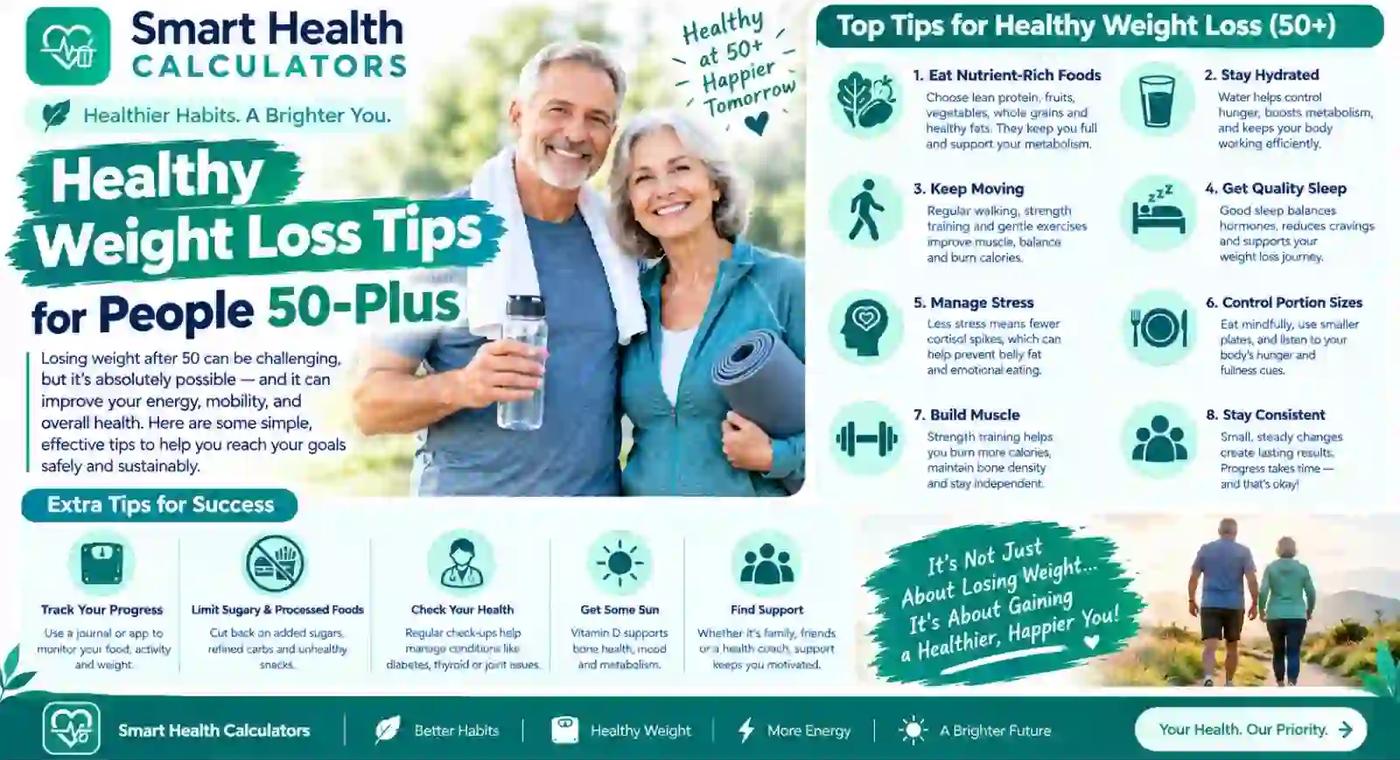
Weight Loss After 50: Safe, Effective Tips That Work
Why weight loss gets harder after 50 — and what actually works. Safe, doctor-backed tips on diet, strength training, and hormonal changes for lasting results.
If losing weight feels noticeably harder now than it did in your 30s, that's not just in your head — and it's not a failure of willpower either. Your body at 50-plus genuinely handles calories, muscle, and hormones differently than it did two decades ago, which means the strategies that worked before often stop working now, sometimes for reasons that have nothing to do with effort.
This guide walks through what's actually changing in your body after 50, why the standard "eat less, move more" advice needs adjusting for this stage of life, and what a safe, sustainable approach genuinely looks like — one that protects your muscle and bone health rather than just chasing a number on the scale. If you have any chronic health condition, take regular medication, or haven't exercised in a while, talk to your doctor before starting any new weight loss plan, since this article is educational information, not a substitute for personalized medical advice.
Why Weight Loss Genuinely Gets Harder After 50
This isn't a myth people tell themselves to feel better about slower progress. Several real, measurable physiological shifts happen around this age, and understanding them changes how you should approach weight loss entirely.
Muscle mass declines naturally with age, a process called sarcopenia, and it typically accelerates after age 50. Since muscle tissue burns more calories at rest than fat tissue does, losing muscle directly lowers your basal metabolic rate — meaning your body now needs fewer calories just to maintain its current weight than it did years ago.
Hormonal shifts compound the problem. For women, menopause brings a significant drop in estrogen, which is linked to increased fat storage, particularly around the abdomen, and can make fat loss feel disproportionately difficult even when calorie intake hasn't changed. For men, gradually declining testosterone (sometimes called andropause) has a similar, if generally less abrupt, effect on muscle maintenance and fat distribution.
Insulin sensitivity often decreases with age, meaning your body doesn't process carbohydrates quite as efficiently as it once did, which can contribute to fat storage and make blood sugar management a more relevant piece of the weight puzzle than it was in your 20s or 30s.
None of this means weight loss is impossible after 50 — it just means the approach needs to shift from "eat less and hope for the best" to something more deliberate.
The Menopause-Weight Connection, Explained Honestly
Menopause deserves its own section because it's one of the most searched, and most misunderstood, parts of this topic. Weight gain during perimenopause and menopause isn't purely about willpower or diet quality — declining estrogen genuinely changes where and how your body stores fat, shifting more of it toward the abdomen (visceral fat) rather than the hips and thighs.
This visceral fat shift matters beyond appearance, since visceral fat is more metabolically active and has stronger links to cardiovascular and metabolic health risks than fat stored elsewhere. That's precisely why belly fat after 50 gets discussed so often — it's not just a cosmetic concern.
Hormone replacement therapy (HRT) is sometimes discussed as a tool that can ease some menopause symptoms, and there's ongoing research into its relationship with weight and fat distribution. This is a genuinely individual medical decision that depends on your health history, risk factors, and symptoms — it's a conversation for your doctor or a menopause specialist, not something to self-manage based on general articles.
Rethinking the Calorie Deficit After 50
A calorie deficit still drives weight loss at any age — that basic principle doesn't change. What changes is how aggressively you should approach it and what you prioritize alongside it.
Because muscle loss is already working against you, a large, aggressive calorie deficit at this age risks accelerating muscle loss even further, which then lowers your metabolism even more and makes long-term maintenance harder. This is exactly why fast-results, low-calorie crash diets tend to backfire more severely after 50 than they might have in your 30s.
A moderate approach works better for this age group:
- Aim for a modest deficit of roughly 300–500 calories below maintenance, rather than an aggressive 750–1000+ calorie cut
- Prioritize adequate protein intake to protect muscle mass during the deficit
- Pair the deficit with resistance training, which helps signal your body to preserve muscle rather than burn it for energy
- Expect a slower, steadier rate of loss — often closer to 0.5–1 lb per week rather than 2 lbs, and that's genuinely appropriate at this stage, not a sign something is wrong
If you want to calculate your specific maintenance and deficit numbers rather than estimating, the Calorie Intake Planner factors in your age directly, since calorie needs by age shift meaningfully — our guide on calorie intake for men and women by age breaks down exactly how much that shift typically looks like decade by decade.
Is Intermittent Fasting Safe After 50?
This comes up constantly, and the honest answer is: it depends on the individual, and it's not automatically the right tool for this age group. Some people over 50 tolerate intermittent fasting well and find it helps with consistency. Others — particularly those with blood sugar concerns, a history of disordered eating, or certain medications that need to be taken with food — may find it genuinely unsuitable or even risky.
If you're curious about fasting protocols, this is specifically a conversation to have with your doctor first, given how individual the risks and benefits are at this stage of life, rather than following a generic online recommendation.
Protein: The Single Most Important Nutrient at This Age
If there's one dietary change that matters more after 50 than at any earlier life stage, it's prioritizing protein intake. Adequate protein helps preserve muscle mass during weight loss, supports the muscle-building stimulus from resistance training, and helps you feel fuller for longer — which makes the whole process more sustainable.
Research on aging populations suggests older adults often need somewhat more protein per kilogram of body weight than younger adults to achieve the same muscle-protective effect, partly because of something researchers call "anabolic resistance" — muscle tissue in older adults responds slightly less efficiently to protein intake, meaning it takes a bit more to get the same building and repair response.
Practical ways to prioritize this:
- Include a protein source at every meal rather than concentrating it all at dinner
- Consider spreading protein intake across the day rather than one large serving, since this appears to support muscle protein synthesis more effectively
- Pair protein intake with resistance training rather than treating them as separate strategies — they work together, not independently
For specific numbers based on your body weight and activity level, our guide on how much protein you need per day walks through the calculation in more detail.
Exercise: Why Strength Training Matters More Than Cardio Now
Cardio isn't useless after 50 — it genuinely supports heart health and can help create the calorie deficit needed for weight loss. But if you had to choose one form of exercise to prioritize at this stage, strength training earns that spot, and here's specifically why.
Resistance training directly counters the muscle loss that's already working against your metabolism. It also supports bone density, which matters increasingly after 50 given the natural decline in bone mass that affects both men and women, particularly women post-menopause. The CDC's physical activity guidelines for older adults specifically recommend muscle-strengthening activities on two or more days per week, alongside at least 150 minutes of moderate aerobic activity weekly — a combination, not an either/or choice.
A practical weekly structure that works well for most people over 50:
- 2–3 days of resistance training (bodyweight, resistance bands, or weights), targeting all major muscle groups
- 2–3 days of moderate cardio (brisk walking, cycling, swimming), which is gentler on joints than high-impact options
- 1–2 rest or active recovery days, since recovery matters more as you age and overtraining risk rises
If joint pain or arthritis is a concern, low-impact options like swimming, water aerobics, or stationary cycling let you build strength and cardiovascular fitness without the repetitive joint stress of running or high-impact classes. Our beginner-to-advanced workout structuring guide and cardio and strength training guide both cover how to build this kind of balanced routine step by step.
Starting Safely If You Haven't Exercised in a While
If it's been years since you've done any structured exercise, don't start with the same intensity you might have handled at 30. A few practical safety steps:
- Get medical clearance first, especially if you have any cardiovascular condition, joint issues, or haven't been evaluated recently.
- Start with bodyweight or light resistance before adding heavier loads, giving your joints and connective tissue time to adapt.
- Prioritize form over intensity, since poor form under load is where most injuries in this age group actually happen.
- Build gradually over 4–6 weeks rather than jumping straight into an intense program, even if you feel capable of more.
What a Realistic Weight Loss Goal Looks Like After 50
One of the most common frustrations at this age comes from comparing your pace to someone younger, or to your own younger self. A realistic, sustainable rate of loss for most people over 50 is roughly 0.5–1 lb per week — slower than the 1–2 lb range often cited for younger adults, largely because the moderate deficit and muscle-preservation priorities discussed above naturally produce slower results.
This slower pace isn't a failure — it's the appropriate trade-off for preserving the muscle and bone density that matter more for long-term health than the speed of the number on the scale. Someone who loses 20 lbs over six months while maintaining their muscle mass is generally in a stronger position than someone who loses the same amount in two months at the cost of significant muscle loss.
Managing Weight Loss Alongside Chronic Conditions
Many people in this age group are managing at least one chronic condition — high blood pressure, type 2 diabetes, arthritis, or elevated cholesterol — and weight loss efforts need to work alongside these, not in conflict with them.
- High blood pressure: rapid, aggressive dieting combined with certain medications can affect blood pressure regulation, so any significant dietary change should be discussed with your doctor, particularly if you're on blood pressure medication.
- Diabetes or blood sugar concerns: significant calorie or carbohydrate changes can affect blood sugar management and medication dosing, making medical guidance essential before changing your eating pattern.
- Arthritis or joint pain: exercise selection matters more than exercise intensity here — low-impact strength and cardio options let you stay active without aggravating joints.
This is exactly why "talk to your doctor first" isn't just a legal disclaimer in this context — it's genuinely the responsible first step before making significant changes at this stage of life.
Sleep and Stress: The Overlooked Weight Loss Factors
Weight management after 50 isn't purely about food and exercise. Sleep quality tends to decline with age for a variety of reasons, and poor sleep is linked to increased hunger hormones, reduced willpower around food choices, and higher cortisol levels — all of which work against weight loss efforts regardless of how well you're eating or exercising.
Similarly, chronic stress elevates cortisol, which has been linked to increased abdominal fat storage specifically. If you're doing everything "right" with diet and exercise but still struggling, it's worth honestly evaluating your sleep quality and stress levels as contributing factors rather than assuming the problem is purely dietary.
Our guides on signs of poor sleep quality and natural ways to reduce stress cover these connections in more depth if either feels relevant to your situation.
Staying Motivated for the Long Haul
Weight loss motivation often looks different at 50-plus than it did earlier in life — the goal frequently shifts from appearance-focused to function-focused: staying mobile, avoiding chronic disease, keeping up with grandchildren, or simply feeling stronger day to day.
A few practical approaches that tend to work well at this stage:
- Track non-scale progress like strength gains, improved mobility, or better energy levels, not just weight
- Build a routine around consistency, not perfection — missing a few workouts or having an off day with food matters far less than the overall pattern across weeks and months
- Find social accountability through a workout partner, class, or community group, since this age group often benefits significantly from social support structures
- Reassess goals every few months, since what motivated you at the start may shift as you see real progress
A Realistic Weekly Framework
Here's how these principles come together in a practical, sustainable weekly approach:
| Focus Area | Practical Guidance |
|---|---|
| Calorie approach | Moderate deficit (300–500 cal below maintenance) |
| Protein | Distributed across meals, prioritized daily |
| Strength training | 2–3 sessions per week, all major muscle groups |
| Cardio | 2–3 sessions per week, moderate intensity, low-impact options if needed |
| Sleep | 7–9 hours, consistent schedule |
| Progress tracking | Weekly average weight, strength gains, energy levels — not daily scale checks |
| Medical check-ins | Before starting, and periodically to reassess with any condition or medication changes |
Frequently Asked Questions
Why is it harder to lose weight after 50?
Age-related muscle loss (sarcopenia), hormonal shifts like menopause and declining testosterone, and reduced insulin sensitivity all lower your metabolic rate and change how your body stores fat, making the same calorie deficit produce slower results than it would have at a younger age.
What is the best diet for weight loss after 50?
There's no single "best" diet, but a moderate calorie deficit with higher protein intake tends to work well for this age group, since it supports muscle preservation while still creating steady weight loss — extreme or fad diets are generally not recommended.
Does menopause cause weight gain?
Menopause doesn't directly cause weight gain on its own, but declining estrogen shifts fat storage toward the abdomen and can make fat loss feel more difficult, even without changes to diet or exercise habits.
How do I lose weight without losing muscle as I age?
Prioritize adequate protein intake, incorporate resistance training 2–3 times a week, and avoid overly aggressive calorie deficits, since a moderate approach preserves muscle far better than rapid, extreme dieting.
Is intermittent fasting safe for people over 50?
It depends on the individual — some people tolerate it well, while others, particularly those with blood sugar concerns or on certain medications, may find it unsuitable. It's worth discussing with your doctor rather than adopting it based on general advice.
How long should it realistically take to lose weight after 50?
A sustainable rate is typically 0.5–1 lb per week, slower than the 1–2 lb range often cited for younger adults, largely because the moderate approach needed to protect muscle mass naturally produces steadier, slower results.
Should I talk to a doctor before starting a weight loss plan after 50?
Yes, especially if you have any chronic condition, take regular medication, or haven't exercised regularly in some time — this ensures your plan is safe and appropriately tailored to your individual health situation.
The Bottom Line
Weight loss after 50 isn't about working harder at the same strategies that worked in your 30s — it's about working differently, with muscle preservation, protein intake, and strength training taking priority over speed. A moderate deficit, consistent resistance training, adequate protein, and genuine attention to sleep and stress will get you further and keep you healthier than any aggressive, fast-results approach at this stage of life.
If you're ready to build a plan around your specific numbers rather than general guidelines, start with the Calorie Intake Planner to establish your maintenance calories, and pair it with our guides on lowering your biological age through daily habits and natural body fat reduction for the fuller picture of how these pieces work together. And whatever plan you land on, run it past your doctor first — it's the one step in this entire process that genuinely can't be skipped at this stage of life.
Medical Disclaimer
This article is for general education only. It is not medical advice, diagnosis, treatment, prescription guidance, or a replacement for professional healthcare. Speak with a qualified healthcare professional for personal medical concerns, symptoms, pregnancy concerns, mental health crisis, medication questions, or before making major health changes.