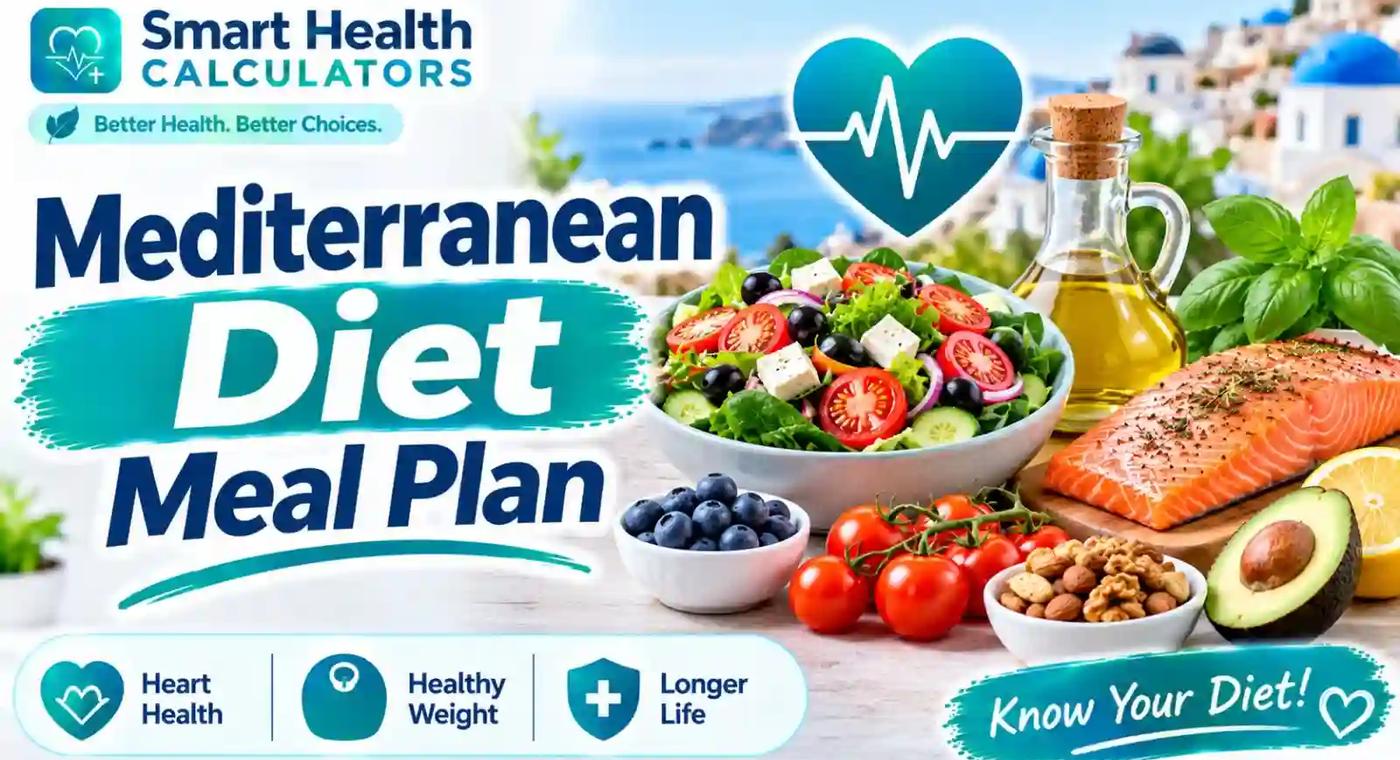
Mediterranean Diet Meal Plan: 7-Day Menu & Grocery List
Follow a 7-day Mediterranean diet meal plan with easy recipes, a complete grocery list, portion tips, and budget-friendly Pakistani food swaps.
This guide gives you a practical 7-day menu, a categorized grocery list, portion guidance, meal prep tips, vegetarian and budget swaps, and answers to the questions people ask most. It also includes Pakistani and South Asian substitutions, because you don't need imported ingredients to eat this way.
One note first: a general meal plan is not individualized medical advice. If you have diabetes, kidney disease, food allergies, or take medication, check the plan with a registered dietitian or your doctor.
What Is a Mediterranean Diet Meal Plan?
A Mediterranean diet meal plan is a structured menu built around vegetables, fruits, whole grains, legumes, nuts, seeds, fish, and extra virgin olive oil. It includes moderate amounts of yogurt, cheese, eggs, and poultry. It limits red meat, sweets, refined grains, and highly processed foods.
The American Heart Association describes the pattern in much the same way. It is an eating style, not a short-term diet, which is why it works well as a weekly rhythm.
What Is the Mediterranean Diet?
The Mediterranean diet is based on the traditional eating habits of countries around the Mediterranean Sea, including Greece, southern Italy, Spain, and parts of the Middle East and North Africa. Meals are plant-forward. Olive oil is the main fat. Fish appears often, meat appears occasionally, and sweets are for special occasions.
The Oldways Mediterranean Diet Pyramid is a helpful visual. Vegetables, fruits, grains, legumes, nuts, herbs, and olive oil sit at the base. Fish and seafood come next. Poultry, eggs, cheese, and yogurt are eaten in moderation. Red meat and sweets sit at the top.
It is also a way of eating, not just a food list. Meals are unhurried, often shared, and built from fresh ingredients rather than packets.
Why a Meal Plan Makes the Mediterranean Diet Easier
Knowing the principles is one thing. Cooking them on a busy weeknight is another.
A written plan helps in four practical ways:
- You shop once, with a purpose. No wandering the aisles and buying chips.
- You reuse ingredients. Roast a tray of vegetables on Sunday and use it in three meals.
- You waste less food. Fresh produce gets used before it spoils.
- You spend less. Planned meals cost less than impulse takeout.
Many people also find the plan helps with portion awareness, since each meal is built from a simple template rather than guesswork.
What the Research Says (and Doesn't Say)
The Mediterranean pattern is one of the most studied dietary patterns in the world. Observational studies have linked it with better heart health and lower risk of several chronic conditions. Randomized trials, including PREDIMED, have also examined cardiovascular outcomes.
There is an important caveat. The original 2013 PREDIMED paper was retracted and replaced with a corrected 2018 publication after randomization irregularities were identified. The corrected analysis still pointed in a favorable direction, but the lesson is to avoid overclaiming. You can find the corrected study by searching PubMed, and the Harvard Nutrition Source offers balanced explanations of the evidence.
In plain terms: the Mediterranean diet is a well-supported, sensible way to eat. It is not a cure, and it does not guarantee weight loss or lower cholesterol. Results depend on your overall diet, activity, genetics, and health conditions.
The World Health Organization backs several of its building blocks. It recommends at least 400 g of fruit and vegetables daily, at least 25 g of fiber, less than 5 g of salt, and keeping saturated fat below 10% of daily energy. A Mediterranean-style plan fits those targets naturally.
Mediterranean Diet Food List: What to Eat and What to Limit
Foods to Eat Most Days
- Vegetables and leafy greens: tomatoes, cucumbers, spinach, eggplant, peppers, zucchini, onions
- Fresh seasonal fruit: oranges, apples, figs, grapes, berries, pomegranate
- Whole grains: whole wheat bread or roti, oats, bulgur, barley, brown rice, quinoa
- Legumes: chickpeas, lentils, white beans, fava beans
- Nuts and seeds: walnuts, almonds, pistachios, sesame, flaxseed
- Extra virgin olive oil: the primary cooking and dressing fat
- Herbs and spices: oregano, basil, parsley, mint, cumin, garlic
Foods to Eat Weekly
- Fatty fish and seafood: salmon, sardines, mackerel, shrimp (aim for two or more servings per week)
- Poultry and eggs: moderate portions
- Yogurt and cheese: Greek yogurt, feta, and similar fermented dairy in modest amounts
Foods to Limit
- Red and processed meat (sausages, deli meats)
- Sugary drinks, sweets, pastries, and packaged desserts
- Refined grains such as white bread and instant noodles
- Highly processed snacks and fried fast food
- Butter and margarine as everyday fats
For a deeper look at healthy fat sources, see foods high in healthy fats.
How to Build a Mediterranean Plate
You don't need a food scale to follow this pattern. Use this simple template:
- Half the plate: vegetables and salad, dressed with olive oil and lemon
- A quarter: whole grains or a starchy side
- A quarter: protein, such as fish, legumes, chicken, or eggs
- A little extra: a drizzle of olive oil, a few nuts, or a spoonful of yogurt sauce
Compare this with the Harvard Healthy Eating Plate, which follows a similar structure. If you want a version with fewer rules about specific foods, the DASH diet takes a related but more sodium-focused approach.
Complete 7-Day Mediterranean Diet Meal Plan
This menu is designed for one adult and works as a template. Portions can be scaled up or down. Each day includes breakfast, lunch, dinner, and a snack.
Day 1 (Monday)
- Breakfast: Greek yogurt with walnuts, sliced figs or apple, and a drizzle of honey
- Lunch: Chickpea and cucumber salad with tomatoes, red onion, olive oil, and lemon
- Dinner: Baked salmon with roasted zucchini and half a cup of cooked quinoa
- Snack: A small handful of almonds and an orange
Day 2 (Tuesday)
- Breakfast: Whole grain toast with mashed avocado, tomato, and a boiled egg
- Lunch: Red lentil soup with a side salad and whole grain bread
- Dinner: Grilled chicken with tzatziki, roasted peppers, and bulgur
- Snack: Hummus with carrot and cucumber sticks
Day 3 (Wednesday)
- Breakfast: Overnight oats with chia seeds, berries, and chopped almonds
- Lunch: Whole wheat pita stuffed with falafel, lettuce, tomato, and yogurt sauce
- Dinner: Baked cod with olives, tomatoes, and garlic, served with roasted potatoes
- Snack: Plain yogurt with a few walnuts
Day 4 (Thursday)
- Breakfast: Vegetable omelet with spinach and feta, plus a slice of whole grain toast
- Lunch: Tuna and white bean salad with parsley, lemon, and olive oil
- Dinner: Eggplant and chickpea stew over brown rice
- Snack: A pear with a few pistachios
Day 5 (Friday)
- Breakfast: Greek yogurt parfait with oats, berries, and flaxseed
- Lunch: Mediterranean grain bowl with farro, roasted vegetables, olives, and feta
- Dinner: Grilled shrimp skewers with a large tomato-cucumber salad and a small portion of whole wheat couscous
- Snack: Roasted chickpeas
Day 6 (Saturday)
- Breakfast: Shakshuka (eggs poached in tomato and pepper sauce) with whole grain bread
- Lunch: Lentil salad with arugula, cucumbers, and a lemon-olive oil dressing
- Dinner: Sardines or mackerel on whole grain toast with a big green salad
- Snack: Apple slices with almond butter
Day 7 (Sunday)
- Breakfast: Whole grain pancakes topped with yogurt and fresh fruit
- Lunch: Vegetable and white bean minestrone with a slice of whole grain bread
- Dinner: Roast chicken with lemon and herbs, roasted root vegetables, and a green salad
- Snack: Dates stuffed with a walnut half (one or two)
Why This Menu Works
Fish appears three times, legumes appear at least once daily, and every meal includes vegetables. Olive oil is the main fat throughout, and red meat is absent. That matches the pattern described by the American Heart Association and Oldways.
Breakfast, Lunch, Dinner, and Snack Ideas
If the 7-day menu feels too fixed, use these swappable ideas.
Mediterranean Breakfast Ideas
A traditional Mediterranean breakfast is often simple: bread, olive oil, fruit, yogurt, olives, or cheese. Try:
- Whole grain toast with tomato rubbed on top and olive oil
- Yogurt with nuts and fruit
- Egg and vegetable scramble
- Oatmeal with walnuts and cinnamon
- Ful medames (mashed fava beans) with lemon and olive oil
Easy Lunch Ideas for Work and Home
- Chickpea salad in a jar
- Whole wheat wrap with hummus, grilled vegetables, and feta
- Lentil and vegetable soup in a thermos
- Greek salad with grilled chicken
- Tuna, white bean, and arugula salad
Dinner Ideas
- Baked fish with lemon, garlic, and tomatoes
- Chicken souvlaki with salad and tzatziki
- Pasta made with whole wheat and loaded with vegetables
- Stuffed peppers with rice, herbs, and pine nuts
- Lentil and spinach stew
Satisfying Snacks
- Olives and a small piece of cheese
- Fruit with a handful of nuts
- Greek yogurt with honey
- Hummus and raw vegetables
- Whole grain crackers with tahini
Mediterranean Diet Grocery List
Organize your shopping by category to keep it quick and cheap.
Vegetables: tomatoes, cucumbers, spinach, arugula, zucchini, eggplant, bell peppers, onions, garlic, carrots, mushrooms, cauliflower
Fruits: lemons, oranges, apples, pears, berries, grapes, figs, dates
Whole grains and starches: whole wheat bread or pita, oats, brown rice, quinoa, bulgur, farro, whole wheat pasta, small potatoes
Legumes: canned or dried chickpeas, red and green lentils, white beans, fava beans
Protein: salmon, sardines, cod, shrimp, chicken breast or thighs, eggs, canned tuna
Dairy: plain Greek yogurt, feta cheese, a small block of parmesan
Healthy fats: extra virgin olive oil, olives, walnuts, almonds, pistachios, tahini, flaxseed, chia seeds
Pantry flavor: canned tomatoes, dried oregano, cumin, paprika, parsley, mint, red wine vinegar, mustard
Tip: buy a good bottle of extra virgin olive oil and a cheaper everyday cooking oil only if budget demands it. Fresh, high-quality olive oil is the flavor backbone of the diet.
Meal Prep and Portion Guidance
A 90-Minute Sunday Prep Routine
Spend an hour and a half on the weekend and your week gets much easier:
- Cook a pot of lentils or chickpeas
- Cook a batch of quinoa, bulgur, or brown rice
- Roast a tray of mixed vegetables
- Wash and chop salad vegetables
- Mix a jar of lemon-olive oil dressing
- Hard-boil a half dozen eggs
With these basics ready, lunch can be assembled in five minutes.
How Much Should You Eat?
Portions depend on your age, size, and activity level. A rough guide for many adults:
- Olive oil: about 2 to 4 tablespoons daily, including cooking and dressings
- Vegetables: at least 5 portions daily, aiming to meet the WHO guidance of 400 g fruit and vegetables
- Legumes: at least a few servings weekly, ideally most days
- Nuts: a small handful (about 30 g) daily
- Fish: two or more servings weekly
- Grains: one cupped-hand portion per meal
To estimate your own calorie needs, use the Calorie Intake Planner or the BMR Calculator. For a deeper look at the math behind targets, read the calorie calculator guide.
Adjusting Calories Up or Down
- For weight loss: keep the structure, reduce grain and oil portions slightly, and increase vegetables and lean protein. Avoid aggressive cuts, which are hard to sustain.
- For maintenance or more energy: add an extra serving of whole grains, nuts, or yogurt.
- For higher protein: add eggs, Greek yogurt, fish, and legumes. The protein per day guide helps you work out a sensible target.
Can You Lose Weight on a Mediterranean Diet?
Possibly, but it is not automatic. The diet is rich in fiber, protein, and healthy fats, which can help you feel full. But olive oil, nuts, and cheese are calorie-dense, so portions still matter.
If your weight isn't moving, look at the usual suspects: oversized oil pours, frequent restaurant meals, liquid calories, large portions of bread and pasta, and low activity. The why your diet is not working article covers common stalls, and the weight loss strategies guide offers broader context.
Don't expect the diet alone to guarantee a result. Realistic progress comes from consistent habits over months.
Vegetarian, Pescatarian, and Gluten-Free Variations
Vegetarian Mediterranean Meal Plan
The diet adapts easily. Replace fish with eggs, Greek yogurt, tofu, tempeh, or more legumes. Make sure you get enough vitamin B12, iron, and omega-3s. Ground flaxseed, chia seeds, and walnuts provide plant omega-3s, though they differ from the fish-based kind.
Pescatarian Version
Keep fish and seafood as your main animal protein and skip poultry. This is close to the traditional coastal pattern and requires very few changes.
Dairy-Free and Gluten-Free
- Use unsweetened plant yogurt or tahini sauces instead of dairy
- Replace wheat with quinoa, buckwheat, brown rice, or gluten-free oats
- Check labels on canned goods, sauces, and packaged hummus
Food Allergy Swaps
- Nut allergy: use sunflower or pumpkin seeds
- Fish allergy: use legumes, eggs, and poultry
- Sesame allergy: skip tahini and use plain yogurt or olive oil-based sauces
Budget-Friendly Mediterranean Eating
The Mediterranean diet has a reputation for being expensive. In practice, the base of the pyramid is cheap: beans, lentils, oats, seasonal vegetables, eggs, and rice.
Ways to cut costs:
- Buy dried legumes in bulk instead of canned
- Use canned sardines and tuna in place of fresh fish
- Shop for seasonal vegetables and frozen fruit
- Use frozen spinach and peas
- Cook larger batches and freeze portions
- Use cheaper nuts like peanuts and sunflower seeds occasionally
For more ideas on eating well affordably, see the low-budget diet plan.
Mediterranean Meals With Pakistani and South Asian Ingredients
You can follow this pattern without hunting for specialty ingredients. Many South Asian staples already match the Mediterranean framework.
- Whole wheat roti works in place of pita or whole grain bread. For comparisons, see the calories in roti, rice, and corn guide.
- Dal (masoor, moong, chana) stands in for lentil soup and stews.
- Chana (chickpeas) can be used in salads, curries, and roasted snacks.
- Plain yogurt and raita replace Greek yogurt and tzatziki.
- Mustard oil or sunflower oil can be used for cooking when olive oil is too costly, while keeping some extra virgin olive oil for dressings.
- Fresh fish like rohu or pomfret replaces salmon or cod.
- Seasonal vegetables such as bottle gourd, okra, spinach, and cauliflower fill the vegetable slot.
- Dates, almonds, and walnuts are widely available and suit the snack category.
A simple example: dal with sautéed vegetables, a small whole wheat roti, a bowl of cucumber raita, and a handful of walnuts is a perfectly Mediterranean-style meal in a South Asian kitchen.
Mediterranean Diet vs Other Eating Patterns
Mediterranean Diet vs DASH Diet
Both emphasize fruits, vegetables, whole grains, and lean protein. DASH was designed to lower blood pressure and puts stronger emphasis on sodium reduction and low-fat dairy. The Mediterranean diet is more flexible about fat and relies on olive oil. See the DASH diet guide.
Mediterranean Diet vs Keto
Keto restricts carbohydrates sharply to induce ketosis. The Mediterranean diet keeps whole grains, legumes, and fruit. It is easier to sustain for most people and doesn't require tracking macros closely.
Mediterranean Diet vs Paleo
Paleo excludes grains, legumes, and dairy. The Mediterranean diet includes all three. That makes Mediterranean eating cheaper, higher in fiber, and easier to follow. Compare with the paleo diet meal plan.
Mediterranean Diet vs Intermittent Fasting
Intermittent fasting is about when you eat, while the Mediterranean diet is about what you eat. They can be combined, though not everyone should fast. Read the intermittent fasting for beginners article before trying it.
Mediterranean Diet vs a Standard Western Diet
The Western pattern is higher in processed foods, refined grains, red meat, and added sugar. The Mediterranean pattern swaps these for whole, plant-forward foods. It is mostly a shift in food quality, not an extreme restriction.
Health Conditions and the Mediterranean Diet
High Cholesterol and Heart Health
Replacing saturated fat with unsaturated fats like olive oil, nuts, and fish is a core idea in heart-healthy eating. Ask your doctor for target numbers, as every person differs. Related reading: best drinks for heart health.
Blood Pressure
Reducing salt and processed food helps, and fruits, vegetables, and legumes provide potassium. If you have hypertension, see the how to lower blood pressure naturally guide and discuss your plan with your doctor.
Type 2 Diabetes and Prediabetes
The pattern emphasizes fiber-rich carbohydrates, which tend to raise blood sugar more slowly. Still, portions of rice, bread, and fruit matter, and medication adjustments should come from your care team. Consult an endocrinologist or a dietitian. The NIDDK offers reliable diabetes information.
Pregnancy
A Mediterranean-style pattern can suit pregnancy, but some foods need care: limit high-mercury fish such as swordfish, avoid raw or undercooked fish and eggs, and choose pasteurized dairy. Review the staying healthy during pregnancy guide and talk to your prenatal provider.
Medication Interactions
Certain medications, such as warfarin, interact with vitamin K-rich leafy greens, so consistency matters. Do not change your diet significantly without checking with your pharmacist or doctor.
Common Mistakes to Avoid
- Overpouring olive oil. Healthy fat is still calorie-dense. Measure it for a week and you'll be surprised.
- Treating "whole wheat" as unlimited. Portions of bread and pasta still count.
- Ignoring fiber. Legumes and vegetables should appear daily, not occasionally.
- Buying "Mediterranean" packaged foods. Labels can hide sodium and added sugar.
- Skipping fish entirely. If you can't eat fish, aim for legumes, walnuts, and flaxseed, and ask your doctor about supplementation.
- Drinking wine because the diet "allows" it. Alcohol is optional, not a requirement. If you don't drink, don't start.
How to Start: A Simple 4-Week Rollout
A full overhaul on day one rarely lasts. Try a gradual approach:
- Week 1: Swap cooking fat to olive oil and add a vegetable to every meal.
- Week 2: Replace refined grains with whole grains and add legumes four times.
- Week 3: Add fish twice a week and swap sweets for fruit and yogurt.
- Week 4: Follow the full 7-day plan and adjust to taste and budget.
By the end of a month, the 7-day menu can repeat with new vegetables and proteins. That becomes your own 30-day rotation without needing a separate plan.
Frequently Asked Questions
What should I eat on the Mediterranean diet every day?
Eat vegetables, fruit, whole grains, legumes, nuts, and olive oil daily. Add fish twice a week or more, and use yogurt, cheese, eggs, and poultry in moderate amounts.
What is a typical Mediterranean breakfast?
It is usually light and simple: whole grain bread with olive oil and tomato, Greek yogurt with fruit and nuts, or eggs with vegetables. Sugary cereals and pastries are not typical.
How much olive oil should I use?
Many plans use roughly 2 to 4 tablespoons a day, spread across cooking and dressings. Your ideal amount depends on your calorie needs and goals.
Can I follow the Mediterranean diet without eating fish?
Yes. Use legumes, eggs, yogurt, tofu, nuts, and seeds for protein and healthy fats. If you avoid fish entirely, ask your doctor about omega-3 options.
Are potatoes, rice, and bread allowed?
Yes, in moderate portions. Choose whole grain versions when possible, and pair them with vegetables and protein rather than eating them alone.
Is the Mediterranean diet suitable for people with diabetes?
It can be a good foundation because it is high in fiber and unsaturated fat. Portions of carbohydrates still matter, so work with your doctor or dietitian.
Can I follow this diet on a budget?
Yes. Dried legumes, oats, eggs, seasonal vegetables, canned fish, and frozen produce keep costs low.
Conclusion:
You don't need to cook like a Greek grandmother to benefit from this pattern. You need a plan, a grocery list, and a few repeatable meals. Start with the 7-day menu above, prep a few staples on Sunday, and adjust portions to your needs and budget.
Here is your next-step checklist:
- Print or save the grocery list and shop for the week
- Prep legumes, a whole grain, and a tray of roasted vegetables
- Follow the 7-day plan, swapping meals you dislike
- Note how you feel, how full you are, and what is easy to repeat
- Review your results with a doctor or dietitian if you have a health condition
To set calorie and portion targets that fit you, try the Diet Plan Generator. You can learn more about why you can trust Smart Health Calculators and find related tools in the full tools library.
Ready to personalize your plan? Explore Advanced Tools at Smart Health Calculators.
Medical Disclaimer
This article is for general education only. It is not medical advice, diagnosis, treatment, prescription guidance, or a replacement for professional healthcare. Speak with a qualified healthcare professional for personal medical concerns, symptoms, pregnancy concerns, mental health crisis, medication questions, or before making major health changes.