Can You Get Pregnant During Your Period? Risks & Timing
Yes, you can get pregnant on your period, though it’s less likely. See why sperm survival and short cycles matter and what to do next.
"You can't get pregnant on your period" is one of the most repeated health myths there is. It sounds logical. You are bleeding, so surely no egg is waiting to be fertilized.
The truth is more nuanced. Pregnancy during your period is less likely, but not impossible. The reason has less to do with the bleeding itself and more to do with how long sperm can live and how much cycles vary from person to person and month to month.
This guide explains the biology in plain language, shows which situations raise the risk, and covers what to do after unprotected sex. You will also find guidance on pregnancy test timing and contraception that works.
Can You Get Pregnant on Your Period?
Yes, it is possible. Here is what matters:
- Pregnancy requires sperm to meet an egg, and sperm can survive inside the body for several days. The NHS describes survival of up to seven days, while other medical sources commonly say up to five.
- If you ovulate soon after your period ends, sperm from sex during your period may still be alive when the egg is released.
- The risk is higher with short cycles, long periods and irregular cycles, and on the last days of bleeding.
- Period bleeding does not act as contraception, and calendar tracking is not a guaranteed method.
- If you had unprotected sex and do not want to be pregnant, ask a pharmacist or clinician promptly about emergency contraception.
The direct, evidence-based message from sexual health services is that there is no completely safe time of the month for unprotected sex when you are trying to avoid pregnancy. SH:24's sexual health guidance says this plainly.
How the Menstrual Cycle Works
You do not need a biology degree to understand this, but a simple map of the cycle makes everything else make sense.
The Cycle Starts on Day 1 of Bleeding
The first day of your period is day 1. The cycle runs until the day before your next period begins. Many people have cycles of about 21 to 35 days, and the length can change from month to month.
The Main Phases
| Phase | What happens | Rough timing in a 28-day cycle |
|---|---|---|
| Menstruation | The uterine lining (endometrium) sheds | Days 1–5 (can last longer) |
| Follicular phase | Hormones (FSH, then rising estrogen) prepare an egg in an ovarian follicle | Days 1–13, overlapping with the period |
| Ovulation | An egg is released after a luteinizing hormone (LH) surge | Around day 14 in a typical 28-day cycle |
| Luteal phase | The body prepares for possible implantation | Days 15–28 |
Notice something important: the follicular phase starts on day 1, at the same time as your period. The body is already working toward ovulation while you bleed.
Ovulation Is Not Always on Day 14
The "day 14" rule applies only to a textbook 28-day cycle. In reality, ovulation tends to happen roughly 10 to 16 days before the next period starts, according to sexual health services. That means timing shifts with cycle length, and it can shift from one month to the next because of stress, illness, travel, weight change or hormonal changes.
The Egg and Sperm Clock
- The egg survives only about 12 to 24 hours after release, as ACOG describes in its fertility awareness guidance.
- Sperm can survive for several days in the reproductive tract under the right conditions.
The gap between these two numbers is the heart of the matter. Sperm can wait. The egg cannot.
Why Pregnancy During Your Period Is Possible
Several overlapping factors explain it.
1. Sperm Survive for Days
If sex happens on day 5 of your period and you ovulate on day 9, sperm may still be viable when the egg arrives. Fertilization can then occur even though intercourse took place during bleeding.
2. Short Cycles Bring Ovulation Closer
With a 21 to 24-day cycle, ovulation can occur around days 7 to 10. If your period lasts five to seven days, the fertile window can begin soon after bleeding ends, or even overlap the final days of it. Our guide to fertility window calculation walks through how cycle length shifts these dates.
3. Long Periods Create More Overlap
The longer you bleed, the smaller the gap between the last day of bleeding and ovulation. A seven-day period in a shorter cycle can leave almost no safe buffer.
4. Irregular Cycles Make Prediction Unreliable
If your cycles vary by more than a few days, you cannot confidently predict when ovulation will happen. This is common in teenagers, after stopping hormonal contraception, after childbirth, during perimenopause, and with conditions such as polycystic ovary syndrome (PCOS).
5. Bleeding That Is Not a True Period
Some bleeding mid-cycle can be mistaken for a period. Ovulation spotting, breakthrough bleeding from hormonal contraception, or cervical irritation can look similar to a light period. If you think you are "on your period" and have sex, you may actually be close to ovulation. More on this below.
6. Menstrual Blood Does Not Block Sperm
Menstrual blood is not a barrier or a spermicide. Sperm can survive in the reproductive tract whether or not you are bleeding. The bleeding itself is not what makes pregnancy unlikely. Timing is.
How Likely Is Pregnancy During a Period?
Honest answer: lower than at other times in the cycle, but not zero, and not precisely measurable for any individual.
No reliable single percentage exists for "pregnancy from period sex," because the risk depends on several variables at once: cycle length, period length, ovulation timing, the day of sex, and whether any contraception was used. Websites that publish a precise number are usually guessing.
What you can say is this:
- Day 1–3 of bleeding: generally the lowest-risk days for most people with typical cycles
- Last days of a long period: risk rises, especially with a short cycle
- Days right after bleeding stops: can be higher risk than people expect
- Fertile window: the five days before ovulation plus ovulation day itself carry the highest risk
Clearblue's explanation of pregnancy during your period makes the same point: if bleeding lasts five to seven days and sex occurs toward the end, sperm survival can bridge the gap to ovulation.
Risk by Day of Your Period
This table shows general patterns, not guarantees. Individual cycles differ.
| Situation | Relative risk | Why |
|---|---|---|
| First day of period, 28-day cycle | Very low | Ovulation is typically about two weeks away |
| Middle of a 5-day period, regular 28-day cycle | Low | Still several days before the fertile window |
| Last day of period, regular 28-day cycle | Low to moderate | Fertile window may start within days |
| Last day of a 7-day period, 24-day cycle | Moderate | Ovulation may be only days away |
| Last day of period, very short or irregular cycle | Moderate to higher | Early ovulation is plausible |
| Days just after period ends, short cycle | Higher | May already be inside the fertile window |
| Bleeding that is actually mid-cycle spotting | Potentially high | May be close to ovulation |
If you are asking about a specific day, our pregnancy calculator and the guide on calculating your conception date can help you map dates, but they cannot predict ovulation for any one cycle with certainty.
Can You Get Pregnant on the First Day of Your Period?
It is very unlikely, but not strictly impossible. On day 1 of a typical cycle, ovulation is usually well over a week away, and even sperm that survive for five to seven days would often be gone by then.
The caveats are the same as always. If your cycle is unusually short, if ovulation happens early, or if the bleeding you consider "day 1" was not actually a period, the numbers change. Because you cannot be certain, medical guidance still avoids calling any day "safe."
Can You Get Pregnant on the Last Day of Your Period?
This is the scenario where risk becomes more real. Imagine:
- Your period lasts six days
- Your cycle is 25 days long
- You ovulate around day 11 (about 14 days before the next period)
- You have sex on day 6
Sperm only need to survive five days to still be present at ovulation. That is entirely within the documented survival range. Pregnancy is possible in this scenario.
The same logic applies to sex in the days right after bleeding stops. Many people think the fertile window "starts later," but with short cycles it can begin almost immediately.
Spotting, Period Bleeding and Implantation Bleeding
The word "period" does a lot of work in this topic, and sometimes it is wrong.
True Period Bleeding
A true period generally has a recognizable pattern for you: heavier early on, tapering off, arriving roughly when expected.
Ovulation Spotting
Some people notice light spotting around ovulation, often pink or light red, lasting a day or two. It can be mistaken for an early or light period. Having sex during this time is having sex during your most fertile phase. Our guide on ovulation signs and how to track ovulation explains other signs such as cervical mucus changes.
Breakthrough Bleeding
Hormonal contraceptives, missed pills, and some medicines can cause irregular bleeding that is not a true period.
Implantation Bleeding
Some people have light spotting around the time an embryo implants, usually before the expected period. It tends to be lighter and shorter than a period, but it is not a reliable way to tell the difference. See our guide on the first signs of pregnancy for more on early symptoms.
The Practical Takeaway
Bleeding alone does not prove you are not pregnant, and it does not prove you are not fertile. If bleeding is unusual for you, lighter than normal, or happens at an odd time, treat it with caution and consider testing if your cycle is off.
Does Birth Control Change the Picture?
Yes, a lot, depending on the method and how consistently it is used.
If You Use Reliable Contraception Correctly
Methods such as the combined pill, progestin-only methods, implants, hormonal and copper IUDs, and condoms work every day of the cycle, including during your period. Their effectiveness does not depend on whether you are bleeding. Effectiveness figures differ between "perfect use" and "typical use", so check current guidance from sources such as the CDC contraception resources or the WHO family planning fact sheet.
If You Missed Pills or Used Contraception Incorrectly
A missed pill, a condom that broke or slipped, or a vomiting episode after taking a pill can leave you unprotected, even during your period. Follow the leaflet for your method, and ask a pharmacist or clinician what to do next.
If You Rely on Tracking Alone
This is the weakest approach. Period-tracking apps estimate based on past cycles, but cycles vary. Fertility awareness methods can work when taught and followed carefully, but they depend on daily observation and consistent cycles, and they are far less forgiving than most other methods. ACOG's fertility awareness overview explains both how they work and why they require commitment.
Myths About Pregnancy and Periods
Myth 1: "You Cannot Get Pregnant on Your Period"
Possible, though less likely. Sperm survival bridges the gap.
Myth 2: "Heavy Bleeding Washes Sperm Away"
Bleeding does not flush out sperm in a way that prevents pregnancy. Sperm travel quickly into the cervix and beyond.
Myth 3: "Showering or Washing After Sex Prevents Pregnancy"
Washing the outside of the body does not stop sperm that have already entered. Douching is not recommended as a contraceptive and can irritate the vagina.
Myth 4: "Day 14 Is Always Ovulation Day"
Only in a textbook 28-day cycle, and even then it varies by cycle.
Myth 5: "If I Bled, I Am Not Pregnant"
Light bleeding can happen in early pregnancy. Bleeding does not rule out pregnancy, especially if it was lighter, shorter or at a different time than usual.
Myth 6: "Withdrawal or Calendar Methods Are Safe on Period Days"
Both are less reliable than most modern contraception. Pre-ejaculate and timing errors can both lead to pregnancy.
Myth 7: "Irregular Periods Mean You Cannot Get Pregnant"
Irregular cycles make ovulation harder to predict, not impossible.
What to Do After Unprotected Sex During Your Period
If pregnancy is not desired, act promptly, but calmly. Time matters for emergency contraception, and a few clear steps help.
Step 1: Do Not Assume You Are Safe
Because your period is on or ending, it is tempting to assume nothing can happen. If you want to avoid pregnancy, treat it like any other unprotected sex.
Step 2: Consider Emergency Contraception
Emergency contraception (EC) can reduce the chance of pregnancy after unprotected sex or contraception failure. Options generally include:
| Option | How it works | General timing guidance |
|---|---|---|
| Levonorgestrel pill | Hormonal pill that mainly delays ovulation | As soon as possible, usually within 72 hours (3 days) |
| Ulipristal acetate pill | Hormonal pill that delays ovulation | Within 120 hours (5 days) |
| Copper IUD | Inserted by a clinician, prevents fertilization/implantation | Within 5 days, and can be a very effective option |
These are general patterns. The CDC advises that emergency contraceptive pills be taken as soon as possible within five days of unprotected sex, and that suitability and effectiveness differ by method. Body weight, other medicines and medical history can affect which option is best, so ask a pharmacist or clinician. The NHS explains the options in its emergency contraception guide, and Planned Parenthood offers a patient-friendly overview.
Step 3: Know That EC Is Not a Regular Method
Emergency contraception is a backup, not a replacement for ongoing contraception. It does not protect against sexually transmitted infections (STIs).
Step 4: Take a Pregnancy Test at the Right Time
Testing the next day will not give a reliable answer, because it takes time for hCG to build up. A common guideline is to test about three weeks after unprotected sex, or from the first day of a missed period, following the instructions on your test. If you are unsure, repeat the test after a few days or ask a clinician about a blood test.
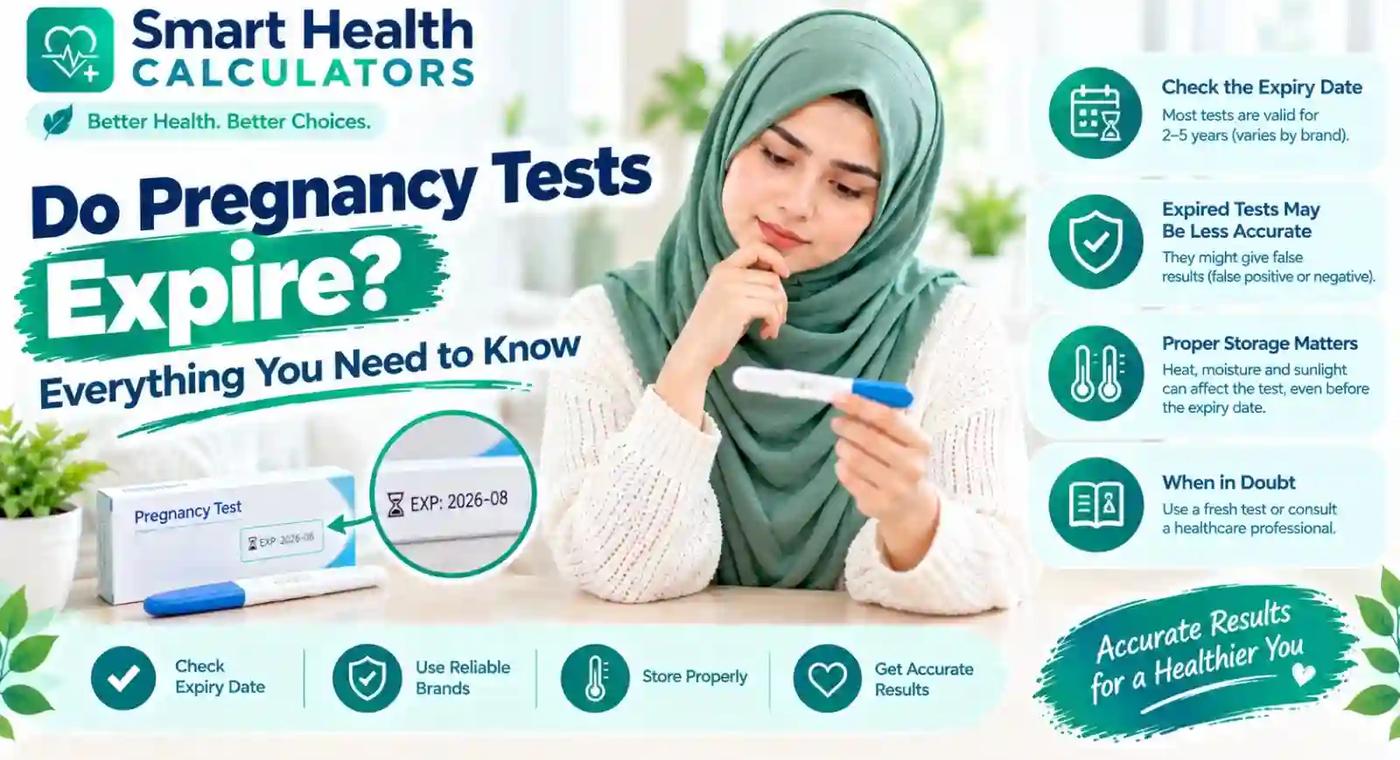
Make sure the test is within its date, since expired kits can be unreliable. Our article on whether pregnancy tests expire explains how to check. MedlinePlus also explains how pregnancy tests work and when to repeat them.
Step 5: Consider STI Testing
If you had unprotected sex with a new or untested partner, ask about STI screening. Condoms are the main method that protects against both pregnancy and many STIs.
Step 6: Plan Ongoing Contraception
If this was a one-off gap, it is a good moment to choose a method that suits you. A pharmacist, family planning clinic or doctor can help.
Real-World Scenarios
These examples are illustrative, not clinical predictions.
Scenario 1: The Short Cycle
Ayesha has a 24-day cycle and a six-day period. She has unprotected sex on day 6 and ovulates around day 10. Sperm from day 6 are still alive four days later. Pregnancy is plausible. She takes emergency contraception within the recommended window and tests three weeks later.
Scenario 2: The Heavy First Day
Sana has a regular 30-day cycle. She has unprotected sex on day 1 while bleeding heavily. Ovulation is typically about two weeks away, so the risk is low. She still chooses to start a regular contraceptive method, since "low" is not "none."
Scenario 3: Not Actually a Period
Hira has an irregular cycle. She notices light pink bleeding for two days and assumes it is her period. She has sex without protection. A few weeks later, her real period is missing. The spotting had been around ovulation. This is the situation where "period sex" is really fertile-window sex.
Scenario 4: Contraception Plus Backup
Maryam takes a daily pill but vomited an hour after taking it. She has sex that evening during her period. She reads the pill leaflet, uses condoms for the following days, and asks a pharmacist whether emergency contraception is needed. Her risk depends on the pill type and timing, which is why she checks.
How Cycle Length Changes the Risk
Because so much depends on cycle length, here is how the same day of sex plays out in different cycles.
| Cycle length | Typical ovulation | Day-5 sex risk | Notes |
|---|---|---|---|
| 21 days | ~Day 7 | ~Day 7 | Sperm from day 5 could easily meet the egg |
| 24 days | ~Day 10 | Moderate | Possible with a longer period |
| 28 days | ~Day 14 | Low | Nine days gap, beyond usual sperm survival |
| 32 days | ~Day 18 | Very low | Long gap |
| Irregular | Unpredictable | Unclear | Treat as potentially fertile |
Estimates assume ovulation about 14 days before the next period, and individual cycles vary. Use the table to understand the logic, not to plan contraception.
Why Tracking Apps and Calculators Are Not Contraception
Tools can be helpful for understanding your cycle. They are not a substitute for contraception when pregnancy would be unwelcome.
- Apps predict from averages. Your next cycle may differ.
- Stress, illness, travel and medication can shift ovulation.
- Sperm survival creates a buffer that calendars rarely account for.
If your goal is to conceive, tracking is genuinely useful. Try our guides on the fertility window and ovulation tracking. If your goal is to avoid pregnancy, pair tracking knowledge with a reliable contraceptive method.
When to Speak to a Healthcare Professional
Consider seeing a doctor, nurse, midwife or pharmacist if:
- You had unprotected sex and want emergency contraception
- Your next period is late, or lighter or heavier than usual
- Your cycles are very irregular, very short, or unusually long
- Bleeding is heavy, prolonged, or happens between periods
- You want help choosing contraception
- You have concerns about STIs
- You feel anxious about a possible pregnancy
Seek Urgent Care If You Have
- Severe abdominal or pelvic pain
- Fainting or dizziness
- Very heavy bleeding
- Shoulder-tip pain with abdominal pain
These can indicate serious conditions, including ectopic pregnancy, which needs immediate assessment.
Access to Services
Availability of emergency contraception, family planning clinics and pharmacy advice differs between countries. If you live in Pakistan or elsewhere where access varies, a qualified gynecologist, a licensed pharmacist or a family planning service can explain what is available locally and what suits your health history.
Managing Anxiety While You Wait
The waiting period after unprotected sex can feel long. A few steady habits help:
- Decide on your next step (EC, a test date, a clinic visit) and write it down
- Avoid testing too early, since early tests can mislead
- Use calming techniques such as these five-minute breathing exercises or natural ways to reduce stress
- Talk to someone you trust
The Mental Health Checker can help you reflect on how you are feeling, though it is not a diagnosis. Stress can also change cycle timing, which can make waiting even harder.
If You Are Trying to Conceive Instead
If you want a pregnancy, this topic works in reverse. Sex during the fertile window, the five days before ovulation plus ovulation day, gives the best chance. Sex during your period is not a good target.
Helpful next reads:
- Fertility window calculator guide
- Ovulation signs and tracking
- How to calculate your conception date
- Pregnancy calculator, due dates and trimesters
- Pregnancy symptoms by trimester
If you have been trying for a year without success (or six months if you are over 35), speak to a doctor about fertility assessment.
Why Choose Smart Health Calculators
Reproductive health questions deserve clear, careful answers without judgment. Smart Health Calculators offers free tools and plain-language guides on fertility, pregnancy, nutrition, sleep and mental wellbeing. You can browse all health calculators or see our roundup of the best free health calculators.
Remember that calculators and articles support understanding, but they do not replace a clinician who knows your history.
Frequently Asked Questions
Can you get pregnant during your period?
Yes. It is less likely than at other times in your cycle, but possible, because sperm can survive for several days and ovulation can occur soon after bleeding ends.
Can you get pregnant on the first day of your period?
It is very unlikely, since ovulation is usually well over a week away in a typical cycle. It is still not strictly impossible with very short or unpredictable cycles.
Can you get pregnant on the last day of your period?
Yes, this is a higher-risk time. With a short cycle or a long period, sperm from the last days of bleeding may still be alive when ovulation occurs.
How long can sperm survive after period sex?
Medical sources commonly say about five days, and the NHS describes up to seven days. The exact time varies, so quote the source you rely on rather than a single universal number.
Can irregular periods increase pregnancy risk?
They make ovulation harder to predict, so you cannot rely on calendar timing. That uncertainty is why irregular cycles call for dependable contraception.
Can you get pregnant if you have spotting that looks like a period?
Yes. Spotting can be ovulation bleeding, breakthrough bleeding or something else, and it may occur when you are fertile. Do not assume light bleeding means a safe time.
Does heavy bleeding prevent pregnancy?
No. Heavy flow does not wash away sperm in a way that prevents conception, and menstrual blood is not a contraceptive.
Can you get pregnant on your period if you are on birth control?
If you use your method correctly and consistently, the risk is low. Missed pills, vomiting, antibiotics with certain methods, or other errors can reduce protection, so check your method's instructions.
What should I do after unprotected sex during my period?
If you do not want to be pregnant, ask a pharmacist or clinician about emergency contraception as soon as possible. Take a pregnancy test at the right time and consider STI screening.
When can I take a pregnancy test after period sex?
Testing too soon can be misleading. A common guideline is about three weeks after unprotected sex, or from the first day of a missed period, and repeating if unsure. A clinician can arrange a blood test if needed.
Does showering or washing after sex prevent pregnancy?
No. Washing outside the body does not stop sperm that have already entered, and douching is not a recommended contraceptive.
Can tracking my period reliably prevent pregnancy?
Not on its own. Cycle length, ovulation timing and sperm survival all vary, so tracking is far less reliable than methods such as condoms, pills, implants or IUDs.
Conclusion:
You can get pregnant during your period. It is less likely than during your fertile window, but sperm survival, short cycles, long bleeding and irregular ovulation all close the gap. No day of the cycle is completely safe for unprotected sex when avoiding pregnancy matters.
Here is a simple action plan:
- Use reliable contraception every time, including during your period, if you want to avoid pregnancy.
- After unprotected sex, ask a pharmacist or clinician promptly about emergency contraception.
- Test at the right time, using an in-date pregnancy test, and repeat if the result does not fit your situation.
- Treat odd bleeding with caution, since it may not be a true period.
- Speak to a professional about irregular cycles, STI concerns, or choosing a method that suits you.
Want to understand your own cycle better? Try our Pregnancy Calculator, or explore advanced tools at Smart Health Calculators for planning and wellness.
Medical Disclaimer
This article is for general education only. It is not medical advice, diagnosis, treatment, prescription guidance, or a replacement for professional healthcare. Speak with a qualified healthcare professional for personal medical concerns, symptoms, pregnancy concerns, mental health crisis, medication questions, or before making major health changes.