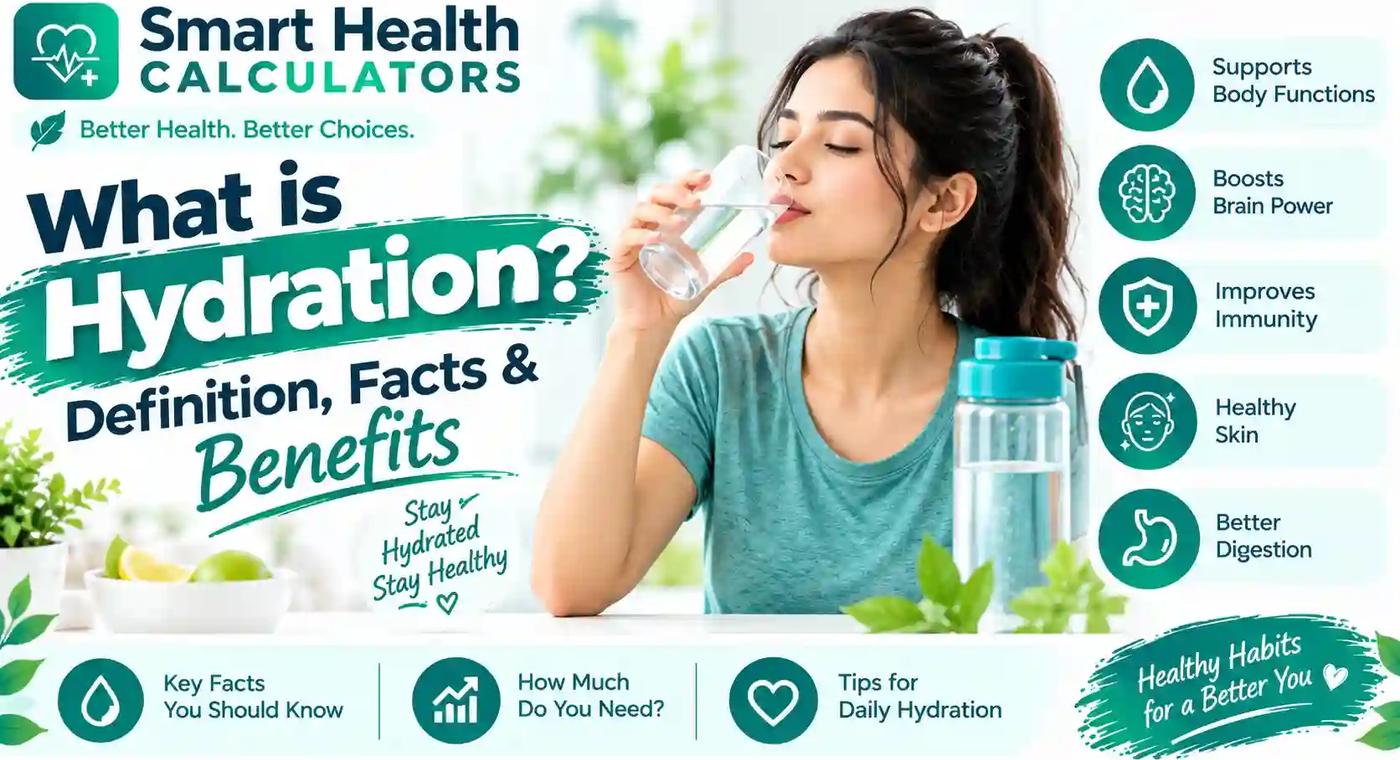
What Is Hydration? Definition, Facts, Benefits.
How the body balances fluids, the real benefits of staying hydrated, signs of dehydration, daily water needs, and practical tips.
You have probably heard "drink more water" a thousand times. Fewer people can explain what hydration actually is, why your body cares so much about it, or how to tell whether you are getting enough.
This guide answers those questions in plain language. You will learn what hydration means, how your body balances its fluids, the benefits that research supports (and the claims that are exaggerated), how to spot dehydration, and how to build habits that work in real life. Practical examples and a few simple calculations are included along the way.
What Is Hydration?
Hydration is the process of keeping enough water in your body to support normal physiological functions, including temperature regulation, circulation, digestion, and waste removal. Your body takes in water from plain drinking water, other beverages, and food. How much you need depends on your age, activity level, climate, and health.
In one sentence: being well hydrated means your body has the fluid it needs, in the right balance with minerals called electrolytes, to work properly.
The CDC's guidance on water and healthier drinks states that getting enough water every day is important for health, and that daily water intake comes mostly from water and other beverages.
Hydration Definition and Meaning in Simple Terms
In everyday language, hydration means "having enough water in your body." In biology and medicine, the idea is a little more precise.
Hydration status describes the balance between the water your body takes in and the water it loses. When intake roughly matches losses, you are in fluid balance. When losses outrun intake, you move toward dehydration. When intake far outpaces what your kidneys can clear, you can drift toward overhydration, which is rare but real.
A few terms you will see throughout this article:
- Total body water: all the water inside and around your cells.
- Intracellular fluid: water inside your cells.
- Extracellular fluid: water outside cells, including blood plasma.
- Electrolytes: minerals such as sodium, potassium and chloride that carry electrical charge and help control where water goes in the body.
- Fluid homeostasis: your body's system for keeping fluid levels stable.
Think of hydration less as "how much water did I drink?" and more as "does my body have the right amount of fluid, in the right places, right now?"
Hydration vs Drinking Water: Are They the Same Thing?
Not quite. Drinking water is one way to get hydrated. Hydration is the result.
You take in fluid through:
- Plain water
- Other drinks, such as milk, tea, coffee, juice and soups
- Water-rich foods, such as fruits, vegetables, yogurt and stews
You lose fluid through:
- Urine
- Sweat
- Breathing (water vapour in your breath)
- Stool
- Fever, vomiting or diarrhea when you are unwell
That difference matters when you read numbers online. The widely quoted U.S. reference figures for water cover total water from all beverages and food, not just what comes out of a bottle. We will unpack that below.
How Does Hydration Work in the Body?
The human body is roughly half to two-thirds water, depending on age, sex and body composition. Muscle holds more water than fat, so lean individuals tend to have a higher percentage. Every cell relies on that water.
Here is the process in simplified form.
1. You Lose Water Constantly
Even if you sit still all day, you lose water through breath, skin and urine. Exercise, heat, illness and dry air increase that loss.
2. Your Body Monitors Its Fluid Levels
Sensors in the brain and blood vessels track the concentration of your blood and its volume. When your blood becomes slightly more concentrated, a measure often called plasma osmolality rises.
3. Thirst and Hormones Respond
The brain's thirst centre prompts you to drink. At the same time, the hormone antidiuretic hormone (ADH) tells your kidneys to conserve water, producing smaller amounts of more concentrated urine. This is why urine looks darker when you are low on fluid.
4. You Drink, and Water Is Absorbed
Fluid passes through the stomach and into the small intestine, where most of it is absorbed into the bloodstream. Electrolytes, especially sodium, help water move across the gut lining and into tissues.
5. The Kidneys Fine-Tune the Balance
Your kidneys filter blood continuously, keeping what you need and sending the rest to urine. This is how the body adjusts to everything from a salty meal to a hot afternoon.
This loop is elegant, but it is not perfect. Thirst can lag behind real needs, especially in older adults, during intense exercise, or in extreme heat. That is why habits matter.
Why Is Hydration Important?
Water is not just a drink. It is a working part of nearly every system in the body.
According to the CDC, water supports normal temperature regulation, joint lubrication and waste removal. Beyond those basics, fluid helps:
- Carry nutrients and oxygen in the blood
- Support digestion and the movement of food through the gut
- Allow kidneys to filter waste
- Maintain blood volume and blood pressure stability
- Keep mucous membranes and tissues moist
When you are short on fluid, these functions become harder. The effect can be mild at first, such as a headache or tiredness, and become serious if the shortage continues or is severe.
Main Benefits of Staying Hydrated
Let us separate what is well supported from what is often overstated.
1. Helps Regulate Body Temperature
When you heat up, you sweat. Sweat evaporates and cools the skin. That cooling needs water. If you do not replace what you lose, your ability to manage heat can decline, which raises the risk of heat exhaustion and heatstroke.
2. Supports Digestion and Regular Bowel Movements
Water helps food move through the digestive tract and keeps stool soft. Low fluid intake can contribute to constipation in some people, though fibre, activity and medical conditions also play a role. Drinking more water is a reasonable first step if you are mildly under-hydrated, but it will not fix every digestive complaint.
3. Supports Kidney Function
Your kidneys need adequate fluid to filter waste and produce urine. Staying well hydrated is generally associated with a lower risk of kidney stones in people prone to them. That is not the same as saying that extra water prevents all kidney disease. People with kidney, heart or liver conditions may have specific fluid limits, so they should follow their clinician's advice.
4. Supports Physical Performance
Even small fluid deficits can make exercise feel harder, especially in heat. Staying hydrated before, during and after activity helps maintain endurance and recovery. For short, easy workouts, plain water is usually enough. For long or very sweaty sessions, electrolytes may also matter.
Our guides on how much water to drink before a workout and water intake for athletes go deeper on timing and amounts.
5. Supports Mood, Focus and Mental Performance
Research suggests that noticeable dehydration can affect concentration, mood and perceived effort. The key word is dehydration. If you are already well hydrated, drinking extra water is unlikely to sharpen your mind. If you are a little dry, correcting it may help you feel clearer.
6. Supports Skin Comfort
Your skin reflects hydration in a limited way. Severe dehydration can make skin less elastic, and dry air can make it feel tight. Moisturizers, sleep, diet and genetics usually have a bigger impact on how skin looks. Water helps your body overall, but it is not a miracle skin treatment.
7. Can Help With Weight Management When Used Wisely
Water has no calories. The CDC notes that replacing sugary drinks with plain water can reduce calorie intake. That is a practical benefit. It does not mean water alone causes significant fat loss. For a closer look, see our article on hydration and weight loss.
What Hydration Cannot Do
To keep expectations realistic:
- It will not "flush toxins" beyond what your kidneys and liver already do.
- It will not cure fatigue caused by poor sleep, anaemia or stress.
- It will not offset an otherwise unhealthy lifestyle.
- More is not always better.
Signs of Good Hydration vs Dehydration
Your body gives you clues. Learn to read them.
Signs You Are Probably Well Hydrated
- Urine is pale yellow, like light straw
- You urinate regularly during the day
- You rarely feel intense thirst
- Your mouth is moist and energy feels steady
- Skin and lips are comfortable
Early Signs of Dehydration
- Thirst
- Dry mouth or sticky saliva
- Darker, stronger-smelling urine
- Urinating less often
- Headache
- Tiredness or low energy
- Dizziness when you stand up
MedlinePlus lists symptoms such as thirst, dry mouth, reduced urination and dizziness, and warns that severe dehydration can be life-threatening.
For a deeper look, read our guide to the signs you are not drinking enough water.
Urine Colour Guide
| Urine Colour | What It May Suggest |
|---|---|
| Very pale or almost clear | Plenty of fluid, possibly more than needed |
| Pale straw or light yellow | Usually well hydrated |
| Darker yellow | Mild dehydration, consider drinking more |
| Amber or honey | Likely dehydrated |
| Brown or very dark | Seek advice, especially if with other symptoms |
Caution: Urine colour is a handy guide, not a diagnosis. Some vitamins, medicines and foods change urine colour. Certain health conditions do too. Clear urine all day can also mean you are drinking more than you need.
Can You Be Dehydrated Without Feeling Thirsty?
Yes. Thirst is an early alarm, but it is not always reliable. Common situations include:
- Older adults, whose thirst signals may weaken with age
- Hard exercise, when you sweat quickly and focus on something else
- Hot or dry environments, where sweat evaporates quickly
- Busy days, when you simply forget to drink
That is why many people benefit from simple routines rather than waiting for thirst.
What Happens If You Do Not Drink Enough?
The effects depend on how big the fluid deficit is and how long it lasts.
Mild dehydration may cause thirst, headache, fatigue, dry mouth and reduced concentration.
Moderate dehydration can bring dizziness, a fast heartbeat, very dark urine and muscle cramps.
Severe dehydration is a medical emergency. Warning signs include confusion, fainting, rapid breathing or heartbeat, sunken eyes, extreme weakness, very little or no urine, and inability to keep fluids down.
When to Seek Medical Help
Contact a healthcare professional or emergency services if you or someone else has:
- Confusion, extreme drowsiness or fainting
- Severe vomiting or diarrhea that does not stop
- Inability to keep any fluids down
- Very little or no urine for many hours
- A high fever with signs of dehydration
- Symptoms in an infant, young child or frail older adult
Plain water at home is not a substitute for urgent care when symptoms are severe.
How Much Water Should You Drink Daily?
Here is where many articles go wrong, so read this carefully.
The Reference Values
The National Academies of Sciences, Engineering, and Medicine set adequate intake values for total water for healthy adults:
- About 3.7 litres per day for men
- About 2.7 litres per day for women
These figures include water from all beverages and food. Roughly 20 percent typically comes from food, and the rest from drinks. The beverage portion for adults works out to around 3.0 litres (about 13 cups) for men and 2.2 litres (about 9 cups) for women.
The UK Practical Guide
The NHS suggests 6 to 8 cups or glasses of fluid a day as a general guide, noting that needs can vary.
How These Fit Together
They are not contradictory. One is a total-water reference value, and the other is a simple drinking guide. Neither means that every adult must drink an exact amount of plain water daily.
A Simple Worked Example
Imagine a moderately active woman who follows the National Academies reference:
- Total water target: about 2.7 litres
- From food: around 0.5 litres (soups, fruit, vegetables, yoghurt)
- From drinks: around 2.2 litres, which is about 9 cups of mixed fluids
That might look like tea at breakfast, a glass of water mid-morning, water with lunch, milk or tea in the afternoon, and water with dinner. It does not have to be nine separate glasses of plain water.
To personalise your estimate, try our free water intake calculator and read the full daily water intake guide.
What Increases Your Fluid Needs?
You may need more than the reference values if you are:
- Exercising or doing physical work
- In hot or humid weather, or at high altitude
- Sick with fever, vomiting or diarrhea
- Pregnant or breastfeeding
- Eating a high-protein or high-fibre diet
- Taking certain medicines, such as diuretics (check with your doctor)
Climate matters more than many people expect. Our article on how climate affects water needs and our guide on how much water to drink in extreme heat explain how to adjust.
For pregnancy specifically, see pregnancy water intake: how much you need.
A Practical Way to Estimate Sweat Loss
If you exercise regularly, try this simple check:
- Weigh yourself (lightly dressed) before a workout.
- Weigh yourself again afterward, after drying off.
- Note how much you drank during the session.
Roughly, each kilogram lost represents about a litre of fluid not replaced. This is an estimate, but it helps you see how much you may need to drink afterward. Do not use it to push for extreme weight changes.
Do Tea, Coffee and Food Count Toward Hydration?
Yes, they count.
Tea and Coffee
Caffeinated drinks can have a mild diuretic effect in some people, but in typical amounts they still contribute to your total fluid intake. A few cups of tea or coffee a day are not a problem for most healthy adults. Sugar, syrups and cream are another matter. They add calories, which is why the CDC encourages choosing water over sugary drinks.
Milk, Soups and Other Drinks
Milk, unsweetened tea, herbal infusions, soups and broths all provide fluid. Sugary soft drinks and energy drinks also contain water, but they are not good everyday choices because of their sugar content.
Water-Rich Foods
Food can supply a meaningful share of daily water. Examples with high water content include:
- Cucumber and lettuce
- Watermelon and strawberries
- Oranges and grapefruit
- Tomatoes and zucchini
- Yoghurt
- Soups and stews
Foods also bring potassium, fibre and vitamins. A bowl of watermelon on a hot day is a perfectly good hydration strategy.
Water vs Electrolytes vs Sports Drinks
What Electrolytes Do
Electrolytes such as sodium, potassium and chloride help control fluid balance, nerve signals and muscle contraction. You lose them in sweat, and more so with heavy or prolonged exercise.
Do You Need Electrolyte Drinks?
For everyday life, most people do not. A normal diet usually supplies enough. The CDC says the average person should drink water, not sports drinks, to rehydrate.
Electrolyte drinks may help when:
- You are exercising intensely for a long time
- You sweat heavily in hot conditions
- You are recovering from vomiting or diarrhea (oral rehydration solutions are designed for this)
Water vs Sports Drinks
| Situation | Better Choice |
|---|---|
| Everyday hydration | Water |
| Workout under an hour | Water, usually |
| Long, intense or very sweaty exercise | Water plus electrolytes or a sports drink |
| Vomiting or diarrhea | Oral rehydration solution |
| Sugary soft drinks | Not a hydration strategy |
Read more in our guide on whether you need electrolytes for weight training.
Can You Drink Too Much Water?
Yes, although it is uncommon. Drinking very large amounts in a short time can dilute sodium in the blood. This condition is called hyponatremia. Symptoms can include headache, nausea, confusion, swelling and, in serious cases, seizures.
Situations where the risk is higher include:
- Endurance events where people drink far more than they lose
- Water-drinking challenges
- Certain medical conditions or medicines that affect fluid balance
For most people, drinking to thirst and following sensible routines is safe. You do not need to force down water until your urine is completely clear. Our article on whether you can drink too much water covers the symptoms and risk factors in more depth.
Hydration Myths vs Evidence
| Myth | What the Evidence Suggests |
|---|---|
| “Everyone needs exactly 8 glasses of water.” | Needs vary. Total fluid from food and drinks matters. |
| “Coffee dehydrates you.” | In normal amounts, coffee contributes to fluid intake. |
| “Clear urine is always best.” | Pale yellow is a usual target. Always clear may mean overdrinking. |
| “If you are thirsty, you are already badly dehydrated.” | Thirst starts at small deficits, but it is a signal to drink. |
| “Water flushes out all toxins.” | Kidneys and liver do that work. Water supports them. |
| “More water always means better health.” | Too much can be harmful. |
| “Sports drinks are better for everyone.” | Most people do not need them for daily hydration. |
Hydration for Different Groups
Older Adults
Thirst can decline with age, and medicines or health conditions may raise dehydration risk. Offer fluids regularly. Watch for confusion, dizziness, constipation or dark urine.
Children
Kids lose fluid quickly through play and heat. Encourage water through the day and around activity. For infants and young children, follow paediatric guidance, since needs differ by age and feeding.
Pregnancy and Breastfeeding
Fluid needs are higher. Morning sickness can make it harder to keep fluids down. If vomiting is persistent, talk to your healthcare provider.
Athletes and Outdoor Workers
Plan fluids before, during and after activity. In heat, use shade and breaks, and consider electrolytes for long sessions. Our water intake guide for athletes offers a practical framework.
People With Medical Conditions
If you have kidney disease, heart failure, liver disease or take medicines affecting fluids, ask your doctor for personal targets. General advice may not apply.
Practical Tips to Stay Hydrated
Small habits beat big intentions. Try these:
- Start the day with a glass of water. You wake up after hours without fluid.
- Keep a bottle where you can see it. Visible water gets drunk.
- Link drinking to routines. A glass with each meal and one when you finish a task.
- Flavour naturally. Add lemon, cucumber, mint or a slice of orange.
- Eat your water. Add fruit, salad and soup to meals.
- Check your urine colour. It is a free, instant feedback tool.
- Drink more in heat or when active. Do not wait for intense thirst.
- Swap sugary drinks for water or unsweetened options.
- Use reminders if you forget. A phone alarm or a marked bottle works.
- Sip, do not chug. Steady intake is absorbed more comfortably.
A Sample Day
| Time | Hydration Habit |
|---|---|
| Morning | Glass of water on waking, tea or coffee with breakfast |
| Mid-morning | Water at your desk |
| Lunch | Water with a meal, salad or soup |
| Afternoon | Herbal tea, water or fruit |
| Evening | Water with dinner |
| Workout days | Extra water before, during and after |
Adjust the plan to your schedule. The best system is the one you will actually follow.
How Long Does Rehydration Take?
For mild dehydration, many people feel better within an hour or two of drinking fluids and eating normally. Recovery from heavier fluid losses, illness or intense exercise can take longer. Severe dehydration needs medical care and may require fluids given through a drip.
Hydration in Hot Climates
If you live in a hot region such as South Asia, the Gulf or tropical areas, hydration is not just a wellness topic. It is a safety one.
Helpful practices include:
- Drinking regularly through the day instead of waiting for thirst
- Wearing light, breathable clothing and avoiding the hottest hours outdoors
- Taking breaks in shade or air conditioning
- Using oral rehydration solutions if you have heavy sweating and cramps, or if you are ill
- Watching for heat exhaustion: heavy sweating, weakness, dizziness, nausea, headache
If someone has a very high body temperature, confusion, hot dry skin, or loses consciousness, treat it as an emergency and call for help.
Real-World Examples
Example 1: The desk worker with afternoon headaches. Sana drinks one cup of coffee in the morning and little else until evening. Her urine is amber by 3 p.m. She adds a water bottle at her desk and a glass with lunch. Her headaches ease within a few days. Hydration was not the only factor, but it was an easy one to fix.
Example 2: The weekend runner. Imran weighs 72 kg before a hot-weather run and 71 kg after, having drunk little. He has lost about a litre of fluid. Next time he drinks before the run, carries water, and rehydrates afterward with water and a salty snack.
Example 3: The older relative. A grandfather rarely feels thirsty and has started to seem dizzy. His family sets a routine: a glass of water or tea with each meal and one mid-morning and mid-afternoon. They also mention it to his doctor, who checks his medicines.
Why Choose Smart Health Calculators for Hydration Guidance?
General advice is useful, but numbers become more helpful when they fit you. Here is why readers use Smart Health Calculators:
- Personal estimates based on your details instead of one-size-fits-all rules
- Simple, free tools that work on any device
- Evidence-minded explanations that point you back to trusted health sources
- Connected guides on water, fitness, nutrition, sleep and more
Start with the water intake calculator, then pair it with the BMI calculator, BMR calculator or calorie intake planner for a fuller picture. Looking for more? Explore Advanced Tools at Smart Health Calculators, or browse our overview of the best free health calculators.
Frequently Asked Questions About Hydration
What does hydration mean in simple terms?
Hydration means having enough water in your body to function normally. You get water from drinks and food, and you lose it through urine, sweat and breathing.
What are five benefits of staying hydrated?
Good hydration supports temperature regulation, digestion, kidney function, physical performance and general comfort and concentration. Benefits are most noticeable when you correct a fluid shortage.
How much water should I drink every day?
It depends on you. U.S. reference values for total water are about 3.7 litres for men and 2.7 litres for women, including food. The NHS suggests 6 to 8 cups or glasses of fluid as a general guide. Heat, exercise, illness and pregnancy increase needs.
Can you be dehydrated without feeling thirsty?
Yes. Older adults, people exercising hard, and those in hot environments may not feel thirst until they are already low on fluid. Urine colour and routine drinking help.
What are the first signs of dehydration?
Common early signs include thirst, dry mouth, darker urine, less frequent urination, headache, fatigue and dizziness.
Do tea and coffee count toward daily fluids?
Yes. In normal amounts, they contribute to your total fluid intake. Watch the sugar and cream.
Is clear urine always a sign of good hydration?
No. Pale yellow is usually the target. Consistently clear urine can mean you are drinking more than you need, and urine colour can also be affected by medicines, vitamins and health conditions.
Can you drink too much water?
Yes. Excessive intake in a short time can lower blood sodium and cause hyponatremia, which can be dangerous. Drinking to thirst and spreading fluid through the day is safer.
Does drinking water improve concentration?
If you are mildly dehydrated, restoring fluid may help focus and mood. If you are already well hydrated, extra water is unlikely to boost mental performance.
When should dehydration symptoms need medical attention?
Seek urgent care for confusion, fainting, rapid heartbeat, severe vomiting or diarrhea, inability to keep fluids down, very little urine, or symptoms in infants, young children and frail older adults.
Trusted Sources and Further Reading
For primary guidance, return to these official resources:
- CDC: About Water and Healthier Drinks
- National Academies: Dietary Reference Intakes for Water, Sodium, Chloride, Potassium and Sulfate
- MedlinePlus: Dehydration
- NHS: Water, drinks and hydration
More from Smart Health Calculators:
- Daily water intake guide
- Signs you are not drinking enough water
- Can you drink too much water?
- How to stay hydrated in extreme heat
- How climate affects water needs
- Back-to-school health habits
- How to build a healthy morning routine
Conclusion:
Hydration is simple in principle and easy to neglect in practice. To recap:
- Remember the definition. Hydration is keeping enough water, in balance with electrolytes, to support normal body function.
- Count food and drinks. Total water includes everything you eat and drink.
- Use the colour check. Aim for pale yellow urine, and remember it is a guide, not a diagnosis.
- Raise intake when needs rise. Heat, exercise, illness and pregnancy change the equation.
- Choose water most of the time. Save sports drinks and electrolytes for long, intense or sweaty efforts, or illness.
- Avoid extremes. Both too little and far too much water can cause problems.
- Know the red flags. Confusion, fainting, severe vomiting or diarrhea, and very little urine need medical care.
Your next step takes about two minutes: run your numbers through our water intake calculator, set a simple drinking routine, and check your urine colour tomorrow morning.
Medical Disclaimer
This article is for general education only. It is not medical advice, diagnosis, treatment, prescription guidance, or a replacement for professional healthcare. Speak with a qualified healthcare professional for personal medical concerns, symptoms, pregnancy concerns, mental health crisis, medication questions, or before making major health changes.