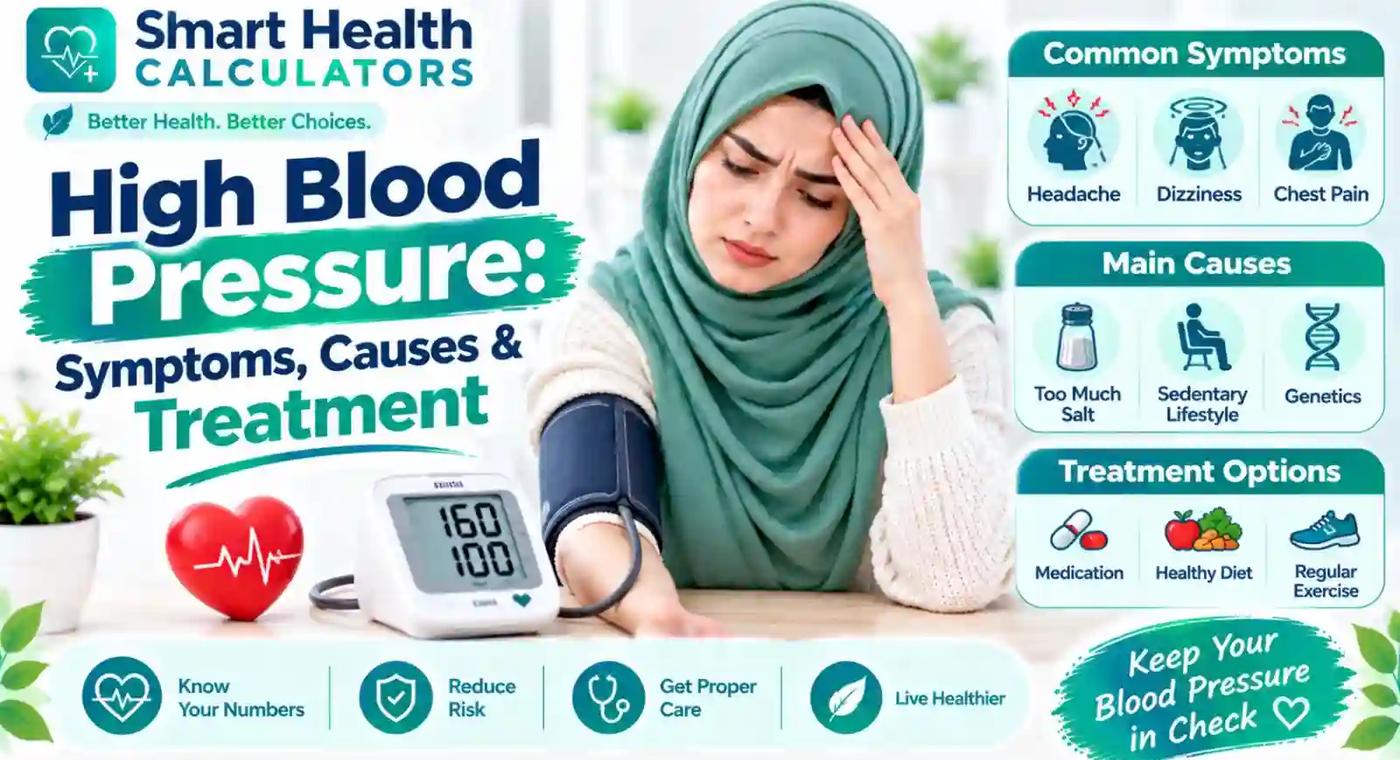
High Blood Pressure: Symptoms, Causes & Treatment Guide
What is high blood pressure? Learn the symptoms, causes, diagnosis, and treatment, how to measure it at home, and the warning signs that need emergency care.
Millions of people have high blood pressure and have no idea. It rarely announces itself. You feel fine, you go about your day, and meanwhile the force of blood against your artery walls is slowly wearing down your heart, brain, kidneys, and eyes.
The good news is that hypertension is one of the most manageable conditions in medicine. This guide explains what the numbers mean, which symptoms to take seriously, what causes it, how doctors diagnose and treat it, and what you can do at home. If your pressure is on the low side instead, read our guide to low blood pressure symptoms, causes and treatment.
What Is High Blood Pressure?
High blood pressure (hypertension) is a condition in which the force of blood pushing against your artery walls stays too high over time. In adults, it is generally diagnosed when readings are consistently 130/80 mmHg or higher under U.S. guidelines, though some guidelines use 140/90 mmHg. Most people have no symptoms, which is why it is called a silent condition.
The short answers:
- Can you have it without symptoms? Yes. Most people with hypertension feel nothing at all.
- Is it dangerous? Untreated, it raises the risk of heart attack, stroke, kidney disease, and vision problems.
- Can it be controlled? Usually yes, with lifestyle changes, medicine, or both.
- Is it curable? Often it is managed rather than cured, though lifestyle changes can bring readings down a lot and sometimes treating an underlying cause resolves it.
- When is it an emergency? A very high reading with chest pain, severe headache, confusion, vision changes, weakness, or trouble speaking needs emergency care.
What the Numbers Mean
Blood pressure is written as two numbers, measured in millimeters of mercury (mmHg).
- Systolic (top number): the pressure when your heart beats and pushes blood out.
- Diastolic (bottom number): the pressure when your heart rests between beats.
For example, 120/80 mmHg means a systolic pressure of 120 and a diastolic pressure of 80. Either number being high can count as hypertension. In older adults, an elevated top number with a normal bottom number is common and is called isolated systolic hypertension.
If you want a closer look at the top and bottom numbers, the American Heart Association's blood pressure page explains them clearly.
Blood Pressure Categories
The American Heart Association and American College of Cardiology use these adult categories:
- Normal: below 120/80 mmHg
- Elevated: 120 to 129 systolic and below 80 diastolic
- Stage 1 hypertension: 130 to 139 systolic or 80 to 89 diastolic
- Stage 2 hypertension: 140 or higher systolic, or 90 or higher diastolic
- Hypertensive crisis: above 180 systolic and/or above 120 diastolic, which needs prompt medical attention
Other bodies, including some European and UK guidelines, use 140/90 mmHg as the main diagnostic threshold. Your doctor will tell you which target applies to you.
Why Both Numbers Matter
People often ask which number is more important. For most adults, especially over 50, the systolic number is a stronger predictor of heart and stroke risk. But a high diastolic number also matters, particularly in younger adults. Treat both as important.
Why High Blood Pressure Is Called a Silent Condition
Your body adapts to gradually rising pressure. You don't feel your arteries stiffening or your heart muscle thickening. By the time symptoms appear, damage may already exist.
That is why screening matters. The Centers for Disease Control and Prevention notes that many adults with hypertension don't know they have it, and the World Health Organization reports that only a minority of people with hypertension worldwide have it controlled. Check the latest figures on those pages, because statistics are updated regularly.
Symptoms of High Blood Pressure
Most people have none. Some have symptoms, and a few signs deserve attention.
Common Myths
Many people believe headaches, nosebleeds, or flushing reliably signal high blood pressure. They usually don't. A mild headache is far more often caused by tension, dehydration, or poor sleep. Waiting for symptoms is not a safe strategy.
Symptoms That May Appear at Very High Levels
When pressure rises sharply, you may notice:
- Severe headache
- Shortness of breath
- Chest pain or pressure
- Dizziness or confusion
- Blurred or changed vision
- Nosebleeds
- Anxiety or a pounding heartbeat
- Weakness, numbness, or difficulty speaking
These can signal a hypertensive crisis or another emergency, such as a stroke or heart attack.
Does High Blood Pressure Cause Headaches?
Usually not at ordinary levels. Headaches tend to appear only when pressure is severely elevated. If you get frequent headaches, see a doctor, but don't assume your pressure is the cause.
Does It Make You Tired?
Hypertension itself doesn't typically cause fatigue, but related problems can, including sleep apnea, heart strain, kidney disease, and medication side effects.
When High Blood Pressure Is an Emergency
Hypertensive crisis means a reading above 180/120 mmHg. What you do next depends on symptoms.
- Hypertensive urgency: very high readings without symptoms of organ damage. Contact your doctor promptly, rest, and recheck after a few minutes.
- Hypertensive emergency: very high readings with symptoms such as chest pain, shortness of breath, back pain, numbness, weakness, vision changes, confusion, or difficulty speaking. Call emergency services immediately.
Emergency numbers include 911 in the United States, 999 in the UK, and 1122 for Rescue 1122 in Punjab, Pakistan. Use your local emergency number if you are elsewhere.
Don't drive yourself if you have emergency symptoms.
What Causes High Blood Pressure?
Hypertension falls into two main types.
Primary (Essential) Hypertension
This is the most common form, accounting for the large majority of cases. It develops gradually over years and has no single identifiable cause. Instead, several factors combine.
Secondary Hypertension
This type is caused by an underlying condition and may appear suddenly. It is more likely if you are young, your pressure is very high, or it doesn't respond to usual medicines. Common causes include:
- Chronic kidney disease
- Narrowing of the arteries that supply the kidneys
- Obstructive sleep apnea
- Thyroid disorders
- Adrenal gland conditions, such as primary aldosteronism
- Certain medicines
- Alcohol misuse and some recreational drugs
If your doctor suspects a secondary cause, they may order additional tests. Treating the cause can sometimes lower pressure significantly.
Risk Factors for Hypertension
Some risk factors you can change, and some you cannot.
Risk Factors You Cannot Change
- Age. Arteries stiffen over time, so risk rises with age.
- Family history. Hypertension often runs in families.
- Ethnicity. Some groups face higher rates and earlier onset.
- Sex. Rates differ by age group. Men tend to develop it earlier, and women's risk rises after menopause.
Risk Factors You Can Change
- Too much salt (sodium). Excess sodium makes the body hold fluid, which raises pressure.
- Excess weight. More body weight means the heart works harder.
- Physical inactivity. Regular movement keeps arteries flexible.
- Too little potassium. Potassium helps balance sodium.
- Heavy alcohol use. Regular heavy drinking raises pressure.
- Smoking and nicotine. They cause temporary spikes and long-term artery damage.
- Chronic stress and poor sleep. They affect hormones and heart rate.
- Diabetes and high cholesterol. They damage blood vessels over time.
Quick Look at Weight
If you are unsure where you stand, try our BMI Calculator. Remember that BMI is only a screening tool, and you can read about its limits in our guide on whether BMI is accurate. Waist size can also matter, as explained in our guide to waist-to-height ratio.
Everyday Triggers: Coffee, Alcohol, Stress, and Medicines
People search for these constantly, so here is what is actually known.
Coffee and Caffeine
Caffeine can raise blood pressure briefly, especially in people who don't drink it regularly. The effect is usually short-lived. If you have hypertension, ask your doctor about your caffeine intake, and avoid drinking coffee shortly before a home reading.
Alcohol
Regular heavy drinking raises blood pressure over time. Cutting back often helps.
Anxiety and Stress
Anxiety can cause temporary spikes, such as when you feel nervous at the doctor's office. Chronic stress may contribute to higher pressure through lifestyle effects. Try our guides on natural ways to reduce stress and six relaxation techniques, and use the Mental Health Checker for a self-check. If medical visits make you anxious, read how to cope with anxiety before a health checkup.
Dehydration
Mild dehydration can change readings in the short term. Staying well hydrated supports healthy circulation. See our Water Intake Calculator and daily water intake guide.
Medicines That Can Raise Blood Pressure
Some common medicines can push readings up, including certain pain relievers called NSAIDs (such as ibuprofen), decongestants, some antidepressants, birth control pills, and steroids. Don't stop a prescribed medicine on your own. Talk to your doctor or pharmacist if you suspect one is affecting your pressure.
How High Blood Pressure Is Diagnosed
A single high reading doesn't confirm hypertension. Doctors look for a pattern.
In the Clinic
A clinician will take readings on more than one occasion, usually using an upper-arm cuff, with you seated and rested. They may measure in both arms and ask about symptoms, medicines, family history, and lifestyle.
Home Blood Pressure Monitoring
Home readings help confirm the diagnosis and track treatment. They also reveal two tricky patterns:
- White coat hypertension: readings are high at the clinic but normal at home.
- Masked hypertension: readings look normal at the clinic but are high at home.
Ambulatory Blood Pressure Monitoring
For uncertain cases, a doctor may ask you to wear a small device for 24 hours that measures pressure automatically throughout the day and night. This is considered a very reliable way to confirm hypertension.
Tests to Look for Causes and Damage
Your doctor may order:
- Blood tests (kidney function, electrolytes, blood sugar, cholesterol)
- Urine tests
- An electrocardiogram (ECG)
- An eye exam to check blood vessels in the retina
- Additional tests if a secondary cause is suspected
How to Measure Blood Pressure at Home Correctly
Poor technique gives misleading numbers. Follow these steps.
- Choose a validated upper-arm monitor with a cuff that fits. Wrist and finger devices are generally less reliable. A pharmacist can help with cuff size.
- Prepare. Avoid caffeine, smoking, and exercise for 30 minutes beforehand, and use the bathroom first.
- Sit quietly for 5 minutes with your back supported, feet flat, and legs uncrossed.
- Position your arm at heart level, resting on a table, with the cuff on bare skin.
- Stay still and silent. Don't talk or look at your phone.
- Take two readings one minute apart, and record both.
- Repeat at set times, for example morning and evening, for about a week before a doctor visit.
- Write everything down: date, time, both numbers, pulse, and any symptoms.
How Often Should You Check?
Ask your doctor. Many people diagnosed with hypertension check at home regularly, while others check only occasionally. If you are anxious about the numbers, avoid checking repeatedly throughout the day, because that can raise anxiety and your readings.
Reading Your Pulse Too
Your pulse can add context. See our guides on normal heart rate by age and the heart rate zone calculator.
A Worked Example: Reading a Home Log
This is an illustrative scenario, not medical advice.
The situation: Sam, age 48, felt fine but had a clinic reading of 142/92. His doctor asked him to measure at home for a week.
His log: Morning readings averaged 136/86. Evening readings averaged 134/84. A few were higher after coffee, and he noticed readings dropped when he rested for five minutes first.
What this showed: His home average was above 130/80, which pointed toward stage 1 or 2 hypertension depending on the guideline used. Because the pattern was consistent across days, his doctor treated it as more than a nervous-visit spike. They discussed lifestyle changes, and since his risk was moderate, also talked about whether medicine was needed.
The takeaway: A week of careful readings gave far more information than a single clinic number. Bring a log like this to your own appointment.
Complications of Untreated High Blood Pressure
Sustained high pressure damages blood vessels and organs. Over time it can lead to:
- Heart attack and heart failure. The heart works harder and can thicken, a condition called left ventricular hypertrophy.
- Stroke. High pressure can block or burst blood vessels in the brain.
- Kidney disease. Damaged kidney vessels can't filter waste well. Read about this connection through the National Institute of Diabetes and Digestive and Kidney Diseases.
- Eye damage. Hypertensive retinopathy can affect vision.
- Aneurysms and artery disease. Weakened vessel walls can bulge or narrow.
- Cognitive decline. Long-term hypertension is linked to memory and thinking problems.
- Sexual dysfunction. Reduced blood flow can affect both men and women.
Is hypertension a cardiovascular disease? It is a major risk factor for cardiovascular disease and is often counted within it. Controlling it significantly lowers your risk of the complications above.
Treatment: Lifestyle First, Medicine When Needed
Treatment depends on your readings, your overall cardiovascular risk, and other conditions. For some people, lifestyle changes may be enough. Others need medicine, and many benefit from both.
Lifestyle Changes That Lower Blood Pressure
These are the foundation of treatment.
Eat Less Sodium
Cutting back on salt is one of the most effective steps. Packaged, processed, and restaurant foods supply most of the sodium people eat, not the salt shaker. Check labels and cook more at home. Your doctor can give you a daily sodium target.
Follow the DASH Eating Plan
The DASH diet emphasizes vegetables, fruits, whole grains, low-fat dairy, lean protein, and limited sodium and saturated fat. It was developed by the National Heart, Lung, and Blood Institute. Read our full DASH diet guide for foods to eat and limit.
Foods that tend to support healthy blood pressure:
- Leafy greens, which provide potassium and magnesium
- Berries, bananas, and other fruit
- Beans, lentils, and legumes
- Whole grains and high-fiber foods
- Unsalted nuts and seeds
- Fish and lean proteins
- Low-fat dairy, if you eat dairy
Foods and habits to limit:
- Canned soups, instant noodles, and processed meats
- Salty snacks and fast food
- Pickled and heavily salted foods
- Sugary drinks
- Excess alcohol
If you have kidney disease, ask your doctor before increasing potassium, since too much can be harmful in that condition.
For broader eating guidance, see our guides to a whole foods diet, best drinks for heart health, and a low-budget diet plan. The Diet Plan Generator can help you structure meals.
Move More
Regular aerobic activity, such as brisk walking, cycling, or swimming, helps lower blood pressure. Many guidelines suggest about 150 minutes of moderate activity per week, built up gradually. Use the Workout Planner and Step Counter Goal Planner to get started. If you are new to exercise, see our beginner home workout plan. Check with your doctor first if your pressure is very high or you have heart disease.
Reach a Healthier Weight
Even modest weight loss can lower pressure. Our guides on weight loss strategies, losing belly fat, and the Calorie Intake Planner can help. If you have a history of disordered eating, talk to a healthcare professional before using calorie or diet tools.
Limit Alcohol and Avoid Tobacco
Drinking less and quitting smoking both protect your arteries. Ask your doctor for support if you want to quit.
Sleep Well
Poor sleep and untreated sleep apnea can raise blood pressure. Try the Sleep Quality Checker and read our guides on sleep hygiene and signs of poor sleep quality. If you snore loudly or wake gasping, ask your doctor about a sleep apnea test.
Manage Stress
Daily relaxation, breathing exercises, and good routines help. Try 5-minute breathing exercises.
Can You Lower Blood Pressure Naturally?
Lifestyle changes can lower it meaningfully, but "naturally" doesn't mean "without medical guidance." If your readings are high, work with a doctor. Be cautious with supplements and herbal products, since some interact with medicines or raise pressure. Don't stop prescribed medicine and replace it with supplements.
Can You Lower Blood Pressure Quickly?
If you have a mildly high reading, sit quietly, breathe slowly, and recheck after five minutes. Don't try extreme methods to force it down fast. Rapid drops can be dangerous. If your reading is above 180/120 with symptoms, call emergency services. If it is above 180/120 without symptoms, contact your doctor promptly.
Blood Pressure Medicines
When lifestyle alone isn't enough, doctors prescribe medicine. Many people need more than one type, and the choice depends on your health, age, and other conditions.
Common Types
- ACE inhibitors relax blood vessels by blocking a hormone that narrows them.
- Angiotensin receptor blockers (ARBs) work on the same system but block the hormone's receptor instead.
- Calcium channel blockers relax and widen blood vessels and can slow the heart rate.
- Diuretics (water pills) help the body remove sodium and water.
- Beta blockers slow the heart and reduce its workload, and are used in specific situations.
ACE Inhibitors vs. ARBs
Both affect the renin-angiotensin-aldosterone system. ACE inhibitors are known for causing a dry cough in some people. ARBs less often cause that cough, so doctors sometimes switch people between them. Your doctor will choose based on your needs.
Safety Points
- Take medicine exactly as prescribed.
- Never stop because your readings improve. Good numbers often mean the medicine is working.
- Report side effects instead of quitting. Your doctor can adjust the dose or switch drugs.
- Ask your pharmacist before taking over-the-counter pain relievers, decongestants, or supplements.
- Tell your doctor if you are pregnant or planning pregnancy, because some blood pressure medicines aren't safe then.
- Some medicines can lower heart rate. Ask your doctor if you notice a slow or irregular pulse.
Specific drug names, doses, and combinations are decisions for your clinician, not for self-treatment.
When Does Someone Start Medicine?
It depends on your readings and your overall risk. Someone with stage 2 hypertension, existing heart disease, diabetes, or kidney disease is more likely to start medicine sooner. Someone at lower risk with stage 1 may try lifestyle changes first. Your doctor will explain the plan.
High Blood Pressure in Specific Groups
Adults Under 40
Hypertension is not just an older person's condition. In younger adults, doctors are more likely to look for secondary causes, such as kidney, hormone, or sleep conditions.
Older Adults
Isolated systolic hypertension is common as arteries stiffen. Treatment is often beneficial but needs care to avoid dizziness and falls, especially from standing up too quickly. Report any lightheadedness to your doctor. See also our guide to weight loss after 50.
Women
Pregnancy, birth control pills, and menopause can all affect blood pressure. Women should have pressure checked regularly, particularly during and after pregnancy.
Pregnancy
High blood pressure during pregnancy needs careful monitoring. Conditions include chronic hypertension (before pregnancy), gestational hypertension (new after 20 weeks), and preeclampsia, a serious condition involving high pressure and organ effects. Warning signs include severe headache, vision changes, upper abdominal pain, sudden swelling, and reduced baby movement. Contact your midwife or doctor right away if you notice them. Hypertension can also appear or continue after delivery, so keep postpartum checkups.
Read our related guides on staying healthy during pregnancy, pregnancy water intake, and sleeping positions during pregnancy. The Pregnancy Calculator can help with dates.
People with Diabetes or Kidney Disease
These conditions raise risk and often call for tighter targets. Targets differ between guidelines and individuals, so follow your doctor's specific goal.
Preventing High Blood Pressure
You can't change your age or genes, but you can lower your risk.
- Get your blood pressure checked regularly, even if you feel fine
- Eat a heart-healthy, lower-sodium diet
- Stay active and maintain a healthy weight
- Limit alcohol and avoid tobacco
- Sleep well and manage stress
- Take medicines for other conditions as prescribed
- Know your family history and share it with your doctor
For a broader view, see our guides on 5 healthy habits, health calculators, and the Health Age Calculator. These tools give context but do not diagnose conditions.
High Blood Pressure vs. Low Blood Pressure
The two conditions need opposite approaches, so never use advice for one to treat the other.
- High blood pressure is usually silent and is managed with lifestyle changes and sometimes medicine.
- Low blood pressure is a concern mainly when it causes dizziness or fainting, and the fix depends on the cause.
If you feel faint, our guide on what to do when blood pressure drops covers safe first steps.
Why Choose Smart Health Calculators
Health searches often land on pages that either scare you or sell you something. Smart Health Calculators tries to do better.
- Free tools to track numbers like BMI, water intake, sleep, and calories
- Plain-language guides that match each tool
- Safety first advice that spells out when to see a professional
- Source-based claims that point to recognized health organizations
You can learn more on our About page, browse the health blog, or contact us with questions or corrections. Please also read our disclaimer.
Explore Advanced Smart Health Calculators on the tools page, including the BMR Calculator, Body Fat Estimator, and Ideal Weight Calculator.
Frequently Asked Questions
What is high blood pressure?
High blood pressure, or hypertension, means the force of blood against your artery walls is consistently too high. Under U.S. guidelines, adults are generally diagnosed at 130/80 mmHg or higher on repeated readings. Some other guidelines use 140/90 mmHg.
What are the most common symptoms of hypertension?
Most people have no symptoms. When symptoms appear, usually at very high levels, they can include severe headache, chest pain, shortness of breath, vision changes, nosebleeds, and dizziness.
Why is hypertension called a silent condition?
Because it usually causes no noticeable symptoms while it damages the heart, brain, kidneys, and eyes. Regular blood pressure checks are the only reliable way to find it.
What is a healthy blood pressure reading for adults?
A normal reading is below 120/80 mmHg. Readings of 120 to 129 systolic with a diastolic below 80 are called elevated. Your doctor may set a different target for you depending on your health.
What do the top and bottom numbers mean?
The top number (systolic) is the pressure when your heart beats. The bottom number (diastolic) is the pressure when your heart rests between beats.
What are the main causes of hypertension?
Most cases are primary hypertension, which develops from a mix of age, genetics, high sodium intake, excess weight, inactivity, and stress. Secondary hypertension is caused by an underlying condition such as kidney disease, sleep apnea, or hormone disorders.
Can anxiety raise blood pressure?
Yes, temporarily. Anxiety or stress can cause short spikes. Repeated readings in calm conditions give a more accurate picture.
Can coffee raise blood pressure?
Caffeine can raise blood pressure briefly in some people. The effect is usually short. Avoid coffee shortly before a home reading and ask your doctor if you should limit it.
Can high blood pressure be reversed?
Lifestyle changes can lower readings a lot, and in some people bring them back into the normal range. Many people still need long-term management, so keep monitoring and follow your doctor's advice.
Can hypertension be controlled without medication?
For some people with mildly elevated readings, lifestyle changes may be enough. Others need medicine. Don't decide this on your own, because your doctor weighs your overall risk.
What are the risks of leaving high blood pressure untreated?
Untreated hypertension raises the risk of heart attack, stroke, heart failure, kidney disease, vision problems, and cognitive decline.
Should I stop my blood pressure medicine when my readings improve?
No. Improved readings usually mean the treatment is working. Stopping can cause pressure to rise again. Talk to your doctor before making any change.
When is high blood pressure a medical emergency?
When readings are above 180/120 mmHg and you have chest pain, shortness of breath, severe headache, confusion, vision changes, weakness, or trouble speaking. Call emergency services immediately.
Does high blood pressure run in families?
Yes. A family history raises your risk, which is one reason regular screening matters if close relatives have hypertension.
Key Takeaways and Next Steps
High blood pressure is common, silent, and very treatable. Keep these points in mind:
- Know your numbers. Normal is below 120/80 mmHg, and repeated readings of 130/80 or higher usually point to hypertension.
- Don't wait for symptoms. Most people feel nothing.
- Confirm with proper measurement. Use a validated upper-arm monitor and take readings correctly.
- Start with lifestyle. Less sodium, a DASH-style diet, regular activity, healthy weight, less alcohol, and better sleep all help.
- Take medicine as prescribed. Never stop because readings improve.
- Know the red flags. Readings above 180/120 with chest pain, vision changes, confusion, or weakness need emergency care.
- Keep checking. Control is ongoing, not one-time.
What to do next:
- Book a blood pressure check if you haven't had one in the past year.
- Get a validated upper-arm monitor and keep a one-week log.
- Review your salt intake and try one DASH-style swap this week.
- Use the Water Intake Calculator and BMI Calculator to check your basics.
- Share your log and family history with your doctor.
Medical Disclaimer
This article is for general education only. It is not medical advice, diagnosis, treatment, prescription guidance, or a replacement for professional healthcare. Speak with a qualified healthcare professional for personal medical concerns, symptoms, pregnancy concerns, mental health crisis, medication questions, or before making major health changes.